
King Wen's Crisis and Counsel
I ChingThis flow follows Legge's account of King Wen's imprisonment, his study of the figures, and the political counsel he drew from them.
increasing Bearing strength in each event
 decreasing
Bearing strength in each eventdecreasingA Kingdom in Disorder
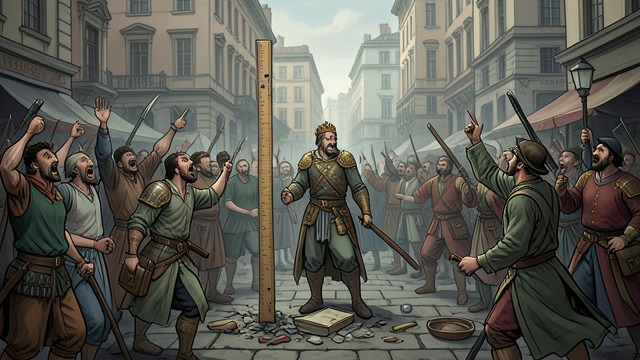
A Fractured Kingdom
Breakdown of rule
Legge depicts the late Shang as a realm in which officials violated laws, common people committed violence, and royal authority no longer secured order.
The account makes political disorder the setting for the Changes. Its warnings about right action and restraint answer a world in which public trust has collapsed.
The ruler's responsibility
King Shou of Shang appears as the source of much of the crisis. Legge recounts accusations of cruelty, disregard for ritual, and reliance on harmful advisers.
The political background turns abstract judgments into urgent counsel about legitimacy, restraint, and the danger of misrule.
The Zhou Lord Is Watched
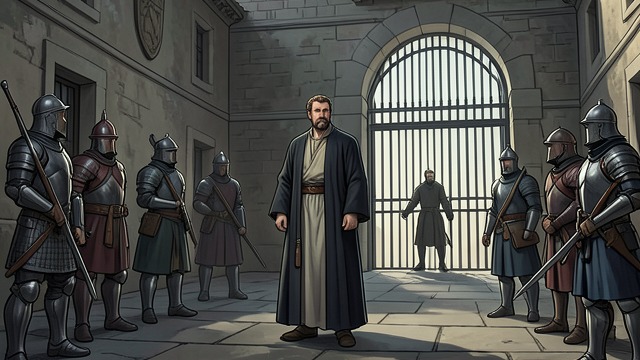
Power Under Suspicion
An influential regional lord
King Wen, then the lord of Zhou, had gained influence through ability in peace and war. Legge portrays him as a respected figure who nevertheless hesitated to challenge the reigning house.
His restraint creates the central political tension: moral authority and popular support do not automatically make rebellion legitimate.
Suspicion turns to imprisonment
King Shou of Shang grew jealous and treated King Wen as a threat. The conflict culminated in King Wen's confinement at Youli.
The imprisonment gives the book's reported composition a precise dramatic setting: a statesman facing danger, with no certainty that he will be released.
Figures Become a Discipline
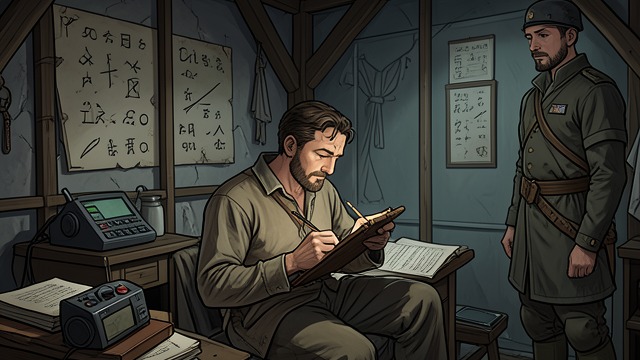
Study in Confinement
A constrained activity
Legge imagines King Wen studying the lineal figures while imprisoned. To guards, the work might have seemed harmless; to its author, the figures could embody the conditions of state and society.
The scene makes interpretation a practice of disciplined attention under political pressure, not detached speculation.
Counsel replaces divination
King Wen gives the figures names and short judgments, shaping an inherited divinatory practice into advice about conduct. Legge sees this as an attempt to restrain divination with reason.
The book's authority later rests partly on this transformation: figures used for prediction become vehicles for moral and political reflection.
The Son Extends the Work
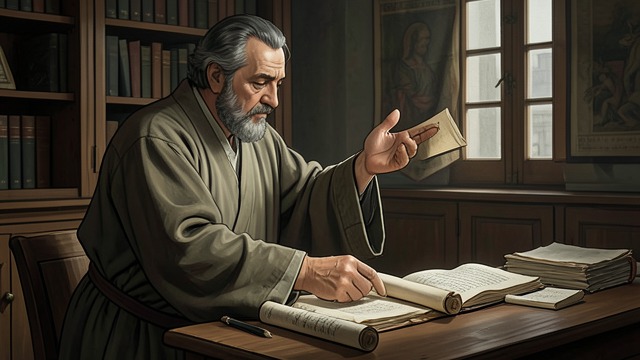
Line by Line
A second authorial task
Duke of Zhou adds interpretations for the individual lines. Legge describes this as extending King Wen's treatment of each whole figure into a series of particular situations.
The work is less direct than the overall judgments, using emblems and circumstances to show the consequences of action.
A political inheritance
Legge presents the son's contribution as both an act of intellectual completion and a continuation of the Zhou family's political concerns.
The two layers together create a structure in which a general condition is tested against changing positions, responsibilities, and opportunities.
A Dynasty Changes Hands
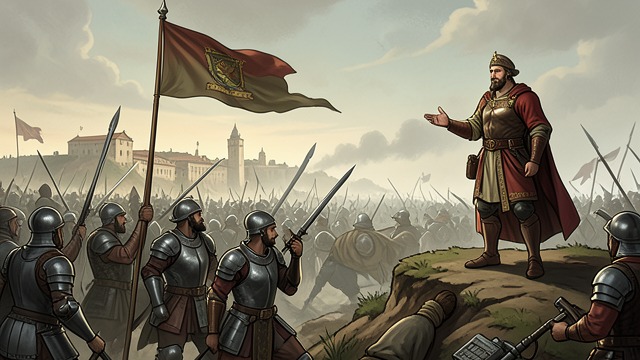
The Political Outcome
A campaign against Shang
King Wu of Zhou eventually led the campaign against Shang. Legge connects several passages in the Changes with the movement from the old regime to the new.
The transition gives the book's counsel on military authority and political legitimacy a concrete historical resonance.
A victory with conditions
The text does not simply celebrate force. Its military passages distinguish disciplined, authorized action from plunder, divided command, and ambition without restraint.
The Zhou conquest resolves the immediate struggle but leaves a continuing question: how can a successful government avoid reproducing the disorder it replaced?
Before King Wen's imprisonment, twelfth century BC
Before 1143 BC
1143–1142 BC
Several decades after 1143 BC
1122 BC
