
From Distress to Relief
I ChingThis flow follows the political and personal movement from entrapment through patient endurance to the reopening of a workable path.
increasing Bearing strength in each event
 decreasing
Bearing strength in each eventdecreasingA Worthy Person Is Blocked
Good Principles Under Pressure
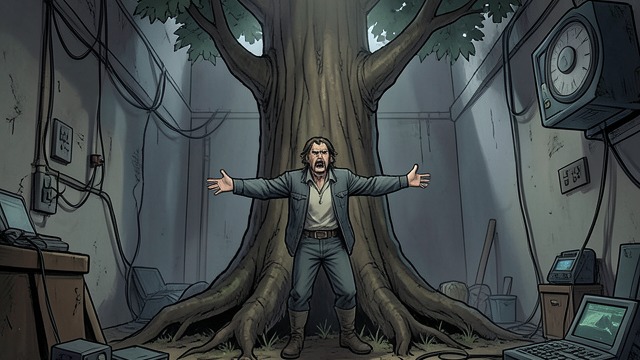
The tree within an enclosure
Legge explains the image of Oppression as a tree unable to spread within a confined space. The figure represents worthy people whose principles cannot develop in the political order.
The condition is structural, not merely a passing discomfort.
Words lose force
The opening says that speeches cannot make themselves good. Legge interprets the warning as a demand for action when argument alone has lost credibility.
The conflict begins with a gap between moral worth and public effectiveness.
The First Figure Enters a Dark Valley
Isolation Deepens
A person without support
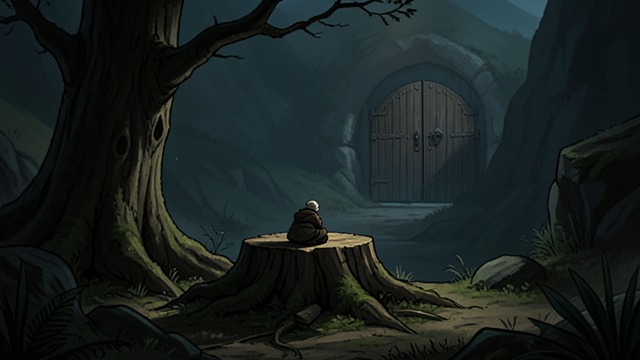
The first line shows someone trapped beneath a tree stump and entering a dark valley. Legge reads the image as a person unable to receive help from the position above.
The promise of relief is distant, measured in years.
The cost of powerlessness
The line makes distress a condition of blocked movement and failed connection. A worthy person may remain isolated when those who could help are themselves constrained.
The conflict reaches a personal depth within the wider political disorder.
Sincerity Sustains the Entrapped

Inner Order in Hardship
Comfort without freedom
The second line depicts a figure surrounded by food and drink yet still oppressed. Legge explains that the person's principles, rather than his possessions, are constrained.
Material comfort cannot replace the ability to act rightly.
Quiet conduct
The ruler eventually comes to the figure, but active action would be harmful. Maintaining sincerity, as in sacrifice, becomes the fitting response.
The conflict shifts from outward deprivation to the challenge of preserving inner purpose.
A Sudden Rescue Opens a Path
Help Arrives Before the Crisis Grows
Early intervention
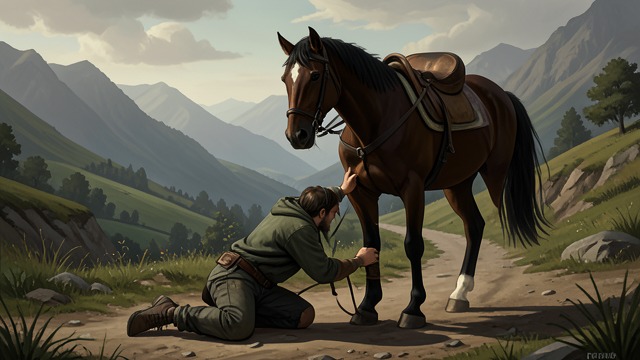
Dispersion begins with a weak figure receiving the assistance of a strong horse. Legge interprets the image as rescue while the disorder is still manageable.
The first response must come quickly enough to prevent fragmentation from spreading.
Cooperation replaces isolation
The person who cannot act alone finds support in a stronger counterpart. The condition that seemed private becomes a problem of collective aid.
The shift from confinement to assistance begins the movement toward relief.
The Community Regathers
A Public Remedy
Dissent is scattered
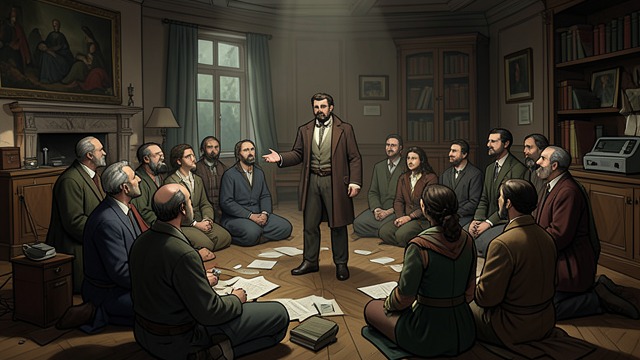
The minister in the fourth line ends divisive factions and gathers good people into a body. Legge compares their united presence to a conspicuous mound.
The remedy is not suppression alone; it also restores relationships.
The ruler addresses the people
The fifth line joins public proclamations with the distribution of stored resources. Legge reads both as acts that reconnect the ruler and community.
The conflict resolves when authority communicates, gives, and rebuilds common purpose.
At the opening of Oppression
At the first line of Oppression
At the second line of Oppression
At the first line of Dispersion
At the fourth and fifth lines of Dispersion
