
The Fox at the Crossing
I ChingThis flow uses the young fox's failed crossing to trace the recurrent danger of acting as though a difficult task is already complete.
increasing Bearing strength in each event
 decreasing
Bearing strength in each eventdecreasingThe State Is Not Yet Ordered
An Unfinished Political Task
The vessel remains uncrossed
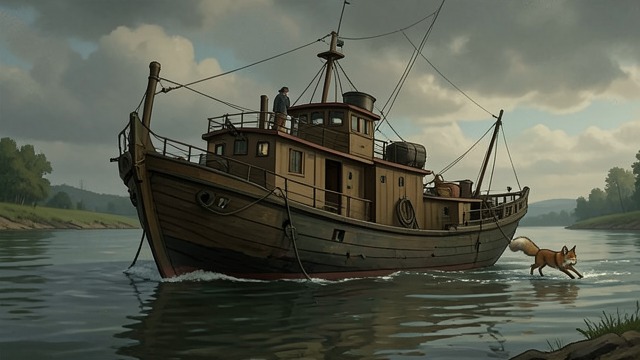
The final hexagram reverses Completion: the vessel of the state has not yet been brought safely across. Legge reads it as a renewed struggle to bring order into being.
The ending refuses to grant the reader a permanently settled society.
A new beginning in uncertainty
The judgment nevertheless promises progress, but warns that the young fox's tail becomes immersed near the far bank. Near-success can still turn into failure.
The political conflict begins again because its conditions remain unstable.
A Young Fox Misjudges the Water

The Last Step Becomes Dangerous
A crossing nearly complete
The young fox is almost across when its tail is immersed. The first line repeats the image as a warning that the undertaking can go wrong at the very beginning of a new attempt.
Legge emphasizes insufficient caution as the cause of trouble.
Regret follows haste
The subject acts but finds reason for regret. Apparent proximity to safety does not mean that the most dangerous part has passed.
The image makes confidence itself a source of conflict.
Restraint Saves One Position

Holding Back the Wheel
A capable figure pauses
The second line depicts a subject dragging back the wheel of a carriage. Legge interprets the act as self-restraint by someone who is strong and centrally placed.
Good fortune comes from refusing to advance at the wrong moment.
Delay can be active
The figure does not surrender the task; it holds its position until movement becomes more suitable. Restraint preserves the possibility of later success.
The conflict is reduced by the ability to stop.
A Long Effort Restores Progress

Commitment Across Years
The ruler authorizes effort
The fourth line recommends firm correctness and recalls a three-year expedition against the Demon Region. Legge uses the image to show that restoring order may take sustained work.
Quick victory is not always available.
Reward follows perseverance
The text promises rewards from the great kingdom after the difficult campaign. Its optimism depends on the effort remaining directed and disciplined.
The conflict can be resolved, but only through work that endures beyond the first enthusiasm.
Confidence Risks Becoming Carelessness
Success Requires One More Check
A feast before completion
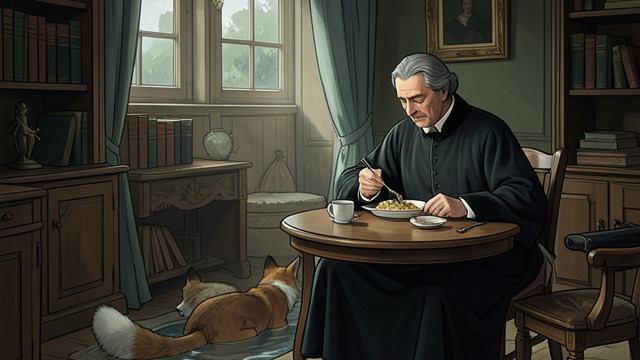
The final line presents a subject confidently feasting. Legge approves quiet confidence if the work is genuinely done, but warns that the image changes if confidence becomes reckless play with danger.
The ending is conditional rather than secure.
The unfinished principle
The closing warning echoes the fox: a project can fail when its agents treat a nearly completed task as already complete. The classic's last lesson returns readers to caution.
The book ends with an open conflict, because change continues beyond any single success.
At the opening of Not Yet Completed
At the opening and first line of Not Yet Completed
At the second line of Not Yet Completed
At the fourth line of Not Yet Completed
At the topmost line of Not Yet Completed
