
The Text's Changing Idea of Strength
I ChingThis flow traces how strength moves from energetic action to restraint, showing that power is valuable only when governed by correctness.
increasing Bearing strength in each event
 decreasing
Bearing strength in each eventdecreasingStrength Begins as Activity
Power as a Basic Quality
The strong line
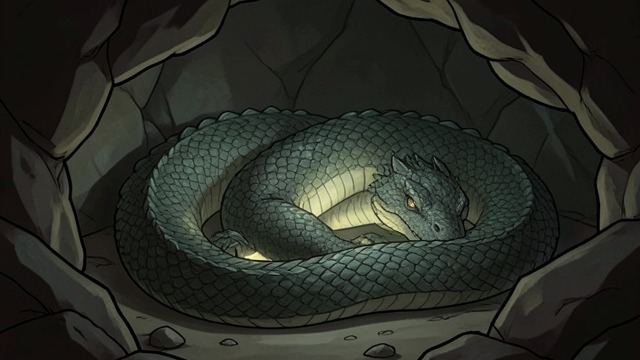
The first hexagram consists entirely of undivided lines and is associated with strength and activity. Its opening image presents a powerful quality before it has entered public action.
Strength is the condition of possibility, not yet proof of wise conduct.
The need for timing
The hidden dragon must wait. Legge's reading makes the first test of strength the capacity not to act too soon.
Power begins as potential governed by circumstance.
Great Vigor Tests Its Holder
Strength Needs a Rule
Vigorous force fills the figure
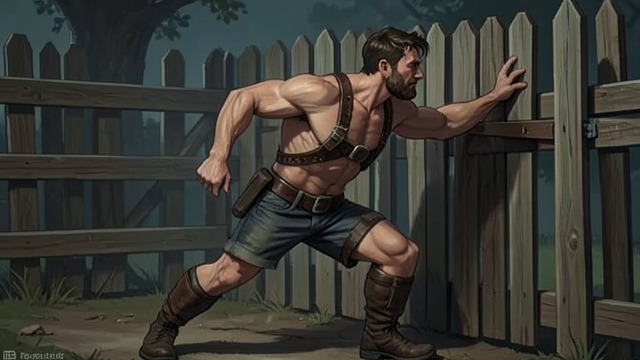
Great Vigor contains more strong than divided lines. Legge interprets it as a condition abundant in energy but not automatically good.
The judgment insists on firmness and correctness as the guide to its use.
The danger of pressing forward
The line of strength in the toes is warned against advancing from too low a position. A ram that butts into a fence can trap itself through force.
The theme separates power from judgment.
A Strong Minister Waits at the Gate
Restraint Stores Power
Advance is stopped
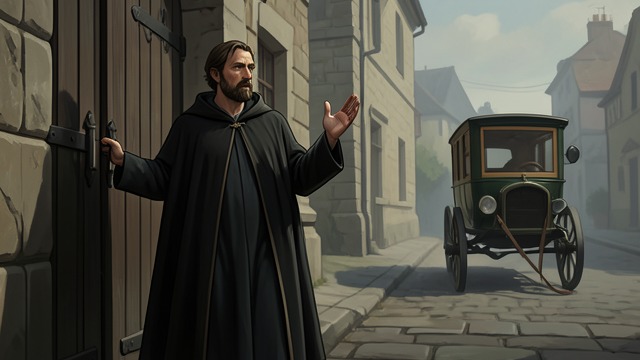
The first line of Great Accumulation is advised to halt; the second shows a carriage whose strap is removed. Legge reads both as restraint on movement.
The force remains available because it has not been spent prematurely.
Accumulation has a purpose
The hexagram's restraint is intended to build virtue and capacity, not to suppress action forever. A later line releases the subject to serve.
Power becomes more useful by being contained.
The Ram Learns to Stop
Awareness Prevents Injury
Strength reaches an impasse
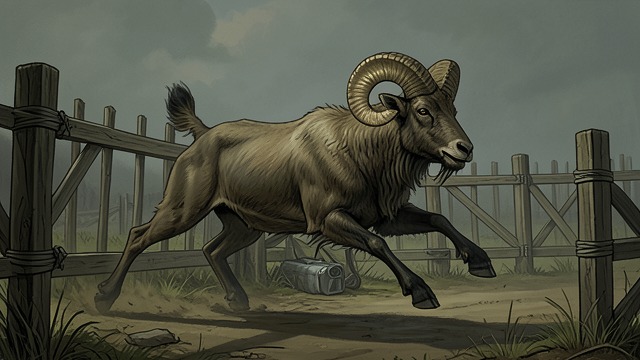
The final line again pictures a ram butting against a fence, unable to advance or retreat. Legge says the position is not advantageous.
Repeated force has become self-entrapment.
Recognition changes the outcome
If the subject realizes the difficulty and stops, good fortune remains possible. Strength does not disappear; it becomes governed by awareness.
The theme reaches its clearest form when restraint replaces futile insistence.
Correctness Directs the Final Movement
Power Is Judged by Its Use
Force serves a purpose
The military and political figures repeatedly give strong people opportunities to act, while warning against divided command, overreach, or self-interest. Legge reads strength as a capacity requiring moral direction.
The same energy can defend order or damage it.
The final measure
A successful action must remain firm, correct, and proportionate. Strength that cannot stop when circumstances change becomes a source of regret.
The theme resolves by making self-command the highest form of power.
At the opening of the first hexagram
At the opening of Great Vigor
At the first two lines of Great Accumulation
At the sixth line of Great Vigor
At the ending of the text's strength sequence
