
The Limits of What a Diviner Can Know
I ChingThis flow traces Legge's distinction between divination as a judgment about a contemplated course and claims to complete foreknowledge.
increasing Bearing strength in each event
 decreasing
Bearing strength in each eventdecreasingThe Book Is Used for Divination
A Practical Use
Stalks and figures
Legge describes the Changes as belonging to a culture where divination with stalks and other materials was practiced. The book's language preserves the compressed style associated with oracles.
Its use is part of its history even when its authors' purpose is debated.
A question about intention
King Wen and Duke of Zhou may have written after the manner of diviners without personally consulting the figures for answers. Legge distinguishes inherited form from the authors' own use.
The theme begins by refusing a simple division between literature and divination.
Fortune Is Judged for a Plan
Consultation Has a Limited Question
Plans, not every future event
Legge argues that a consulter sought to know whether a contemplated plan or condition would turn out well or badly. The book was not necessarily used to discover every event in advance.
The question remains tied to human deliberation.
Choice stays with the consulter
A favorable or unfavorable indication does not remove responsibility for deciding what to do. The purpose is guidance about a course under consideration, not a complete map of the future.
The theme limits divination while preserving its historical function.
The Stalk Procedure Makes the Figures
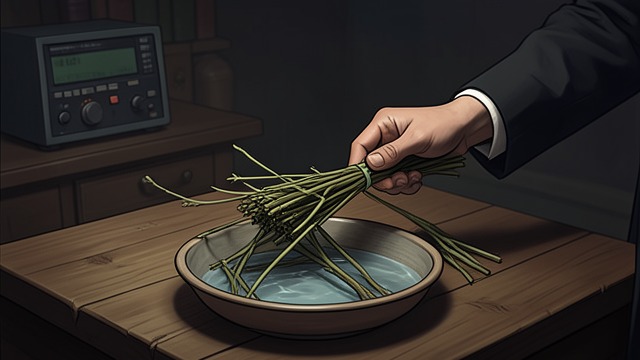
Chance Becomes a Hexagram
Repeated manipulation
The Great Treatise describes forty-nine stalks manipulated three times for each line, until six lines form a hexagram. Legge explains the procedure as elaborate and difficult to master.
Numbers determine whether lines are strong or divided.
A figure is not yet a judgment
The operation produces a configuration, which is then read through the judgments of King Wen and line texts of Duke of Zhou. The process depends on interpretation after the lot is cast.
The system combines procedure with reading rather than providing an automatic answer.
Skepticism Appears Within the Tradition
A Diviner Questions His Tools
Withered grass and bone
Legge recounts a story in which a skilled diviner dismisses the stalks as withered grass and the shell as withered bone. The man argues that human intelligence exceeds that of the objects used to consult it.
The challenge comes from within Chinese writing, not only from modern criticism.
Listening to oneself
The anecdote recommends self-examination instead of searching for certainty in things. Legge uses it to show that doubts about divination have a history of their own.
The theme opens space between inherited practice and blind trust.
The Book Remains Useful Without Omniscience
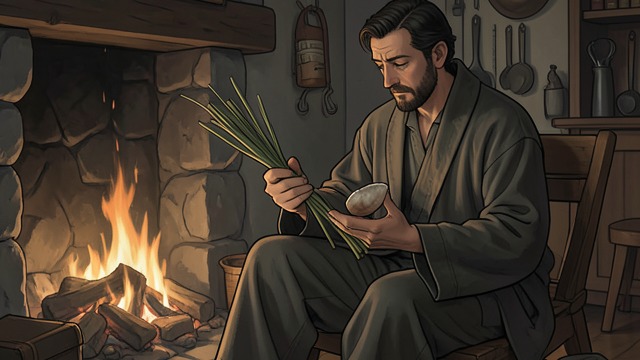
Wisdom Without Prediction
Counsel survives skepticism
Legge calls divination vain, yet he continues to explain how the method works and how its texts can prompt careful judgment. The book's practical and literary meanings remain available even if prediction is rejected.
A reader need not accept every supernatural claim to study the classic.
The future remains uncertain
The hexagrams advise waiting, acting, retreating, or correcting course under particular conditions. They do not guarantee outcomes or disclose everything that will happen.
The theme resolves by keeping responsibility with the person who must act.
Before and during the composition of the text
In the practice described by the Great Treatise
During a formal yarrow-stalk consultation
In a later anecdote about a Ming-era diviner
At Legge's final discussion of divination
