
From Oracle to Political Essay
I ChingThis flow follows Legge's central interpretation of how divinatory language becomes advice about government, character, and public action.
increasing Bearing strength in each event
 decreasing
Bearing strength in each eventdecreasingA Divinatory Inheritance
An Established Practice
Consultation through signs
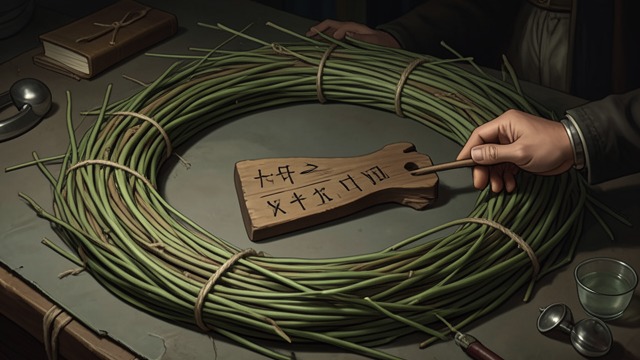
Legge describes divination by stalks and other materials as a longstanding practice in early China. The hexagrams therefore came from a culture already accustomed to consulting signs.
King Wen and Duke of Zhou could write in the compressed, oracular style familiar to that practice.
An author's adaptation
Legge argues that their own work was not necessarily an act of divination. The authors could borrow diviners' language while using it to articulate counsel.
This distinction makes literary form and authorial purpose separate questions.
Figures Receive Human Themes

Essays in Symbolic Form
Naming the figures
King Wen associates each hexagram with an idea and gives it a short judgment. Legge reads the resulting units as essays on social, political, and moral conditions.
Their compact language often implies circumstances that the written sentence leaves unstated.
The reader's task
To understand a judgment, Legge says, readers must recover the situation its author had in mind. The lines then clarify how a person should respond within that condition.
Interpretation becomes a reconstruction of practical thought rather than the decoding of a hidden prediction.
The Lines Make Situations
Six Positions, Six Tests
A changing sequence
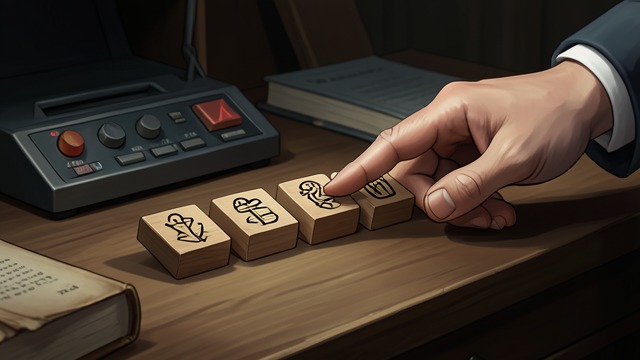
Duke of Zhou uses images and short warnings to interpret each line. A line's meaning depends on its position, strength, and relation to other lines.
One figure can therefore move from hesitation to responsible action, or from success to excess.
Counsel made particular
Legge's military example shows how one line can represent disciplined departure, another an entrusted commander, and another divided leadership.
The line texts convert a general political theme into a progression of choices and consequences.
The Commentaries Explain

Explanations Become a Second Layer
Reading through symbols
The appendixes explain judgments by relating them to trigrams, line qualities, and patterns of correspondence. They offer a more systematic account of how a figure can signify a condition.
Legge finds that these later writers often grasp King Wen's broad intention, even when their reasoning is not part of the original text.
The cost of fusion
When commentators and core text are printed together, their different assumptions can look like one continuous argument.
Legge's separation lets readers see both the explanatory achievement and the historical distance between the layers.
Prediction Meets Practical Judgment
Limits of Divination
A restricted question
Legge argues that divination was used to judge whether contemplated plans or circumstances were auspicious, not to reveal every future event with certainty.
This distinction places human judgment back at the center of consultation.
Ethical use of the book
The hexagrams may prompt caution, perseverance, or withdrawal, but they do not relieve the consulter of responsibility. Legge calls divination vain while still explaining its historical method.
The movement from oracle to essay is thus incomplete: symbolic counsel can guide action, but cannot guarantee its outcome.
Before the composition of the core text
During King Wen's composition
During Duke of Zhou's line-by-line explanations
Several centuries after the core text
In Legge's concluding interpretation
