Darkening of the Light (Ming Î)
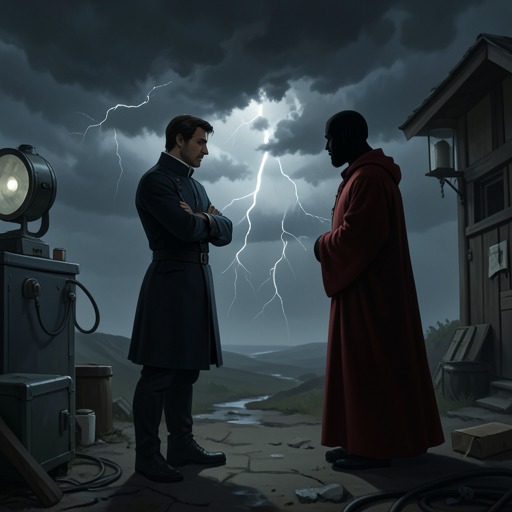
I ChingDarkening of the Light (Ming Î), Hexagram 36, depicts the pressure placed on an able and principled officer when a weak ruler rejects the service that might benefit the state. Its counsel is to recognize danger and maintain firm correctness: advancement gives way to caution, withdrawal, and the preservation of purpose. The commentary’s final image turns that political conflict into a stark contrast between the ruler who might have illuminated the realm and one who is hidden beneath the earth.
Definition and Central Counsel
The hexagram’s judgment says that, under the conditions it represents, it is advantageous to recognize the difficulty of the position and maintain firm correctness. Its name is glossed as “Intelligence Wounded”: intelligence is injured or repressed, not extinguished. The emphasis falls on clear recognition of danger and constancy in conduct rather than on an assurance that the surrounding political order will respond justly.
The commentary identifies the central figure as a good and intelligent minister or officer who continues in the service of his country despite occupying the throne beside a weak, unsympathetic sovereign. The officer’s task is to maintain his purpose under repression. In this reading, the hexagram is not simply a picture of misfortune: it distinguishes the ruler’s hostility from the officer’s capacity to remain committed to good service.
The Officer’s Movement Through the Lines
The first line pictures the officer at the outset of the ordeal as a bird flying with drooping wings. He considers going away, and the text allows for three days without eating; wherever he goes, people may speak derisively of him. The commentary explains that the wound comes at the very beginning of his action and is therefore slight, but enough to make forward movement unwise. His withdrawal does not mean that he has abandoned his good purpose: opposition follows him, while his intention remains intact.
The second line shifts from faltering flight to escape by means of a swift horse. Its subject is wounded in the left thigh but saves himself, and the line calls the outcome fortunate. The commentary reads this figure as a dutiful officer: the injury may hinder his movement without disabling him, and he finds a way to preserve himself and his purpose. The contrast with the first line is one of circumstance and response: the first counsels recognizing when to desist, while the second shows a hindered but successful escape.
The commentary also notes the fourth line’s account of escape from danger with little damage, while acknowledging that its symbolism is not fully understood. At the fifth line, the officer near the sovereign is associated with the count of Ki, a historical personage whose conduct provides the commentary’s ideal of service. These readings extend the hexagram beyond a single image of retreat: they present different positions close to danger and different ways an officer may endure it.
The Ruler and the Political Crisis
The sixth line gives the conflict its final reversal. The text describes a condition with no light, only obscurity: its subject first ascended to the sky and is destined to go into the earth. The commentary identifies this not with the loyal officer but with the ruler who opposes the intelligent service offered to him. Instead of becoming like the sun, enlightening all from the height of the sky, he ends as the sun hidden below the earth. The brightness that should have served the realm has been turned into an image of political failure.
The commentary says that the writer may have had the last king of Shang in mind. That association is reinforced by the book’s account of the wider political crisis under the Shang rulers. A declaration attributed to the son of King Wen describes a disorganized realm: lawbreaking among nobles and officers, violence among the people, uncertain punishment of criminals, and a dynasty sinking toward ruin. It also condemns the king’s contempt for virtue, neglect of instruction and law, abandonment of sacrifices, and preference for corrupt favorites. Against that background, the hexagram’s weak and unsympathetic sovereign is legible as a political figure, not merely an abstract obstacle to personal success.
Political Meaning and Interpretation
The commentary places Darkening of the Light among a set of hexagrams it reads through the responsibilities of rule and service. In its interpretation, an officer’s proper response to a bad political order is neither reckless advance nor surrender of principle: he recognizes the danger, withdraws or escapes when needed, and preserves his purpose. The ruler, by contrast, brings about his own darkening by resisting the intelligent service that could have benefited him and his country.
This historical reading belongs to the commentator’s reconstruction of the text, rather than to an explicit identification in the hexagram’s lines. More broadly, the book presents its hexagram essays as symbolically expressed treatments of moral, social, and political subjects, with line images interpreted in relation to the meaning of the whole figure. Darkening of the Light makes that method especially clear: a drooping-winged bird, a swift horse, and the sun hidden beneath the earth become successive measures of political danger, preservation, and decline.