King Shou of Shang
I ChingKing Shou of Shang is the tyrant whose misrule gives the book’s account of King Wen of Zhou’s study of the hexagrams its political urgency. He is portrayed not simply as a defeated monarch, but as a ruler whose contempt for virtue, abuse of power, and abandonment of public and ritual duties have brought his dynasty close to ruin. That portrayal makes the crisis of his reign the setting for the emergence of the Yijing’s text and its warnings about peril, security, carelessness, and overthrow.
Rule and Political Crisis
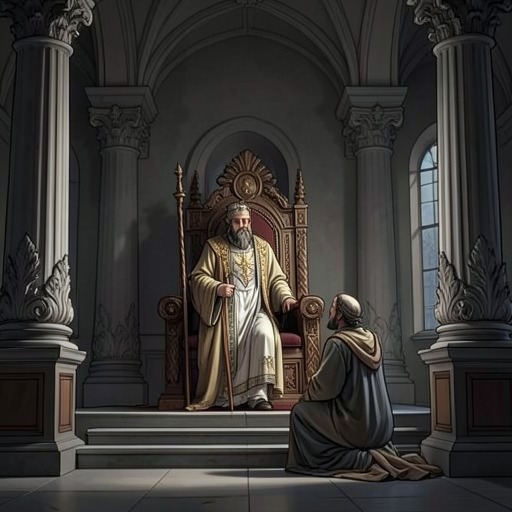
The account describes the Shang realm as disorganized and demoralized under King Shou. A brother of the reigning king is cited as lamenting that the dynasty could no longer govern the land: the founder’s achievements had been undone, lawlessness spread among both the people and officials, and there was no assurance that criminals would be caught. The description presents disorder as more than a failure of administration: nobles and officers imitate one another in violating the laws, while ordinary people commit violent outrages against one another. The dynasty’s condition is compared to a person trying to cross a great stream without finding either ford or bank, an image of a state deprived of a safe route forward.
The book attributes this national misery in substantial part to the monarch’s character and tyranny. In the declaration issued when King Wen’s son took the field against him, King Shou is accused of slighting virtue, surrendering to idleness and irreverence, and setting himself against both Heaven and the people. The accusation turns the case against the king into a moral and political one: his rule is condemned not only for its effects, but because it has broken the obligations on which legitimate rule depends.
Cruelty and Abandoned Duties
The charges against King Shou include cruelty toward people at a river and the killing of a rebuking relative, Pikan. A note explains that the king ordered the legs of people wading in a winter stream to be cut through so that he could observe how they endured the cold. It also identifies the “good man” in the declaration as Pikan, whose stern rebukes angered the king. These accounts illustrate the arbitrary exercise of royal power: people and even a close relative are treated as objects of the ruler’s caprice rather than as members of a community to be governed.
The king is also said to have entrusted honors and confidence to the villainous, driven away his instructors and guardians, and cast aside statutes and penal laws. The account thereby connects personal cruelty with a broader dismantling of government: those who might advise or restrain him are excluded, while legal standards lose force. His neglect reaches religious and ancestral obligations as well. The declaration accuses him of discontinuing sacrifices to Heaven and Earth and offerings in the ancestral temple, joining political disorder to a failure of ritual duty.
The source further reports that King Shou devised unusual contrivances to please his wife, Ta-ki. A note says their exact nature is not known, but records two instruments of torture associated with her: the Heater and the Roaster. The latter is described as a slippery copper pillar laid above a pit of burning charcoal, over which culprits were forced to walk. The detail is offered as an example of the king’s cruelty and of the perverse priorities attributed to his court; it does not make the devices a separate episode in the narrative.
King Wen, Imprisonment, and the Hexagrams
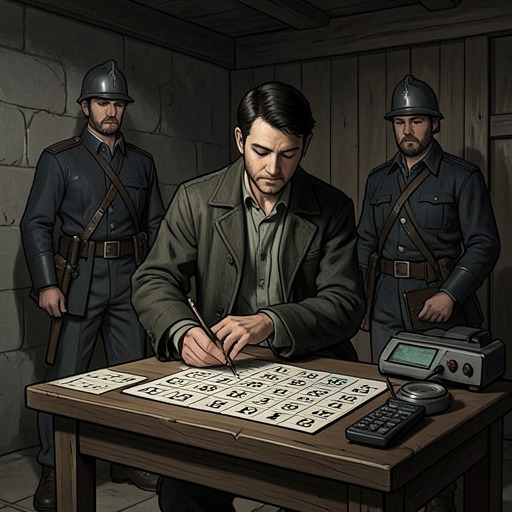
King Wen appears in sharp contrast to King Shou. As lord of the western principality of Zhou and a kind of viceroy over much of the realm, he is described as able in peace and war, wise, restrained, and admired by princes and people. They would have welcomed his attack on the tyrant, but he hesitated to risk the charge of disloyalty. King Shou’s jealous suspicion eventually led to King Wen’s imprisonment at Youli in 1143 BC, where he faced the possibility that an order for his death might arrive.
It was in this danger that King Wen occupied himself with the lineal figures. The book suggests that their study may also have seemed an innocent preoccupation to his keepers, but presents the decisive point as the work he made from them: he assigned the hexagrams meanings connected with nature, human society, and the actual or possible condition of the kingdom, then expressed those meanings through exhortation and warning. In the author’s interpretation, this was an effort to bring the follies of divination within the bounds of reason. King Shou’s tyranny thus supplies the immediate political circumstances for the account of King Wen’s work, while the figures become a means to think about peril and the possibility of security.
Downfall and Significance
The declaration against King Shou concludes that God will no longer bear with him and is sending his ruin. The account situates this judgment within the last age of the Yin dynasty, when the virtue of Zhou had reached its height and conflict between King Wen and the tyrant had intensified. It says the Yijing’s explanations express anxious apprehension and teach how peril may be turned into security, while easy carelessness leads to overthrow. King Shou’s reign therefore exemplifies the danger that the text’s warnings address: power without restraint produces disorder, and a ruler who abandons virtue, law, counsel, and ritual loses the grounds of authority.
The narrative does not develop King Shou’s inner life or give a detailed account of his defeat. Instead, it makes him the political antagonist in an argument about the origins and meaning of the text. His conduct explains why the period is represented as one of danger, while King Wen’s confinement gives the study of the figures its setting. In this structure, the tyrant’s significance lies in the contrast his rule creates: the collapse of a regime is set against the attempt to interpret crisis through warnings about judgment, restraint, and change.