Overthrow and Decline
I ChingOverthrow and Decline, the condition represented by Hexagram 23, describes a collapse that advances gradually through the structures of both household and polity. Its decisive counsel is restraint: when decay has gathered overwhelming force, movement in any direction is unwise; the one remaining firm line must wait for the political season to change.
Form and Meaning
The figure has five divided lines and one undivided line. The divided lines begin at the bottom and climb upward, making the last firm line prominent but isolated. The commentary connects this structure to the ninth month, when summer’s beauty has vanished and the year is poised to enter sterile winter. Seasonal decline gives the political image its rhythm: what has grown powerful can appear final, yet it belongs to a changing cycle.
The name Po signifies falling or causing to fall. It can describe decay in the natural world as well as overthrow in political life. In the hexagram’s political picture, small men have gradually displaced good and great men until only one remains. That last remnant is not advised to force an immediate reversal; the opposing power is too strong, and political conditions, like the seasons, eventually pass.
The Couch and the Advance of Harm
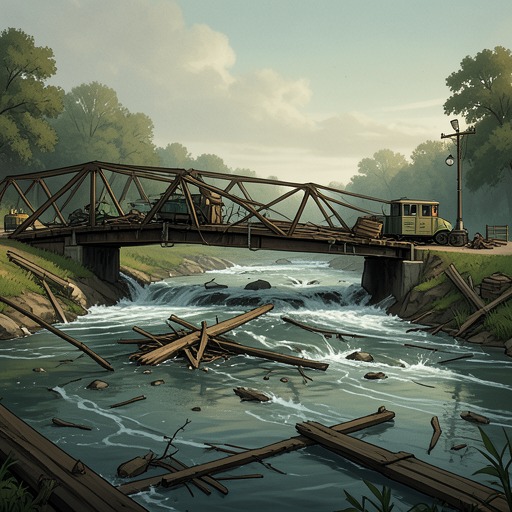
The line texts make the process of overthrow tangible through the image of a couch. The first divided line attacks its legs; the second reaches the frame. In each case the harm is directed toward destroying firm correctness, and each carries an evil outcome. The movement from legs to frame gives the decline a discernible progression: damage begins at the base and works inward, rather than arriving all at once.
The couch also supplies the image of an occupant under threat. Its ordinary supports become the first targets, and the commentary interprets the assault as an attempt to overthrow the occupant or at least to bring that overthrow about. The repeated warning about the destruction of firm correctness makes the political danger more than a change of rulers: the attack threatens the principle that would allow order to endure.
Restraint and the Possibility of Renewal
The general judgment says that, in the condition symbolized by the hexagram, it is not advantageous to make a movement in any direction. This is not an endorsement of decay, but a judgment about the balance of power within its season. Because the force working against the remaining good man is too strong, action cannot yet restore what has been lost. Waiting is therefore a disciplined response to a temporary but severe imbalance.
The upper line offers a deliberately double ending. Its subject is a great fruit that has not been eaten; the superior man finds the people again as a chariot carrying him, while the small men overthrow their own dwellings. The surviving fruit signals that not everything has been consumed by decline. The superior man’s relation to the people is also reversed from isolation to support: they carry him, whereas those who have advanced through destructive conduct bring down their own homes. The sequence joins political renewal to the consequences of conduct, ending not in the triumph of the destroyers but in the return of a sustaining bond between the worthy leader and the people.