The Small Man
I ChingThe Small Man is the commentary’s recurring figure for political disorder: an unprincipled force that gains ground gradually, displaces the good, and endangers firm correctness. Rather than treating his influence as an isolated threat, the text places it within cycles of decline and change, where the response depends on the moment—waiting, withdrawing, or acting to remove corruption.
Growth and Displacement
In Splitting Apart, the Small Man belongs to a pattern of decay that advances from the bottom upward. Five divided lines press against a single undivided line, and the commentary reads this imbalance politically: small men have gradually displaced good and great men until only one remains. The isolated superior man is advised to wait because the opposing power is too strong; political conditions, however, are not permanent, and a better change may soon emerge.
The image of seasonal decline gives that political warning a larger rhythm. Splitting Apart corresponds to the ninth month, when summer’s beauty has vanished and the year approaches sterile winter. The Small Man’s ascent is thus presented as both a social displacement and part of a cycle whose present dominance does not guarantee permanence.
Retreat Under Pressure
Retreat describes a related but distinct stage: the yin influence has established itself, represented by two weak lines in the hexagram of the sixth month. As small and unprincipled men increase in power, superior men must withdraw. The commentary treats withdrawal not as surrender or approval, but as a response required by the conditions of the time; maintaining firm correctness may arrest the threatened evil to a limited extent.
The counsel makes restraint strategic. Where the danger is already advancing, a superior man is not urged to force a confrontation regardless of circumstance. The political answer is to preserve what can be preserved while avoiding an action that would worsen the peril.
Removal of Corrupt Power
Breakthrough presents the conflict at a later and more decisive point. Its top divided line represents the last remnant of winter, soon to yield to the warm and bright days of summer. Politically, that line signifies a small or bad man—a feudal prince or high minister—whose power sustains a corrupt government or a dynasty nearing its end. The five undivided lines represent good order, or the succeeding dynasty.
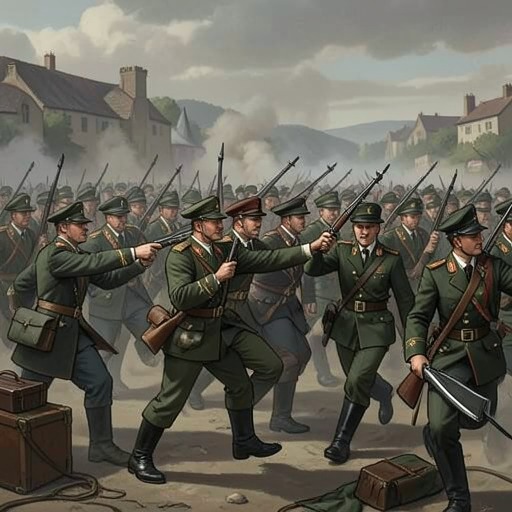
The commentary distinguishes the means of removal from mere military force. The task should be accomplished chiefly through character and the gathering of general sympathy. The criminal is to be denounced openly at court; the enterprise’s difficulty and danger must remain in view, and its adherents must understand that arms are taken up unwillingly. The contrast with Retreat is one of timing and political balance: when the corrupt power is too strong, waiting or withdrawal may be necessary; when the conditions for action arrive, removing it requires public legitimacy as well as resolve.
Political and Seasonal Meaning
Across the three hexagrams, The Small Man names more than an individual opponent. He represents the erosion of good order as unprincipled people gain influence, while the changing balance of yin and yang supplies a model for how that process may unfold and end. The associated responses are deliberately different: Splitting Apart counsels the remaining superior man to wait, Retreat makes withdrawal appropriate to an advancing threat, and Breakthrough describes the effort to displace corrupt power through character and shared support.
The cycle imagery prevents either complacency or rashness. Decline can become entrenched, but political ascendancy is not shown as final; seasonal change offers the prospect of renewal. The commentary’s emphasis is therefore on judging when resistance is premature, when withdrawal preserves the possibility of right action, and when the time has come to act against corruption.