
One Family’s Lost Lamb
Impure BloodThis flow follows the rescue and adoption of Olivie Djourescu as an image of chance survival and unstable belonging.
increasing Bearing strength in each event
 decreasing
Bearing strength in each eventdecreasingA Train to Deportation
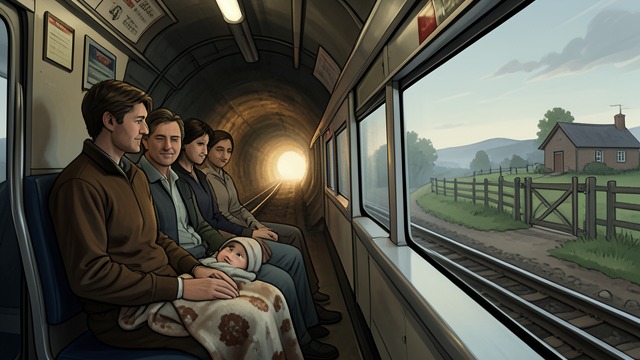
A Train to Deportation
A family under arrest
Adam Djourescu, Elena Djourescu, and their daughter are arrested and sent toward Drancy. Their journey takes place within a system that treats families as transportable units rather than individuals.
A narrow possibility
The rail line passes near the Groismont farm, where a child might escape from a sealed carriage. The possibility is improbable, but the historical record leaves a gap large enough for one life to have slipped through.
A Baby Exchanged
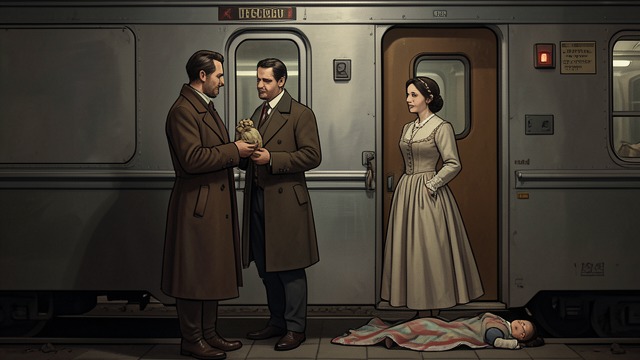
A Baby Exchanged
A desperate choice
Before the Gestapo arrive, Adam exchanges his living newborn son with a stillborn infant. He hopes the substitution will keep the child from being identified and deported with the family.
Protection at a cost
The baby survives, but the exchange makes his identity dependent on silence and forged family history. The act saves a life without saving the family that made it possible.
The Lost Little Lamb
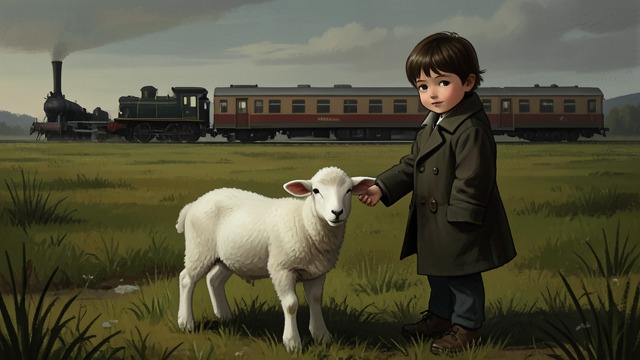
The Lost Little Lamb
A child reaches shelter
Olivie escapes the deportation transport and makes her way to the Groismont farm. The family takes her in rather than returning her to the authorities or treating her as a stranger.
A new beginning
Her adoptive mother later describes her as a lost little lamb who wandered into their lives. The phrase preserves a memory of rescue while leaving the circumstances of the escape painful and uncertain.
The Birthday That Remained
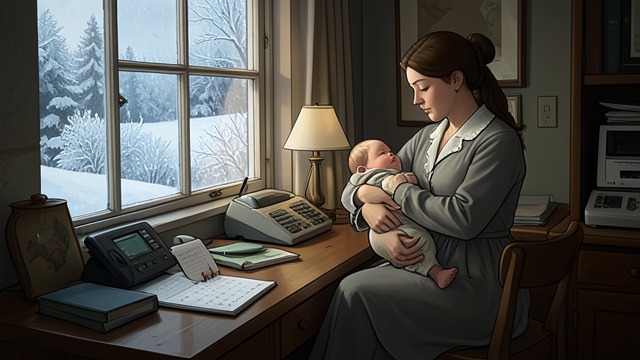
The Birthday That Remained
A date carried forward
The Groismonts register Corinne’s birth as 10 October 1940, preserving the date of her arrival with them rather than the date she was born. Their record turns rescue into a legal identity.
An inheritance of silence
The new family protects the child but does not tell her everything about her origin until later in life. Care and concealment are intertwined, complicating the meaning of her belonging.
A Life Revealed at Last
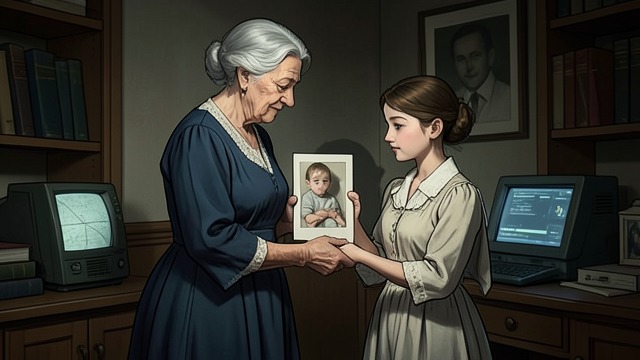
A Life Revealed at Last
Witness confirms the past
Albertine Laseige recognizes the grown woman as Olivie and recounts the exchange that saved Jean. The two children’s survival is finally connected to the same family’s last attempt to preserve life.
Rescue does not end trauma
The family history offers a moment of wonder, but it does not heal the neglect, confusion, and revenge that followed. The lost lamb image becomes both an account of salvation and a reminder of how fragile identity can be.
1943, before the family’s arrival at Drancy
1943, the day of the arrests
1943, after the deportation train passes Grandeville
Corinne’s childhood, revealed on 4 July
5 July, afternoon
