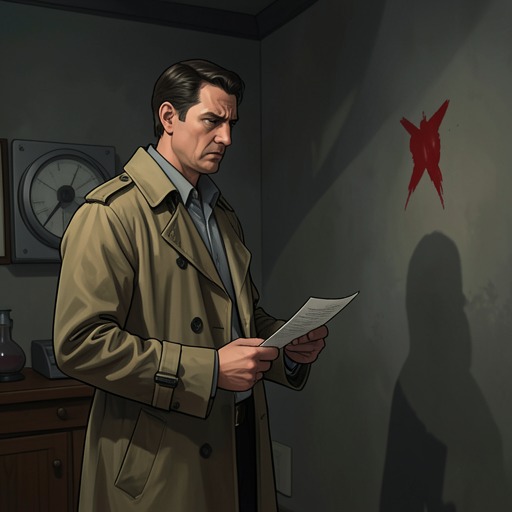
Albert Reboux
Impure BloodAlbert Reboux is the examining magistrate in the investigation, a senior judicial figure whose measured intervention tests the police’s account of the threat. At a meeting convened by Agnès Dantier, he accepts that the alleged threat may be a smokescreen but raises a wider possibility: its purpose could be to pull specialist forces into the region and leave other cities less protected. The suggestion extends the inquiry beyond the immediate scene, even as Agnès disputes how plausible such a strategy would be.
Judicial Role and Introduction
Agnès welcomes Reboux to the meeting alongside public prosecutor Jules Frènes, giving him the formal standing of an examining magistrate from the Palais de Justice. The greeting also establishes the meeting’s mixed institutional character: police commanders and investigators are considering the threat with judicial officials present. Reboux accepts the welcome with the hauteur that Darac associates with him, and Darac notices that Frènes seems irritated at receiving second billing.
Reboux’s authority is conveyed partly through his voice. Darac thinks of it as a voice made to pass judgement, though he finds the content of Reboux’s remarks less impressive. This distinction characterizes the magistrate through Darac’s perspective rather than through an independent assessment: Reboux carries institutional weight, but his manner does not automatically persuade the detective.
Assessment of the Threat
After Agnès presents her view of the local situation, she invites Reboux to give his assessment. He agrees with her smokescreen theory, then asks whether the perpetrators’ actual target might be elsewhere. If the threat brings specialist units into the Alpes-Maritimes area, he reasons, their availability in other places would diminish. He names Marseille, Lyon, and Paris as cities that could consequently face a major incident with inadequate police resources to support them.
Reboux acknowledges that he does not know the staffing levels of the units involved; his point is therefore a possibility to consider, not a demonstrated fact about the deployment. Agnès answers that the idea had already been raised at an earlier meeting, but questions the logic of the supposed diversion. Someone intent on drawing forces into the region, she argues, would issue a more potent threat. She also distinguishes the local police’s immediate responsibility from the possible vulnerability of another region. The exchange leaves Reboux’s hypothesis on the table while showing that the investigation’s participants do not treat every conceivable consequence as equally persuasive.
Place in the Investigation
Reboux remains part of the official chain of oversight as the case proceeds. When Granot rebukes Frènes over the handling of Mansoor Narooq, he says copies of the report are being sent to the Commissaire, Reboux, and Frènes. The detail situates Reboux among the authorities receiving the account of a potentially consequential police incident; it does not establish that he personally directed the encounter.
Later, a uniformed officer announces that Reboux has arrived to see Frènes. The brief entrance confirms his continuing presence in the case’s judicial orbit, although the scene does not specify what he and the prosecutor discuss. Across these appearances, Reboux’s function is less to solve the street-level mystery than to frame its institutional and strategic implications: he tests whether the apparent local threat might also be a means of reallocating police capacity elsewhere.