Caserne Auvare
Impure BloodCaserne Auvare is the police compound that anchors much of the investigation in Nice: a place where field evidence is converted into coordinated police action. Its barrack-like layout, offices, squad rooms, and meeting spaces form the practical infrastructure behind Darac and his colleagues’ changing cases, from the Rue Verbier killing to the search for the abducted Dantier family.
Setting and Layout
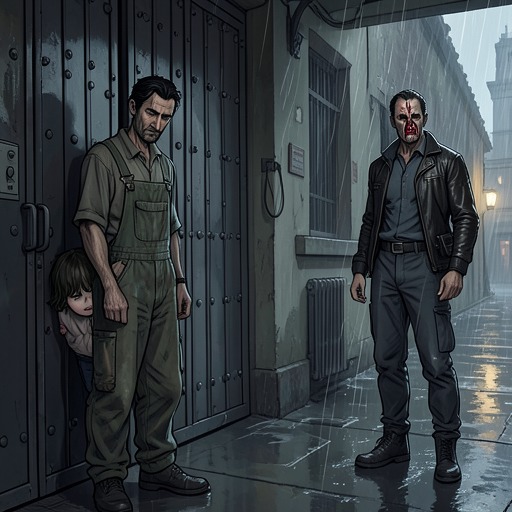
The compound’s severe appearance is conveyed through the perspective of Agnès, who approaches it from across the street. Thirteen two-storey, barrack-like buildings stand in strict parallel rows behind a perimeter wall; four similarly austere three-storey structures lie across the road. The setting is presented as a working police establishment rather than a civic monument: one young visitor compares it unfavorably with the Hotel Negresco, and Agnès privately appreciates the phrase cop shop.
That physical order also matters to the daily movement of the investigation. Officers return to the compound from crime scenes, pass through its buildings to reach specialist offices, and gather in rooms that shift from sleepy, report-strewn workspaces to crowded command centers as urgency rises. The compound’s routine entrances and internal rooms make it both an administrative base and a staging ground for sudden developments.
Evidence and Investigation
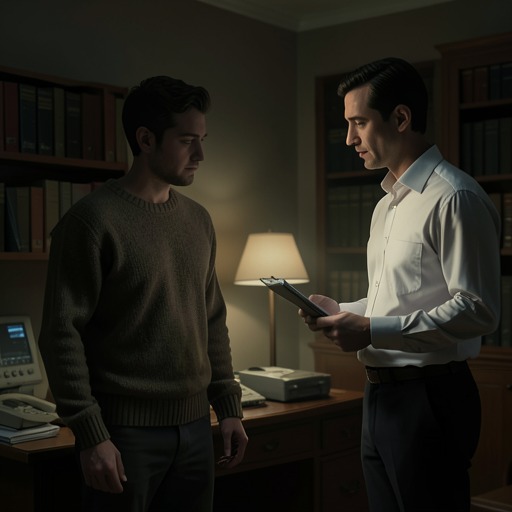
After the Rue Verbier prayer-service killing, Darac returns to Caserne Auvare and goes straight to the ground-floor office of Jean-Jacques Lartou Lartigue, the scene-of-crime officer. Lartigue has Rue Verbier CCTV footage ready. The recording does not cover the area outside the prayer room, but its marketplace view captures an elderly woman with a trolley; a second camera is expected to provide the corresponding later footage. The limitations of surveillance become part of the evidence rather than a reason to abandon it: investigators use the compound to review what the cameras do show and reconstruct what happened around their blind spots.
The compound is also the destination for suspects and the location of continuing inquiries. Darac radios for a progress report on Hamid Toulé and the lookalike cousins Slimane Bahtoum and Mansoor Narooq, whose statements and background checks are under review. Later, he instructs a suspect to get dressed so they can continue the interview at the Caserne. Max Perand brings Darac a note confirming his suspicion, another small piece of information delivered through the ordinary traffic of the office.
The place supports investigation beyond the initial killing. When Darac assembles his team to discuss the Emil Florian case, he lays out its two linked concerns: Florian’s murder and the possibility that he had been involved in drug-assisted rapes. Darac and Roland Granot have visited Manou Esquebel’s workplace and found a key like the one Florian had tried to discard, a key Esquebel had been anxious to keep them from seeking. The meeting at the Caserne turns that discovery into a shared investigative lead.
Command, Coordination, and Routine
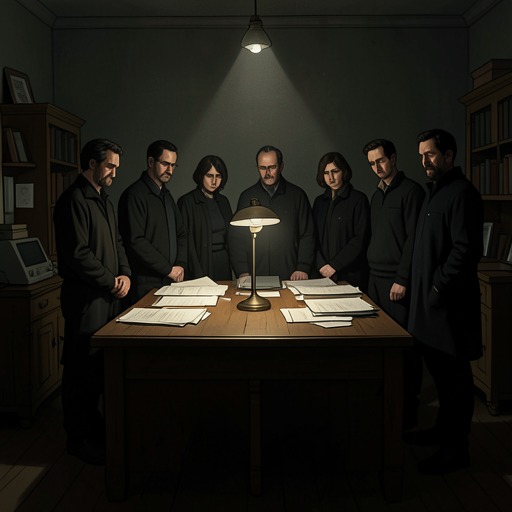
Caserne Auvare provides rooms in which the scale and structure of police work become visible. At one briefing, Agnès addresses a full room and welcomes the examining magistrate Albert Reboux, public prosecutor Jules Frènes, and GIPN chief Frédéric Anselme. The gathering brings investigators, judicial officials, and intervention command together under one roof, while their different positions and temperaments remain legible in the meeting’s formal arrangement.
The operational work is not confined to senior officers. A team of twenty clerical assistants and officers helps Perand and Flaco trace Mercedes van sales and hirings, steadily building a list. Their labor gives the search a collective, methodical dimension: telephone calls and directory entries become part of the same investigation as surveillance, interviews, and field operations.
The compound also registers the cost of that work in the rhythms of an ordinary shift. After a long day, Agnès climbs the steps, struggles twice with the entry buzzer, and asks the duty officer Béatrice to send an espresso to her office. The brief exchange places fatigue and routine alongside the pressure of the cases; police work here is sustained not only through dramatic confrontations but through repeated returns to the building and its everyday procedures.
From Base to Operational Hub
As the investigations intensify, Caserne Auvare becomes a command point for action extending across the city. During the search for Manou Esquebel, radio messages reach several vehicles at once: one unit follows the suspect, another is driven by Frankie Lejeune, and a third is led by Erica Flaco with uniformed officers. The teams’ positioning downtown reflects a working hypothesis that Esquebel will first go to the Peerless Taxis office to retrieve his hidden key. The compound’s personnel and communications thus connect the evidence assembled indoors with a distributed street operation.
Its rooms also absorb the sudden reversals of the case. After the kidnapping of Agnès and Vincent Dantier, Darac’s squad room changes from a tired, report-filled space into a crowded gathering of more than thirty officers and assistants. News that Darac has found a promising lead has drawn them in, and he prepares to check details before beginning the meeting. The change in the room’s occupancy makes the expansion of the search concrete: private clues become a coordinated effort involving a much larger group.
Caserne Auvare’s importance is therefore not merely that it recurs as an address. It is where disparate forms of evidence—CCTV images, a key, witness accounts, vehicle records, and field reports—are brought together, tested, and passed into action. From its offices and meeting rooms, the investigation moves back out into Nice; as the danger escalates, the same compound supplies the personnel and coordination needed to pursue the case toward rescue.