David Jarret
Impure BloodDavid Jarret is a police officer whose first appearance makes him seem like a courteous, capable young professional, while the later disclosures transform that introduction into a trail of clues. He is Jean Florian’s son and the grandson of Jews betrayed to the Nazis; he uses his position and that history to pursue a violent revenge that implicates Vincent Dantier, Agnès Dantier, and others. His arc turns on the collision between a concealed family past and the trust his public role allows him to command.
Identity and Introduction
Jarret enters the narrative at a formal briefing, among the members of a platform party introduced to Roland Granot. In his mid-to-late twenties, he appears less chiselled and more sensitive-eyed than the other young men around him. Granot expects that the thoughtful appearance will conceal a crushing handshake; Jarret’s grip proves the most vice-like of the three. The introduction establishes an immediate contrast between his perceptive, controlled look and the force he can exert physically.
His behaviour is not simply rough. When Granot introduces Vincent Dantier, Jarret seems to notice that a hard handshake could hurt the older man’s arthritic hand and instead shakes it with almost surgical care. The moment presents him as observant and capable of restraint, a socially intelligent officer who adjusts his manner to another person’s vulnerability. In retrospect, that polished attentiveness also shows how easily his conduct can invite trust.
At the briefing, Jarret speaks with confidence about the national police’s counterterrorism arrangements. When Yves Dauresse jokes that RAID has escaped Vincent’s notice because it was founded after his retirement, Jarret supplies the date he believes it was established and explains its relationship to the Gendarmerie’s specialist unit. The exchange places him within a professional culture of informed discussion and easy banter; nothing in the exchange openly marks him as an enemy of the people gathered there.
Clues and Access
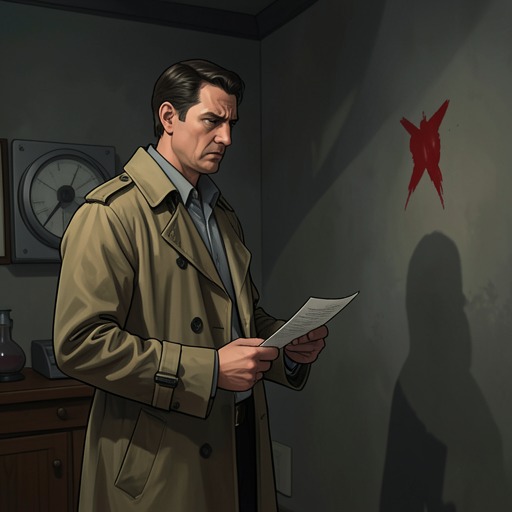
Jarret’s place in the briefing later becomes a crucial point in the investigation’s reconstruction. During an inventory of names, Granot recognizes him as David Henri Jarret and suddenly recalls that he met both Paul Darac and Vincent at the briefing, shaking their hands. Astrid’s flyer, whose image Granot has been trying to conceal with his hands, prompts the recognition. Granot realizes the drawing had been sitting on his desk for hours without leading him to Jarret. The revelation converts an ordinary introduction into evidence of access: Jarret had been in the room with the investigators and Vincent before suspicion reached him.
That access matters because the crimes depend on exploiting what the police can and cannot see. At Rue Verbier, the camera trained on the marketplace does not cover the area outside the prayer room itself. The footage can show the approach to the scene, but it leaves a significant gap around the place where the killing occurs. Separately, when investigators review surveillance of Agnès’s arrival at the lockup, they find unexplained image blips in the period when she was abducted. Darac deduces that the perpetrators used a photograph taken from the camera’s exact point of view and later held in front of its lens, briefly replacing the live view. The tactic exploits the camera rather than disabling it: continuous time tags remain intact, while the image conceals what is happening.
The investigation also reconstructs the street events through Marie Lacroix, who watched from a third-floor balcony opposite the Basilique. She saw Emil Florian join the prayer meeting, the old woman Delage strike him with her shopping trolley, and Emil bend forward as if in prayer without getting up again. Crucially, she also saw Emil arrive before the available CCTV footage began. Darac’s account places Armani on Jean Médecin and then in a Rue Verbier boutique, while Emil hides behind a Colonne Morris and later moves under cover of a crowd gathered around a living-statue performer. The case thus emerges from overlapping vantage points—balcony, street, and partial surveillance—rather than from any single complete record. This context shows the kind of evidentiary gaps the investigation must bridge; it does not, by itself, establish Jarret’s involvement in each individual act.
Family History and Motive
The explanation of Jarret’s history comes through Jean Florian, who remembers a letter from Emil revealing that their father had died and that Jean would receive nothing from the will. Emil’s explanation was cruelly direct: Jean was not a true Florian, because he had been born to different parents. He was a Jewish baby given away at birth. Emil’s mother had told him that Jean’s biological parents were Adam Djourescu and his wife Elena, who were betrayed by a fellow officer and sent to Auschwitz. The letter identified the informant only by his first name: Vincent.
That disclosure makes Vincent Dantier central to the family history behind the present violence. Jean understands that Vincent’s betrayal consigned his true parents to the gas chambers, but he also recognizes what he cannot recover: the letter never gave him the informant’s full identity. The revelation of Jarret’s connection to this history does not erase the distinction between the original crime and the crimes committed in response to it. Instead, it reveals how historical persecution and betrayal have been carried into the present through a family secret and a desire for redress.
Jean says that he passed Emil’s revelation to his son because David needed to know what had happened to his real grandparents. The information also helped Jean make sense of the way the Florian family had treated him after Emil arrived, and of how Jean himself had gone on to treat his wife and son. He does not blame his wife for leaving with David, taking back her maiden name, or hating him; she died before he could explain. With David, he believed there had still been a chance to make amends. Jean says he had wanted to win his son back, not avenge the original crime. His account therefore distinguishes his attempted reconciliation from the purpose Jarret has evidently chosen for himself.
Revelation and Violence
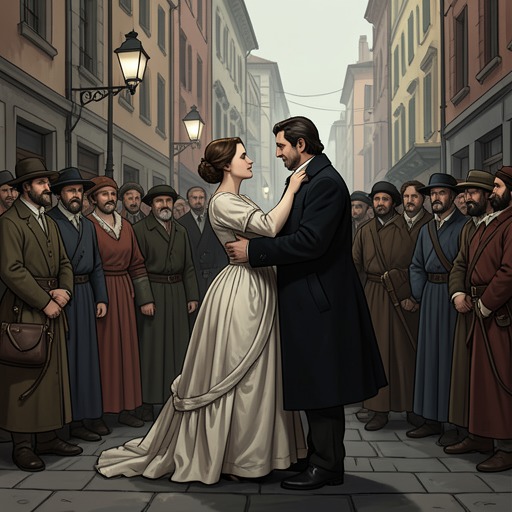
The police identification of David Henri Jarret turns the briefing-room acquaintance into the man behind the concealed threat. At the lockup, Agnès is being held and attacked; after the ceiling lights come on and the torches go out, she recognizes her assailant. Jarret smiles and identifies himself as a trusted police officer. Her immediate inability to connect him to what has happened underscores the force of the disguise: he is not an outsider whose presence would naturally raise suspicion, but someone whose role signifies protection and institutional trust.
Jarret’s revenge is made explicit in the language he uses against Agnès. As Delage washes her and complains that this is the thanks she receives, Jarret gets into the van and speaks of taking Agnès to a pleasure park, invoking the camps and Vincent’s role in sending his grandparents and aunt to Auschwitz in October 1943. He names forced labour, gassing, bodies, burning, smoke, and ashes. The historical crime is not merely an explanation supplied to the reader; Jarret deliberately brings it into the present as a threat, making Agnès hear the history through the perspective of its victim’s descendant and tormentor.
The scene exposes the difference between remembering persecution and pursuing justice. Jarret’s knowledge of his grandparents’ fate is real, and the account of their betrayal gives his anger a historical source. But he directs that anger at Agnès, a captive, and invokes the Nazi camps to terrorize her. The past becomes an instrument of present violence. His police identity intensifies the reversal: the officer who should be part of the machinery of protection is revealed as the person exploiting his trusted position while participating in the crimes.
Change and Narrative Significance
Jarret’s character is built around retrospective reinterpretation. His careful handshake with Vincent, his restraint toward Vincent’s arthritic hand, and his confident participation in police discussion initially register as signs of professional composure. Once the identification and captivity scenes reveal him as a trusted officer involved in the violence, those early details acquire a second meaning. His ability to read a situation and control his conduct is no longer merely reassuring; it helps explain how his public persona can conceal his purpose.
The surveillance investigation supplies a structural counterpart to this reversal. Investigators first confront images with gaps: a camera does not cover the prayer-room entrance, and another recording briefly presents a substituted view. They have to infer an unseen action from the limits of what the cameras captured. Jarret’s presence within the police circle creates a human version of that problem: the visible evidence of competence and familiarity is genuine, but incomplete. The eventual recognition depends not on a single spectacular clue but on connecting the briefing, the image on Astrid’s flyer, the names read aloud, and the family history revealed through Jean.
The ending of the supplied evidence leaves Jarret’s confrontation unresolved. Darac sees water seeping from beneath the lockup’s roller door and remembers Astrid’s thirty seconds. Though regulations require him to call for backup and wait, he drives away, turns, and smashes his Peugeot through the door. Inside, he sees a hose running from the van’s tailpipe and understands that there is no time to prepare: he must disconnect it and find Jarret. The sequence makes Jarret’s revenge immediately dangerous to the captives, but the available account stops at Darac’s forced entry rather than confirming Jarret’s final fate.