Jules Frènes
Impure BloodJules Frènes, the public prosecutor overseeing a politically sensitive investigation, is both its institutional gatekeeper and a persistent source of friction for Captain Paul Darac and the team. He calls for Darac’s removal, insists on careful procedure where Muslim suspects are concerned, and contests the investigative team’s assessment of threats. His interventions reveal a prosecutor attentive to public optics and authority as well as legal process, though the evidence leaves his motives open to competing readings.
Identity and Introduction
Frènes appears at the investigation’s scene as the public prosecutor who has green-lighted the inquiry. The precautions surrounding it—crash barriers and a riot squad—are understood as a public display that the authorities are committing every resource to a sensitive matter. With spectators gathered on the opposite pavement and forensic personnel outside the prayer room, the investigation is already unfolding under public scrutiny. Frènes’s position places him at the intersection of legal oversight, policing, and the need to manage that scrutiny.
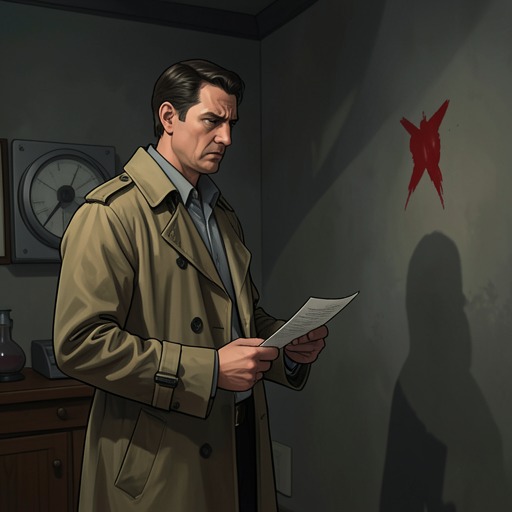
His physical presence is presented through a sharply comic image: outside the prayer room, he paces while speaking on his mobile, repeatedly stabbing the air with a finger as if laying down the law. The description makes his official authority look almost theatrical. That quality persists when he later addresses Darac: Frènes is not merely a distant legal presence but an assertive participant who seeks to shape the investigation’s leadership and public meaning.
Authority and Conflict with Darac
Frènes wants Agnès to lead the investigation and has already conveyed that preference to the examining magistrate. Darac’s response is initially to treat the decision as an uncomplicated change in command and to suggest getting on with the case. But the restriction goes further: Frènes does not want Darac anywhere near the investigation. That exclusion establishes the conflict as both procedural and personal, even though the evidence does not specify the full reasoning behind it.
When Darac asks why he is being removed, Frènes turns the exchange toward the captain’s attitude to religion. He accuses Darac of showing no tolerance toward any faith or creed, while Darac calls the prosecutor hypocritical and asks again for his reason. The confrontation places the investigation’s treatment of a religious community under scrutiny, but it also shows Frènes using a public moral argument in a direct dispute with a particular officer. The exchange does not settle whether his charge is a principled objection, a tactical justification, or both.
Frènes makes the consequences of noncompliance explicit. If a suspect from the community proves guilty of murder, he tells Darac to do everything by the book; otherwise, Frènes will apply for the captain’s suspension. He adds that Darac must remain careful even if the dead man turns out not to have been Muslim. The warning thus extends beyond the identity of the victim: Frènes insists that the handling of any Muslim suspect must withstand procedural scrutiny. His focus on the record and the possibility of suspension makes legal propriety both a safeguard and a lever of authority.
Oversight and Public Scrutiny
At a later briefing, Agnès welcomes Frènes and examining magistrate Albert Reboux as representatives of the Palais de Justice, alongside the GIPN chief, Frédéric Anselme. Frènes appears irritated that Agnès greets the others before him. The small gesture reinforces his sensitivity to rank and precedence, themes already present in his effort to control who leads the investigation.
The meeting concerns findings Agnès has been asked to pass on after attending a session in Monaco. She explains that Commandant Georges Lanvalle had exerted pressure to bring her in, describing her arm as twisted. Frènes immediately writes down her word choice with the satisfaction of someone recording an opponent’s damaging move. Agnès notices and stresses that she said twisted, not shoved, because the distinction might matter later. Their exchange shows how quickly operational decisions and even the wording used to describe them can acquire evidentiary or political significance in Frènes’s presence.
When Agnès argues that a threat against the Tour de France is unlikely to persuade a group connected with Abdel Asiz, Frènes challenges the reasoning. He objects that it risks treating Muslims in Nice as a single-minded community and counters that extremists could exist within it. Agnès answers that this is where the DCRI intelligence she has mentioned becomes relevant. Frènes’s challenge therefore has two edges: it warns against collective assumptions while also insisting that the possibility of extremism not be dismissed. The scene complicates his earlier accusations against Darac, presenting him as alert to prejudice but also willing to press a threat interpretation.
Disputed Threat and Continuing Conflict
After the meeting breaks up, Frènes goes directly to Darac and asks how Mansoor Narooq, a suspect in Darac’s custody, came to be found in a twisted heap beneath the captain’s window. He emphasizes that Narooq is a genuine Muslim, returning the dispute to the treatment and identity of suspects. The question is confrontational rather than detached: Frènes approaches Darac as someone who must account for an incident involving a person under his charge.
Later, Frènes examines a message laid out for him by Raul Ormans. He calls it a non-credible threat and stresses that those who had assessed it had been certain. He then points the accusation toward Lanvalle, declaring that the commandant will have something to answer for and that he himself will address the matter. His response echoes the meeting’s concern with who made decisions, what was recorded, and whether the assessment can be defended. It also shifts the friction beyond Darac: Frènes is prepared to confront another senior figure when a threat judgment appears to have failed.
Character and Narrative Role
Frènes’s defining pattern is the union of legal oversight with an appetite for confrontation. He invokes tolerance and due process, warns that an investigation must be conducted by the book, and resists sweeping assumptions about Muslims; at the same time, he maneuvers over leadership, reacts sharply to perceived slights, and uses the prospect of suspension to enforce his demands. Those actions give his authority a double aspect: it can restrain investigative misconduct, yet it can also become pressure exerted through institutional power.
The evidence does not resolve Frènes into either a neutral guardian of procedure or a purely self-interested antagonist. Instead, his interventions repeatedly make the investigation answerable—to public perception at the scene, to exact wording in a briefing, to the treatment of Muslim suspects, and to the judgment that a threat is credible or not. His role is to keep those questions in conflict, ensuring that the case is not only about what happened but also about who has the authority to define it and how that authority will be held to account.