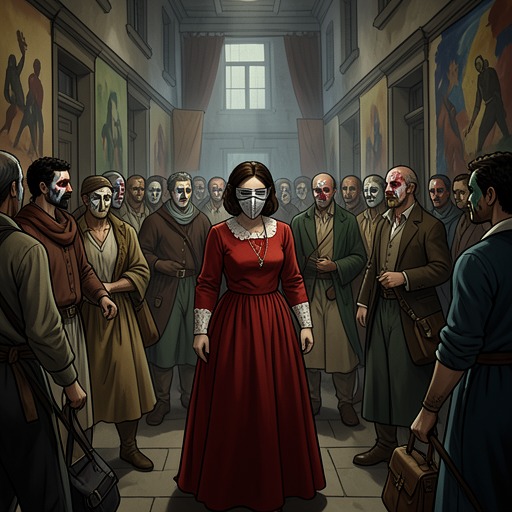
Police personnel identification photo collection
Impure BloodThe Police personnel identification photo collection is a set of police identification photographs, including names, that Manou says he copied from a man he met on the Ajaccio ferry. Its significance lies less in its physical form than in the access it represents: the photographs let an outsider identify police personnel and helped Manou recognize Captain Tardelli despite Tardelli’s visit under another guise. The account points Darac toward a possible insider who supplied the material, opening an inquiry into compromised police records.
Discovery in the Interrogation
The collection comes to light when Manou lets slip that he knows Tardelli, who had visited him the previous night posing as a prison liaison officer. Darac immediately asks how Manou knows what the captain looks like and knows his name. Manou’s first response is a pause: the air conditioner clatters, and he appears to reconsider the performance he has been putting on. He then offers an explanation that Darac finds plausible.
Manou says that a man he had met had photographs of the Narc and Cock squads, a complete set with names, as well as images of a couple of other people who worked at the police station. He adds that the collection did not include Darac or his “little ferrety friend,” implying that he has examined it closely enough to recognize some officers and notice who is absent. The photographs therefore are not just an abstract security concern: they explain how Manou could identify Tardelli, and they suggest that police identities had become available outside official channels.
How Manou Obtained the Images
Manou describes the source as a casual sexual partner he met on the Ajaccio ferry. He says he came across the photographs while going through the man’s belongings as he slept, then took pictures of them on his own phone because he thought they might be useful. The episode is presented as opportunistic acquisition: Manou does not claim to have commissioned the collection or to know how the man first obtained it.
When Darac asks how the man came by the photographs, Manou says he never asked. He instead proposes that someone inside the police had accepted a bribe. Darac considers that explanation likely, while keeping the original breach unresolved: as far as he knows, police records have not been broken into, and a hacker is one possibility, but not the only one. The distinction matters. Manou’s possession of copied images is established by his account; the route by which the source acquired the official photographs remains an inference requiring investigation.
Security Breach and Consequences
The collection changes the interrogation from a question of Manou’s knowledge into a question of institutional security. Darac recognizes that the photographs could have come from a technical intrusion, but Manou’s suggestion of a backhander raises the possibility that an employee misused access. Darac concludes that an inquiry will have to be launched, adding another investigation to an already burdened case.
The set also reveals the practical risk of identifiable police information circulating beyond the force. Manou has used it to connect a disguised visitor with a named captain, demonstrating that the images can undermine concealment and expose officers to recognition. The evidence does not establish who originally removed or copied the photographs, whether a bribe was in fact paid, or what further use Manou intended to make of them. Its decisive effect is to turn a collection of images into a lead about a possible leak—and to make the integrity of the police’s own records part of the investigation.