Sons and Daughters of the Just Cause ultimatum
Impure BloodThe Sons and Daughters of the Just Cause ultimatum is a fabricated threat directed at the Tour de France organising committee, warning that the race’s passage through Nice would bring a “bloody harvest” unless five demands were met. Presented as a grave security crisis, it becomes evidence of a likely false threat: Commandant Lanvalle points out that one named detainee is fictitious and that no organisation of the stated name is known. The document’s theatrical form and implausible demands turn its apparent menace into a clue about the crisis surrounding the race and a planned mosque in Nice.
Form and Delivery
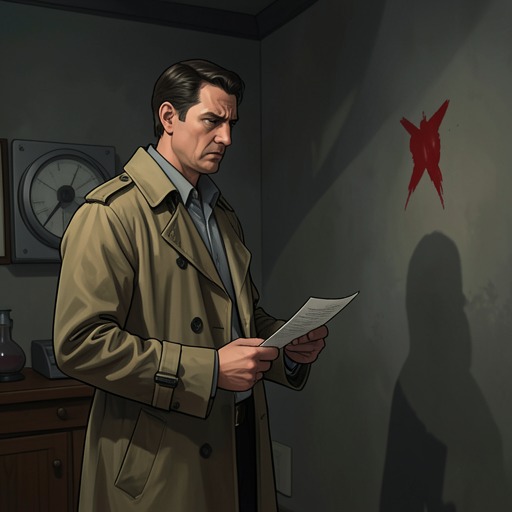
The ultimatum is presented as a sheet of A4 paper bearing text assembled from letters cut out of a newspaper. Commandant Lanvalle holds it up before a silent hall, identifying it as a message received less than two hours earlier. Its cut-and-paste construction gives the threat the appearance of an anonymous ransom note rather than a communication bearing an identifiable author or organisational signature.
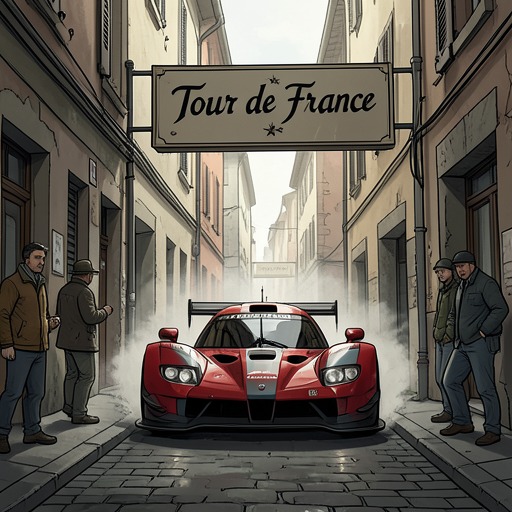
The message is addressed to the Tour de France organising committee. It warns that riders will pass en masse through Nice in two days and threatens a “bloody harvest” in the city if the demands are not met. The compressed deadline makes the warning immediately consequential: the race is approaching, and the alleged danger is tied to its route through Nice.
The Five Demands
Lanvalle reads out five demands. The first two call for France to sever diplomatic ties with Israel and impose blanket trade sanctions against it. The third demands the release from the United States detention facility at Guantanamo Bay of a man named Meier Al Zatdin. The fourth calls for a dedicated mosque to be established in Nice, while the fifth demands that restrictions on wearing hijab in French society, including schools, be relaxed immediately.
The list combines international political claims with issues directly present in the local setting: a mosque project in Nice and the acceptability of Muslim dress. At the announcement, Vincent Dantier remarks that the mosque demand may be what the threat is really about. Lanvalle acknowledges that others share this suspicion, while cautioning the audience not to settle on that explanation prematurely. The contrast between the demands that seem remote and those tied to current local controversies becomes central to assessing the message.
Credibility Under Examination
Lanvalle separates the demands from the question of whether the ultimatum is credible at all. He presents the security response as dependent on that assessment and says that the threat should not be taken at face value. The announcement therefore shifts from the document’s alarming language to the evidence that might authenticate its supposed authors.
The demand concerning Meier Al Zatdin provides the most decisive test. No one in the hall recognises the name. Lanvalle then states that, to the authorities’ knowledge, no such person exists anywhere, even as enquiries continue. This discovery turns a specific demand into evidence against the threat’s credibility: the document invokes a detainee who cannot be found because he is not a real person.
Lanvalle also says that no organisation called the Sons and Daughters of the Just Cause is known to exist, and that no affiliated code name has been used. The message’s chosen name thus supplies no corroborating organisational identity. Its claim to speak for a defined group is unsupported by what the authorities know.
The Threat’s Political and Narrative Significance
Lanvalle distinguishes the demands’ apparent relevance from their plausibility. He describes severing relations with Israel and imposing sanctions as unrealistic and unrealisable. By contrast, he recognises that the questions of Muslim dress and a first mosque for Nice concern current issues. Their topicality does not establish who wrote the threat or what its actual purpose is; it leaves open the possibility that a false terrorist claim is exploiting a live local controversy.
The cut-out letters reinforce that uncertainty. Lanvalle compares the construction to a ransom note from a fictional television crime series, prompting laughter as tension in the hall begins to ease. The response marks a tonal reversal: the ultimatum had silenced the room, but scrutiny of its theatrical form and false identity makes it appear less authoritative. The document remains a threat under examination, not proof that an identifiable terrorist organisation exists or that the promised attack will occur.