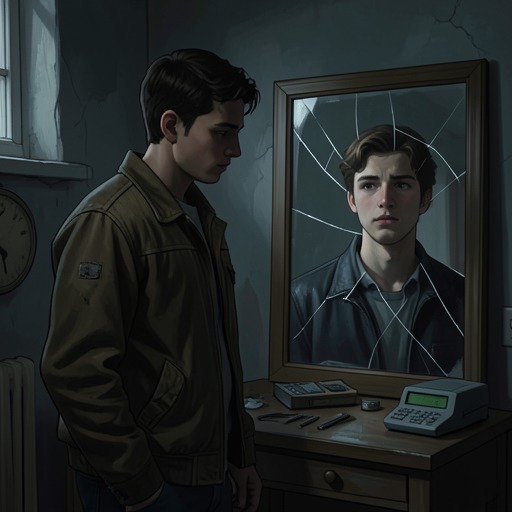
The Intergenerational Cycle of Emotional Neglect
Impure BloodThe Intergenerational Cycle of Emotional Neglect links Jean’s childhood rejection by the Florian family to the way he later treats his own wife and son. The pattern is not presented as an excuse for the harm Jean causes, but as its history: once he becomes the neglected parent, the injuries he received are repeated in the next generation, until learning the truth about his origins gives him a chance to seek reconciliation with David.
Jean’s Place in the Florian Family
Louise Florian eventually bore a son who survived, but his arrival followed years of heartache. Emil came along seven or eight years later. Before then, Jean had been a lovely child: cheerful, helpful, and always ready to run errands. One remembered image catches his childhood vitality in motion, tearing off on his bicycle. Yet after Emil’s birth, Jean seemed to cease to matter to the Florians. Though he was their biological child, their attention and indulgence went to Emil.
The contrast between the boys is sharply drawn. Emil could perform sweetness, but beneath the appearance was a clever, cowardly child who pulled the wings off butterflies when no one was watching. His parents’ indulgence is described as having spoiled him. Jean, by contrast, was the child made to feel unwanted. The household’s injustice lies not in a lack of biological connection to Jean, but in the way he was displaced and neglected once a favored child arrived.
Neglect and Jean’s Flight
A recollection of Jean’s development describes a gradual escalation. He began with naughtiness, moved into more extreme attention-seeking, and, as the situation at home deteriorated, sought escape. His bicycle rides changed from ordinary trips to the shops into absences lasting days. At sixteen, as soon as he was able to leave home, he did so; that same summer, he cycled the entire route of the Tour de France. The journey is presented as more than adolescent adventure: it is the concrete form his flight from neglect took.
The consequences of that childhood are made visible again in the family’s later estrangement. Around 1961 or 1962, Louise encountered Jean’s past in the form of news from Cours Saleya: Jean had never written to any of the Florians after leaving home. His silence marks the lasting break between the rejected child and the family that had failed to make him feel wanted. It also anticipates the difficulty of his later efforts to restore a bond with his own son.
The Pattern Repeated in Jean’s Family
Years later, Emil’s letter to Jean reveals that their parents have died and tells Jean not to expect any share of the inheritance. Its cruelty is personal and deliberate: Emil says Jean is not a true Florian, claims to know the identities of his real parents, and reveals that Jean was a Jewish baby given away at birth. The letter makes Jean’s exclusion from the Florian family more than a matter of unequal affection. It discloses the hidden history of his origins and the wartime betrayal that separated him from his birth family.
Jean’s reaction to this revelation is bound up with his own conduct as a parent. He recognizes that the Florians’ treatment of him after Emil’s arrival helps explain why he went on to treat his own wife and son so badly. The novel establishes a causal connection between the two generations without erasing Jean’s responsibility: what happened to him illuminates the pattern, but does not undo the injury he passed on.
David and the Chance of Redemption
Jean never blamed his wife for leaving him and taking David, nor for returning to her maiden name, Jarret. He did not blame them for hating him, either. By the time he understood what he wanted to explain, his wife had been dead for years, and the chance to speak with her had passed. David, the son who had disowned him, remained the one person with whom Jean believed he might still make amends.
Jean did not seek revenge for the original crime that had destroyed his birth family; he wanted his son back. He therefore passed Emil’s revelation on to David, believing the boy needed to know what had happened to his true grandparents. The decision serves two purposes at once: it explains Jean’s history and the source of the family pattern, while placing painful knowledge in David’s hands. Jean does get David back by telling him, but the same disclosure may have lost him forever. The cycle’s ending is therefore unresolved: understanding the neglect does not guarantee repair, and the truth that opens a path toward reconciliation may also deepen the separation.