The Tour de France as a National Spectacle
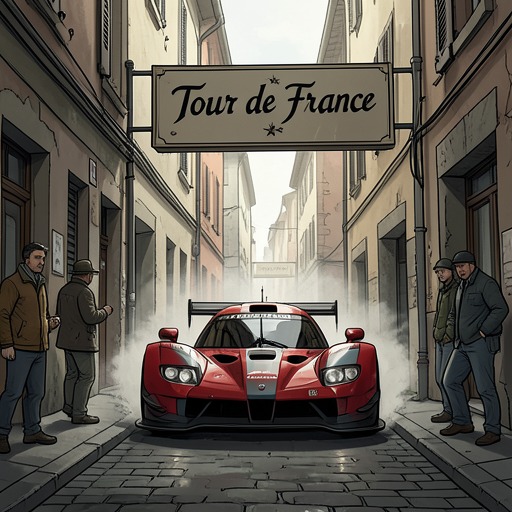
Impure BloodThe Tour de France as a National Spectacle is both a mass sporting event and a powerful symbol of French national life. In the novel, that double status has practical consequences: the race attracts hundreds of thousands of spectators, mobilizes exceptional security resources, and becomes a test of whether a supposed terrorist threat makes sense as criminal strategy.
A National Emblem and a Political Calculation
The Tour is described as perhaps the most sacred icon of national life. That language gives the race a significance far beyond its sporting contest: an attack or threat directed at it would be understood as an assault on a shared national spectacle. Yet its symbolic weight does not automatically make it a useful target for those seeking political advantage. In a discussion of the shifting balance at the Mairie over the proposed mosque, the possibility that people linked to Imam Asiz might threaten to desecrate the Tour is treated as unlikely to win support. The reasoning is that the race’s national standing would make such a threat counterproductive, rather than a persuasive way to tip the local debate.
The political argument also exposes the danger of treating a whole community as a single actor. When Frènes challenges the assumption that Muslims in Nice would share one response or belief, the possibility of extremists is raised without making that possibility representative of the community. The Tour’s status is therefore part of a wider dispute over how a public threat might be interpreted: its symbolic reach is national, but suspicion and political consequences fall upon local people.
Why the Threat Would Not Make a Useful Smokescreen
Agnès rejects the idea that a terrorist threat on the day the Tour reaches town would conveniently distract police from a major crime. The event would bring ten times the usual number of forces into the area, and a threat would attract still more. Even if many officers were assigned to the route, they would remain nearby and available for deployment. The race’s security footprint, rather than providing cover, would increase the risk to anyone planning a serious operation.
Her example is deliberately concrete: a criminal intending to rob the main branch of Crédit d’Azur would not announce a terrorist threat beforehand. Petty theft and pickpocketing might flourish amid the crowds, but that is a different scale of crime from the major operation under discussion. The distinction lets the investigation separate opportunistic offences from a planned high-stakes job, and it makes the supposed smokescreen theory appear strategically self-defeating.
The Opening Stage in Monaco
On Saturday 4 July, the opening stage brings the Tour into Monaco. The account contrasts its expected audience with the already substantial crowds for the Formula One Grand Prix: 100,000 people attend that annual event, while twice as many are expected for the Tour’s opening. The race begins with a 15-kilometre individual time trial, not the 182-kilometre second day that many spectators regard as the point when the competition properly gets under way. But the shorter trial still marks the Tour’s start and opens three weeks of anticipated drama, fun, and possible scandal.
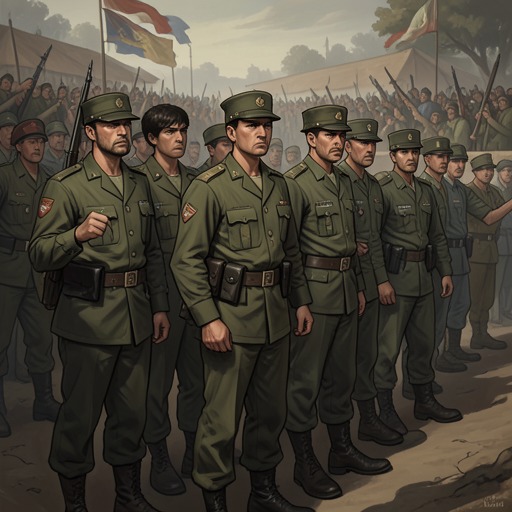
The time trial also alters the working day. Riders leave individually at timed intervals, and the first is not scheduled to depart until 2 p.m., hours later than a normal stage, when the field sets off together. That delay does not change the early routine of the Garde Républicaine motorcycle squadron assigned to the Tour: all forty-five officers have showered and eaten breakfast by 7.30 a.m. Each begins with a motorcycle maintenance check, whether the day’s route is 15 or 215 kilometres. On the circular course, the absence of a peloton makes the work seem undemanding, and banter in the locker room sustains an upbeat mood; the officers expect more exciting days ahead.
Scale, Security, and Spectacle
The scale of the race is rendered through a sharp numerical reversal. Asked to estimate the audience, one officer first answers eighty and then revises the figure to at least 300,000. Dauresse corrects him with the larger forecast of 370 million. Lascaux involuntarily revs his motorcycle at the revelation, then remarks that the spectators will be watching the riders rather than the police. The exchange turns an abstract measure of mass attention into a comic moment of professional unease: the Tour’s public gaze is so immense that even its security detail can feel incidental beneath it.
That contrast binds the event’s celebratory and operational dimensions. For spectators, the Tour means the beginning of a familiar annual drama; for officers, it means preparation, route duties, and the presence of a greatly enlarged force. For investigators, the same concentration of people and resources changes the logic of crime. The race is not merely a backdrop to the plot: its national prestige and logistical footprint shape what threats can plausibly achieve.