Counterculture era of the 1960s and 1970s
Inherent ViceThe Counterculture era of the 1960s and 1970s forms the social atmosphere against which the novel’s California is both searching for new forms of liberation and absorbing them into systems of care, commerce, and control. Chryskylodon Institute advertises harmony and compassion for people under the strain of the period, while its growth and clientele expose the unequal, sometimes predatory conditions beneath that promise. Doc’s unease about becoming like Bigfoot further places countercultural visions of expanded perception beside the police and political structures that seek to contain them.
Crisis and Alternative Care
A brochure for Chryskylodon describes the institute as a place in the Ojai Valley whose name derives from an ancient Indian word for serenity. It promises silence, harmony with the Earth, and unconditional compassion for people emotionally at risk from the unprecedented stressfulness of life in the sixties and seventies. The language gives the period a specific institutional setting: alternative spirituality and therapeutic care are offered not as abstract ideals but as a response to a crisis of mental health.
The surrounding conversation undercuts the brochure’s assurance. One speaker calls Chryskylodon a high-rent loony bin, while Doc has encountered the unfamiliar name in a photograph at Sloane’s house and copies the institute’s telephone number. Its brochure imagery is uninformative, and the institute’s polished claims coexist with suspicion about what its services amount to. The tension between advertised compassion and uncertain practice anticipates the wider ambiguity of private care in the era.
Privatization and the Market for Youth
The account explicitly connects the rise of private facilities to Governor Reagan’s shutdown of most state mental institutions. As public provision contracts, the private sector tries to fill the gap, and Chryskylodon becomes a routine resource for California child-rearing. The transition makes the institute more than a countercultural refuge: it is also part of a market that takes on functions once supplied by public institutions.
The Fenways use Chryskylodon for Japonica on what amounts to a maintenance-contract basis, sending her in and out according to their own changing emotional states. Their reliance reveals how private treatment can become an adjustable service within affluent family life. The period’s strain is not confined to those seeking help; the adults responsible for care are themselves portrayed as emotionally intense and often incoherent.
Chryskylodon also draws discreet benefactors, generally middle-aged men and sometimes women, whose attention is directed toward young people experiencing mental disturbance. The institute’s appeal is promoted through an invitation that packages countercultural youth, drug use, and discretion as attractions. This darker clientele sits uneasily beside the brochure’s promise of compassion. The contrast shows how the language and aesthetics of the Love Generation can be used not only to offer care but also to market access to the vulnerable.
Time, Perception, and Policing
The period is marked by a struggle over the meaning of adulthood and the passage of time. Around 1970, the account describes people with the means to do so as participating in a broad denial of aging. Against a city devoted to illusory products, Japonica perceives people poised above its boulevards, recognizing one another across distance and years. Her vision turns the city’s mesas into a countercultural vantage point, where escape from ordinary limits appears possible even as it remains uncertain and private.
Doc’s reflections offer a more grounded measure of the same conflict. He remembers having worried that he might become like Bigfoot: a diligent police officer who follows leads but remains closed to the revelations that others associate with the regional dream of enlightenment. The people Doc encounters speak of their experiences, but their talk has often left him outside the promise of insight. The opposition is not simply between police and counterculture; it is between procedural knowledge and a world in which perception itself seems to be changing.
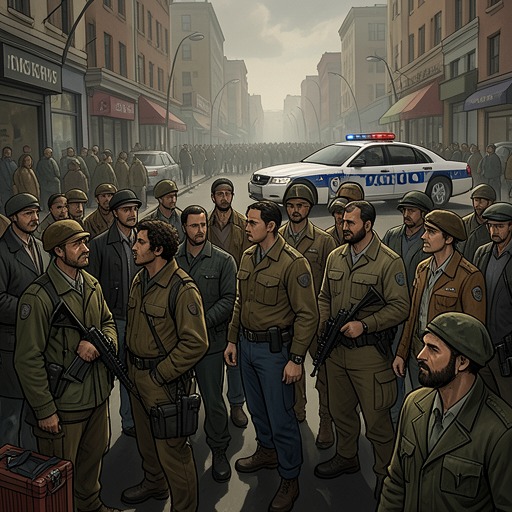
That opposition sharpens when Art Tweedle tells Doc of Bigfoot’s probable connection to the LAPD’s private vigilante force and possibly to the Channel View Estates raid. Doc goes to Parker Center carrying a new suspicion about the institution he once feared becoming part of. His encounter with the era’s countercultural ideal is therefore inseparable from a question of power: visions of enlightenment circulate alongside policing, surveillance, and political violence, rather than replacing them.