Coy Harlingen
Inherent ViceCoy Harlingen’s apparent heroin overdose is the false ending around which his life as a musician, informant, and absent husband is organized. A tenor saxophonist for The Boards, he is declared dead, then reappears under an assumed identity and in the service of antisubversive organizations. The work offers him a sense of being wanted, but its demands keep him from Hope and their daughter Amethyst. His eventual return to music and family does not erase the time lost; it gives him the chance to live beyond the staged death that began his disappearance.
Identity and Background
Before his supposed death, Coy played tenor saxophone with The Boards, a surf band active since the early 1960s. The group had become known as a pioneer of electric surf music and later described its increasingly dissonant sound as surfadelic. Coy’s role was distinctive: he could add improvised saxophone harmonies to the band’s material, using a tenor or sometimes an alto saxophone. His musical identity persists through the plot even when he is absent: people recognize him as a player, and Doc later finds him performing in public.
Hope, Coy’s wife, tells Doc that Coy died of a heroin overdose a few months earlier. The circumstances trouble her: she believes Coy would not have taken the same amount without checking it, and suspects that someone deliberately switched the heroin to a more lethal supply. His dealer, known as El Drano, insists that the drug was ordinary local heroin. The uncertainty around the alleged overdose becomes essential to the story: what appears to be a death caused by drugs is instead a carefully arranged disappearance.
The Staged Death and Informant Work
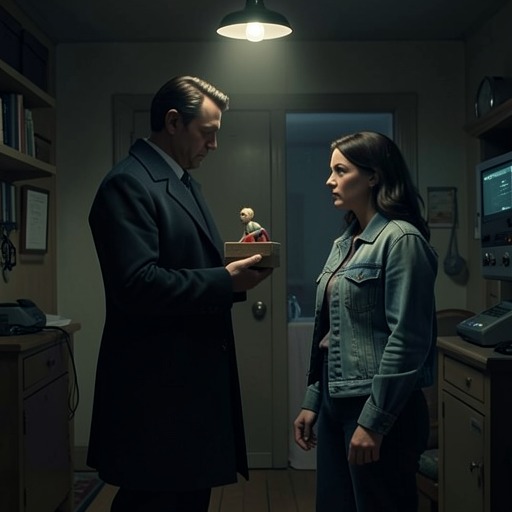
Coy returns to Doc in the waterfront mist dressed in painter’s overalls, a pink button-down shirt, a narrow black tie, and old pointed cowboy boots. His subdued voice and wary approach contrast with the saxophonist Doc later sees onstage. Coy asks Doc to check on Hope and Amethyst in Torrance without revealing that he has asked; despite his absence, he remains concerned for their safety.
Doc later recognizes Coy in footage of a Nixon rally. Penny identifies him as an informant who works mainly for the Red Squad and the Public Disorder Intelligence Division. The public image of a dead musician and the secretly active informant are incompatible only on the surface: Coy has been made to disappear from his former life so that he can operate under another identity. The narrative first presents his death as a personal tragedy, then gradually discloses the political arrangement behind it.
Coy explains that Vigilant California recruited him by making him feel watched and wanted, praising his supposed aptitude for projecting alternate identities, infiltrating groups, remembering details, and reporting back. He calls himself a spy, snitch, or weasel, exposing the gap between the organization’s flattering language and the work it requires. His supposed overdose was staged with help from his dealer: Coy was to use enough of especially potent, uncut China White to make the emergency-room account plausible, but not enough to kill him. He admits that the plan nearly went wrong.
The recruitment does not remain a single assignment. Coy undergoes a program to stop using heroin, receives new teeth that require him to adjust his saxophone embouchure, and is trained for increasingly demanding operations. His preparation includes passing compromising notes to a state legislator, studying political texts, physical workouts, dialect coaching, and evasive-driving lessons. These varied tasks turn the informant role into a constructed second life, combining political surveillance with physical and social discipline.
Family, Music, and the Cost of Disappearance
Coy’s work carries him into campuses and political groups, including antiwar, antidraft, and anticapitalist organizations. He gradually understands that the people running Vigilant California answer to a more powerful level of authority. They label him an addictive personality and rely on the idea that informing for his country will prove as hard to quit as heroin. His sense of being chosen therefore becomes another means of keeping him in service.
The break in this momentum comes while Coy is following members of a group at UCLA in Westwood. He sees a little girl, about Amethyst’s age, calling her mother’s attention to books in a lit shop window. The sight brings his abandoned family back into his thoughts. Coy recognizes the moral cost of faking his death, the danger faced by people he helps target, and how much he misses Hope and Amethyst. His wish to return comes only after he has lost the resources and support that might have made the return simple.
When Doc finds him at Chryskylodon, Coy says he cannot go back because doing so would put both himself and his family at risk. He describes the informant network as a gang that does not let its members leave. Later, he tells Doc that he wants out and that the work has cost him both his family and his freedom. Doc raises Coy’s situation while trying to secure the safety of people close to him, and Coy’s desire to leave becomes part of a wider negotiation with the forces that control his assignments.
Return to Performance
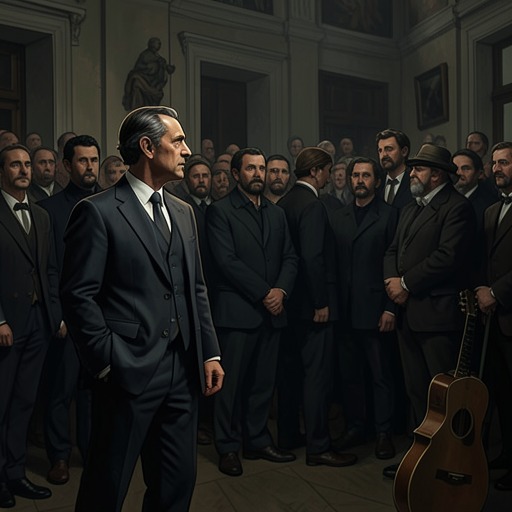
The clues to Coy’s survival come not only through informant records but through music. Doc finds him playing tenor saxophone at O Cangaceiro, performing with an attentive, absorbed concentration that differs sharply from the withdrawn figure he had last seen. The encounter restores Coy to the identity through which he first entered the story: not just a subject of surveillance or a supposed overdose victim, but a working musician.
Later, Scott reports seeing Coy alive outside the Lighthouse Cafe in Hermosa, then describes him performing with The Boards. At a concert, Coy plays long solos on “Steamer Lane” and “Hair Ball” and joins a Dick Dale salute. During one performance he lifts the microphone from its stand and places it in the bell of a baritone saxophone, a moment that especially delights Amethyst. His return to the band is presented as work in progress, not as an instant recovery: earlier he had told Doc he was working on playing with them again.
Coy’s musical return and his family’s recognition of him do not occur in a single clean scene. Hope is unsure what to believe after learning that he is alive, and Amethyst has not yet made the connection between the father she knows and the musician at the concert. Yet the performance gives her a vivid point of contact: she remembers what he did with the saxophone. Music becomes a practical bridge back to a family relationship that his staged death had interrupted.
Release and Significance
By the final stage of Coy’s return, he tells Doc that he is officially off everybody’s payroll; Burke Stodger has personally confirmed that he is released. Coy also reports that Amethyst enjoyed the concert. When he begins to respond to Doc’s assurance that he has saved his own life and now has the chance to live it, the words give way to silence. His changed circumstances are concrete—he is no longer working for his handlers and has played with The Boards—but the emotional consequences of separation remain present in the pause.
Coy’s arc makes disappearance a political instrument as well as a personal rupture. His death is manufactured to enable covert work; the resulting identity draws him into surveillance and away from the family he still wants to protect. The return is therefore neither a simple exposure of a secret nor a complete undoing of the past. It is a gradual recovery of music, choice, and contact with Hope and Amethyst, achieved after Coy recognizes that the sense of being wanted by an organization has displaced the people he actually misses.