Coy Harlingen's faked death and recruitment as an informant
Inherent ViceCoy Harlingen’s faked death is the price of his recruitment as an informant for Vigilant California: the organization offers him a role that makes him feel wanted, but requires him to disappear from his family and assume new identities. The plan converts an apparent heroin overdose into cover for a clandestine career, while Coy’s later account reveals how quickly the promised new life becomes entangled with addiction, political surveillance, and the longing to return to Hope and Amethyst.
Recruitment and the promise of a new identity
Coy recalls that he had long needed to believe somebody cared about him. When Vigilant California contacted him, he took the attention as evidence that someone had been watching and wanted him for a purpose. The organization described his supposed aptitude as the ability to project alternate personalities, infiltrate, remember, and report. It recast spying as paid acting, an appealing description for a man who had felt overlooked and whose musical ambitions had not supplied that sense of recognition.
The offer came with terms. Coy would have to leave Hope and their daughter, Amethyst, for good, and the identity of Coy Harlingen would have to cease to exist while he adopted one or more new identities. Vigilant California promised to send Hope a one-time anonymous payment, meant to appear as if Coy had left it in a will. The arrangement could thus provide money to his family while making his disappearance look final, but the payment could not preserve his place in their lives.
The recruitment also depended on Coy’s heroin use and the promise that he could change it. Vigilant California said the work would require him to kick heroin, or at least the kind of habit he then had. Its recruiters told him about former addicts who had gained control of their addictions and called the demanding discipline involved Higher Discipline. Coy was taken to meet people who appeared energetic and mentally quick; the organization also dangled a once-a-year Percodan dose as a performance bonus. Recovery was presented not simply as a personal possibility but as one condition of his service, managed through incentives and the organization’s expectations.
The staged overdose
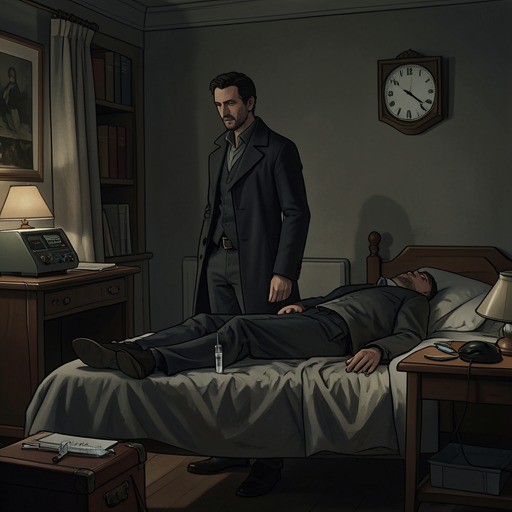
To make Coy’s disappearance credible, his dealer, El Drano, was to supply unusually lethal China White, with the heroin left at the scene of the apparent overdose. Coy was instructed to take only enough to seem plausible in the emergency room, not enough to kill him. In retrospect, Coy calls this the part of the operation he liked least: he was afraid of making a mistake, and admits he nearly died anyway. The plan depended on controlling both the appearance of an overdose and the precise boundary between simulated death and actual death.
The supply chain itself unsettled him. El Drano obtained the heroin from a group of intimidating suppliers outside his usual connection. Although El Drano served only as a cutout, Coy understood that the people behind him frightened him and repeatedly insisted on silence. After El Drano was found dead in a canal, Coy could not help questioning the source of the drug used in his staged death. The episode leaves the recruitment operation connected to a threatening, opaque drug network, even as Coy acknowledges that El Drano had a long history and that the circumstances of his death could have other explanations.
Work as an informant and recognition of the system
After the staged overdose, Coy underwent a period of heroin withdrawal at the Chryskylodon program. He then received new teeth from Rudy Blatnoyd, which required him to adjust his embouchure. His assignments grew more demanding: in an airport toilet stall, he passed compromising notes on toilet paper to a state legislator whom Vigilant California wanted to bring onto its team. Later preparation included reading Herbert Marcuse and Chairman Mao, workouts at a Whittier dojo, dialect coaching in outer Hollywood, and evasive-driving lessons in Chatsworth.
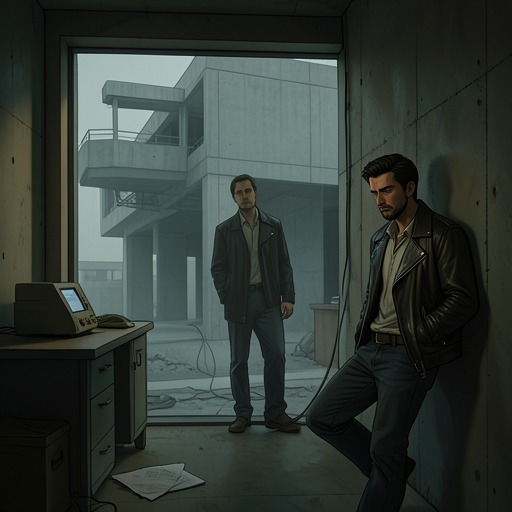
Coy’s work expanded into infiltration. He was assigned to spend time around university, community-college, and high-school campuses and to enter antiwar, antidraft, and anticapitalist groups. During the first months, the workload left him little time to consider what he had done or whether the arrangement had a future. He eventually realized that the people running him were themselves subordinate to another level of power, one that treated the lives of people it considered less capable as available for interference. Vigilant California had labeled him an addictive personality and seemed to assume that, once recruited to inform, he would find that life as difficult to leave as heroin.
That structure makes the recruitment more than a single bargain between Coy and his handlers. The promise of employment and recognition drew him into one organization, while his assignments exposed him to a hierarchy beyond it. His role as a performer did not make him an independent actor: he was taught to adopt identities and report on political groups, while the authority directing him remained partly out of view. The apparent overdose concealed not only his survival but also the new institutional identity that his disappearance enabled.
The family he left behind
Coy’s recognition of the cost came while he was shadowing members of the Bong Users’ Revolutionary Brigades in Westwood. He noticed a little girl about Amethyst’s age looking excitedly into a lighted bookstore window and calling her mother to look at the books. The sight brought his daughter and the family he had abandoned back to mind for the first time since he had signed on. It interrupted the work: while the group he had been following continued on, Coy stood still, suddenly aware of the life excluded from his new assignment.
He describes the realization as a reckoning with the mistake of faking his death, the possibility that people he helped entrap might face actual death, and the depth of his longing for Hope and Amethyst. He had believed the family was unhappy, but that belief did not make their absence bearable. With no resources or support, he wanted his old life back too late to recover it simply by wishing. His decision to ask Doc to look in on Hope and Amethyst followed from this desperation: he could not openly resume his former place in their lives, but he could try to ensure that someone checked on them.
Disclosure to Doc and the limits of return
Coy recounts the arrangement to Doc after he has already reappeared under the cover story of having died. The account clarifies why he had been absent and why his apparent return cannot be separated from covert employment, addiction, and family separation. When Doc asks who first made the offer, Coy responds that spies learn to notice how often a questioner already knows an answer and wants to hear it from another voice. He then directs Doc to speak with Shasta Fay, leaving the identity of the original caller unresolved in this exchange.
Coy’s present circumstances underline the incompleteness of the bargain. He is working on playing with his band again, an effort that recalls the need for recognition that first made Vigilant California’s offer attractive. Yet his disclosure to Doc also shows that he has come to see the arrangement’s larger power structure and the personal loss it demanded. His staged death allowed the organization to use him under new identities; it did not erase his attachment to Hope and Amethyst or give him a straightforward path back to them.
Narrative significance
The episode joins two kinds of disappearance: Coy’s public absence, manufactured to protect his cover, and his gradual loss of control over the life that cover creates. A carefully limited dose, an anonymous payment framed as a bequest, and a replacement identity make death appear administratively manageable. But the scene in Westwood breaks through that construction with an ordinary reminder of his daughter, exposing what the operation cannot contain: Coy’s continuing attachment to the family whose lives his new role required him to leave.
His story also complicates the distinction between informant and target. Vigilant California recruits Coy by presenting surveillance as a personal gift and paid performance; Coy then discovers that his recruiters answer to a power above them and that his own presumed susceptibility to addiction has become part of how they understand and use him. The recruitment offers escape from one form of dependence while building another. His account to Doc therefore reveals both the mechanism behind his supposed death and the human cost that the cover was designed to hide.