Higher Discipline
Inherent ViceHigher Discipline is Vigilant California’s name for a demanding regimen of heroin recovery, offered to Coy Harlingen as both a way to gain control of his addiction and the beginning of a new life as an informant. Its promise of discipline and renewal is inseparable from its use as recruitment: Coy is drawn into undercover work, separated from Hope and Amethyst, and eventually recognizes that the new life is another dependency.
Definition and Promise
Vigilant California describes Higher Discipline as more demanding than religious, athletic, or military discipline because it requires a person to face the risk of relapse every day. The program introduces Coy to people who have gained control of their addictions. Their energy, alertness, and physical vitality make recovery appear tangible rather than merely theoretical. The organization also offers a once-a-year Percodan dose as a performance incentive, turning the promise of abstinence into a reward system that retains an explicit connection to opiates.
The regimen is presented to a man whose heroin use had become bound up with poverty and family distress. Coy recalls that he and Hope were unable to change their circumstances while using, and that their baby was deteriorating. The opportunity seemed credible to him because the people offering help had money and did not resemble the religious proselytizers he associated with unwanted intervention. In retrospect, that appearance of practical assistance is part of the program’s ambiguity: recovery is offered, but inside a structure with its own purposes.
Recovery as Recruitment
Coy’s participation requires more than stopping heroin. The organization tells him that he must leave Hope and Amethyst permanently, accept a payment for Hope disguised as money from a will, and allow his old identity to disappear so he can assume another. Coy initially resists the prospect of faking his death, but the proposed arrangement makes the price of treatment plain: the recovery program is also a route into an undercover role and the abandonment of his family.
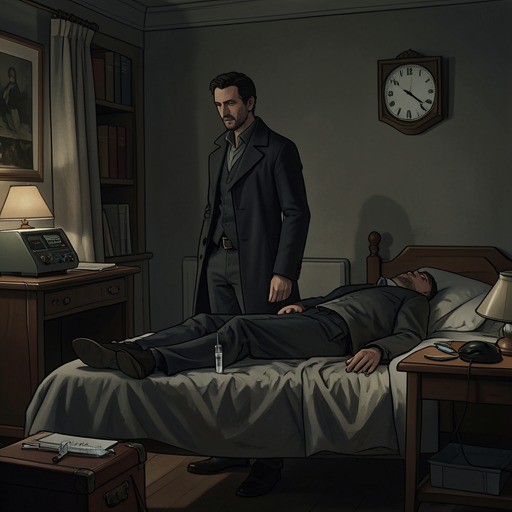
The staged overdose is designed to make that disappearance convincing. Coy’s dealer, El Drano, is to supply unusually lethal, uncut China White to be found at the scene; Coy is instructed to take only enough to appear plausible in the emergency room, not enough to kill him. The plan therefore puts his survival at risk even as it depends on a controlled performance. Coy later tells Doc that it was the part of the operation he liked least and that he nearly died despite the instructions.
Discipline and the New Identity
After entering the Chryskylodon program to withdraw from heroin, Coy begins a series of increasingly demanding assignments. His altered teeth require him to adjust his embouchure, and the new appearance accompanies a new professional role. In an airport toilet stall, he passes compromising notes on toilet paper to a state legislator whom Vigilant California wants to recruit. Later preparation includes reading Herbert Marcuse and Chairman Mao, daily martial-arts workouts in Whittier, dialect coaching in outer Hollywood, and evasive-driving lessons in Chatsworth.
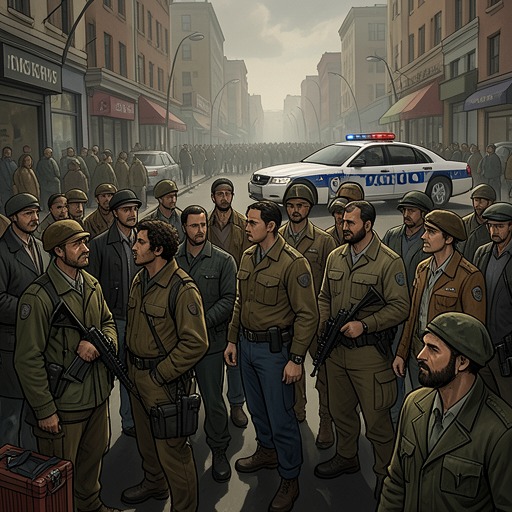
The scale of training exposes the distance between the recovery program’s public promise and its covert purpose. Coy is not simply being taught to live without heroin; he is being prepared to infiltrate antiwar, antidraft, and anticapitalist groups at universities, community colleges, and high schools. The organization labels him an “addictive personality” and assumes that once he has begun informing, he will find that life as difficult to leave as heroin. Higher Discipline thus becomes a model for the very dependence it claims to overcome: discipline and sobriety are folded into a system designed to keep Coy in service.
Limits and Significance
Coy’s turning point comes while he is shadowing the Bong Users’ Revolutionary Brigades at UCLA in Westwood. Seeing a little girl about Amethyst’s age calling her mother over to a bookstore window makes him think again about the family he left. The moment clarifies for him the cost of faking his death, the danger faced by people he helps set up, and how desperately he misses Hope and Amethyst. His change of mind does not erase the obligations and risks created by his recruitment; it reveals that the promised new life has not freed him from dependency or restored the life he surrendered.
The name Higher Discipline therefore carries a double meaning. It denotes the daily effort required to control heroin use, but in Coy’s story it also describes a program that converts recovery into discipline on behalf of an organization. Its claims of energy and self-command are set against the lethal staged overdose, the engineered separation from family, and the gradual escalation into political surveillance. Coy’s experience does not make recovery itself equivalent to the undercover operation; it shows how an institution can attach coercive service and a new dependency to the offer of help.