Preserved (schooner)
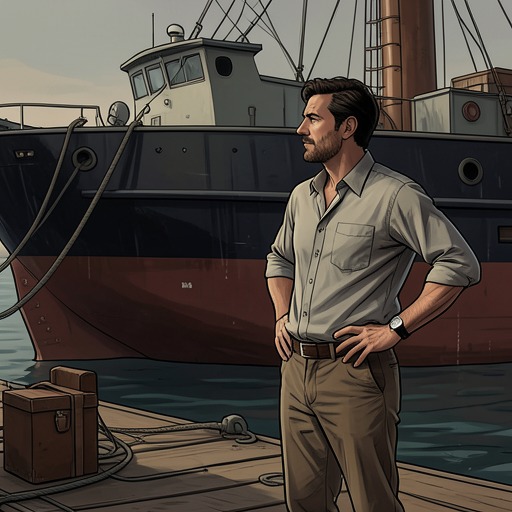
Inherent VicePreserved, formerly known as the Golden Fang, is a schooner whose changing identity gathers the book’s histories of violence, escape, memory, and uncertain redemption. Doc first encounters her return to her old name in a dream, then sees her under sail with Sauncho; when the vessel is abandoned offshore and boarded by the Coast Guard, her fate shifts from imagined refuge to a question of salvage and maritime ownership.
Identity and Past
The schooner has borne two identities: the Golden Fang and her earlier working name, Preserved. In Doc’s dream, she has resumed both her old working identity and her real name. The naming matters because the vessel is no longer confined to the ominous identity through which Doc has known her. Yet the return of the name does not erase what happened aboard: the dream imagines bloodshed and betrayal as dark residues that must be cleared away, and the spirits of people tortured and killed there as needing to be laid to rest.
Doc’s dream gives this change a supernatural cast. A Zen exorcist whom Coy had told him about—the same figure said to have cleared the dark presence from the Boards’ mansion in Topanga—has also worked on the schooner. Doc dreams that the evil possessing the vessel is gone for good. This is a dream-image of release, not confirmation that the ship’s history has been literally or permanently resolved.
A Ship Seen Through Memory
Later, Doc and Sauncho are on the beach near sunset after rain when they see—or believe they see—the schooner heading out to sea, her sails spread and glowing in the evening light. Doc wants to believe that Coy, Hope, and Amethyst are aboard and bound for safety. He almost sees them at the rail, waving, but Sauncho is unsure. Their disagreement leaves the vessel’s meaning open: it can be read as a possible passage to safety, but the family’s presence aboard is not established.
The scene makes the schooner a meeting point for memory and hope rather than a reliable answer. Sauncho describes time as a sea of memory and forgetfulness, and imagines a better shore where the American fate might not have come to pass. His words connect the ship’s possible journey with the lost possibilities of the land and the future people must inhabit. The vessel seems to offer an alternative destination, but the men cannot know whether it is real or what waits beyond the visible horizon.
Under Sail and in Doc’s Imagination
When Doc and Sauncho round Palos Verdes Point, the schooner appears in the distance from San Pedro, with her staysails and jibs set. Sauncho’s expression reveals his affection for her, while Doc’s recognition is complicated by memory: he had seen Preserved under full sail only once before, during an acid trip Vehi and Sortilège had induced.
Now, more or less sober, Doc associates the ship with the 1941 film The Sea Wolf. The resemblance prompts him to speak aloud in the voice of the film’s domineering ship captain; Sauncho asks whether he is all right, and Doc realizes he has been performing the reference aloud. The moment places the schooner between an actual vessel and the images through which Doc interprets it. His perception is not wholly detached from intoxication, dreams, or popular culture, even as the sight of the ship is shared with Sauncho.
Abandonment and Maritime Law
The apparent escape does not hold. As they draw nearer, dark, narrow boats detach from the schooner and speed away. Sauncho identifies them as cigarette boats and observes that no one is pursuing them. Through the spray, Preserved appears older and more battered, resembling the ship in Doc’s earlier dream of Coy’s escape with his family. Sauncho concludes that the crew has abandoned her.
Sauncho is sorry to see the vessel left behind, but he notes that the engines have been stopped and hopes she will not run aground. He explains that if the schooner can be brought into safe receivership and its owners do not claim it within a year and a day, it may officially be treated as abandoned. Who would then acquire ownership would depend on complicated maritime law. The rule turns the ship’s uncertain physical condition into a legal interval: rescue might preserve her, but it would not immediately settle who owns her.
The Coast Guard begins securing the schooner while an oceangoing tug is on its way. A boarding party goes aboard, shortens sail, sets trip lines and storm anchors to keep the ship’s head to the wind, and rigs range and towing lights. These measures replace the dream’s spiritual cleansing with practical intervention. Preserved is not shown sailing freely toward a safe shore; she is being stabilized and prepared for a tow.
Sauncho’s Claim and the Open Ending
At the Coast Guard base on Terminal Island, Sauncho completes paperwork and arranges overnight moorage for the inboard-outboard boat. Later, he cautions Doc that a year and a day is a long time in which complications may emerge, including insurers and claims. He raises the possibility that a valid marine insurance policy could return ownership to an underwriter.
Doc suspects that Sauncho may have taken out a policy himself. Sauncho blushes and admits that he would be involved if litigation followed, while acknowledging that one of Doc’s wealthy acquaintances might instead take the schooner at auction. His interest is therefore both personal and legal, but the evidence does not establish that he owns the vessel or will ultimately obtain it. Preserved’s final significance lies in that unresolved status: she has escaped her former name, survived abandonment at sea, and entered a process that may protect her without guaranteeing either her future freedom or her passage to the hoped-for better shore.