Public Disorder Intelligence Division
Inherent ViceThe Public Disorder Intelligence Division (P-DID) is a police intelligence unit associated with surveillance of political groups and the use of informants. Its work is glimpsed through the career of Coy Harlingen: he is identified as working for the Division, and his public visibility gives him credibility that can be used to infiltrate groups the police wish to monitor.
Identification and Function
When Doc Sportello recognizes Coy in television footage of a protest at a Richard Nixon rally, Penny Kimball explains that Coy is an informant who works mostly for the Red Squad and the Public Disorder Intelligence Division. The exchange distinguishes the Division from the Red Squad while placing both within the policing network that employs Coy. The Division’s full name is introduced when Doc asks who the P-DIDdies are; Penny supplies the expansion rather than treating the acronym as self-explanatory.
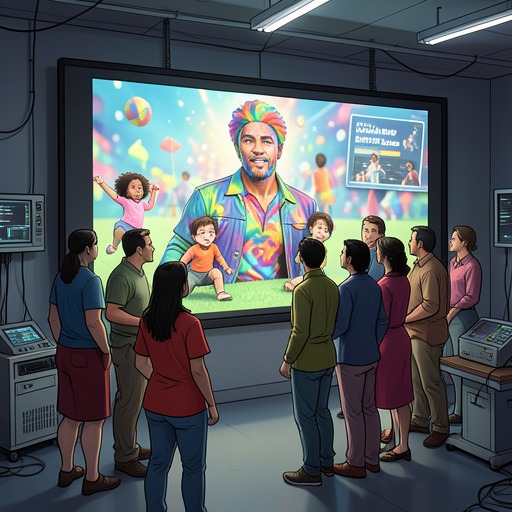
Penny also describes the practical value of Coy’s televised appearance. Because he has been seen publicly protesting Nixon, she says, he has acquired immediate, broad credibility, which police can use to place him inside groups they want to infiltrate. His protest is therefore legible in two ways: as a public political act and as a means of making a covert operative seem believable to potential associates. The evidence establishes that the Division benefits from this informant arrangement, though it does not specify a particular operation directed by the unit.
Coy Harlingen’s Recruitment and Infiltration
Coy’s path into undercover work reveals the personal costs of the Division’s methods. After joining Vigilant California, he comes to understand that the people running the organization are themselves subject to a higher level of power. He is labeled an addictive personality, and his handlers assume that he will find informing as difficult to abandon as heroin. His assignments take him among antiwar, antidraft, and anticapitalist groups, including a group at UCLA that he shadows in Westwood.
That work draws Coy away from his family. While following the UCLA group, he sees a young girl calling to her mother at a bookstore window and thinks of his daughter, Amethyst. The encounter forces him to reckon with the consequences of having staged his death and left Hope and Amethyst. It also makes the human stakes of infiltration visible: Coy is not simply a mobile source of information but a father whose covert role has estranged him from the life he misses.
Institutional Context and Narrative Significance
The Division appears in a wider setting of overlapping police and federal attention. Federal agents question Doc about his contact with Tariq Khalil and frame their inquiry around political militancy, a recent killing, and Mickey Wolfmann’s disappearance. Their questions show how investigations can be organized around suspicion of political groups, although the passage does not establish that the Division itself directs the federal inquiry. Elsewhere, Doc considers the possibility that Wolfmann’s disappearance might be cast as a political kidnapping; the agents’ reaction suggests that this could serve as a cover story, not that it is the Division’s explanation or operation.
The unit’s significance lies in the gap between public identity and covert use. Coy’s televised protest lends him credibility, while his work for the Division makes that visibility useful for infiltration. His later unease exposes the strain in this arrangement: the institution gains access to political circles through an informant, while Coy bears the consequences of the role in his own relationships and sense of responsibility. The novel gives the Division no extended institutional portrait; it is defined instead through the intelligence work, political suspicion, and personal dislocation that gather around Coy.