Spotted Dick
Inherent ViceSpotted Dick is a visiting British band whose slow-motion mystique, elaborate merchandise, and feverish following turn it into a recurring presence in Doc Sportello’s investigation. At once a touring act and a consumer brand, the group appears in scenes where countercultural freedom is already organized as style, spectacle, and appetite.
Identity and Image
The band stays at the Boards’ house for about a week, receiving local airplay on stations whose programming is less hectic. Its music and manner are so languid that listeners have mistaken its pauses for a collective seizure and called an ambulance. The joke makes slowness more than a musical quality: it is a carefully sustained performance, one that outsiders can read as either eccentric art or medical emergency.
That calculated look extends to the band’s clothes and hair. Its members wear wide-wale corduroy suits in luminous brown-gold and precise geometric cuts made at Cohen’s Beauty and Barber Shop in East London. Each week they are taken by bus to the shop, given a cannabis allowance, and seated in a row to giggle over old issues of Tatler and Queen while receiving asymmetric bobs. The routine makes their supposed spontaneity look like a managed collective style.
The lead vocalist carries the haircut’s logic into his own identity. Three hours into a mushroom experiment, he looks in the bathroom mirror, decides his face has two distinct sides expressing violently different personalities, and legally changes his name to Asymmetric Bob. The episode joins the band’s psychedelic self-fashioning to a literal alteration of public identity: an eccentric insight becomes a registered name.
The Boards’ House and Countercultural Spectacle
The group’s visit takes place in a house shared with members of the Boards and their entourage. In one unlit room of uncertain size, the bands’ personnel and hangers-on watch Dark Shadows amid the smells of pot smoke and patchouli oil. Elsewhere in the house, people cater to band whims by deep-frying Hostess Twinkies, ironing one another’s hair on an ironing board to preserve a musical image, and cutting references to rival surf acts out of fan magazines with X-Acto knives.
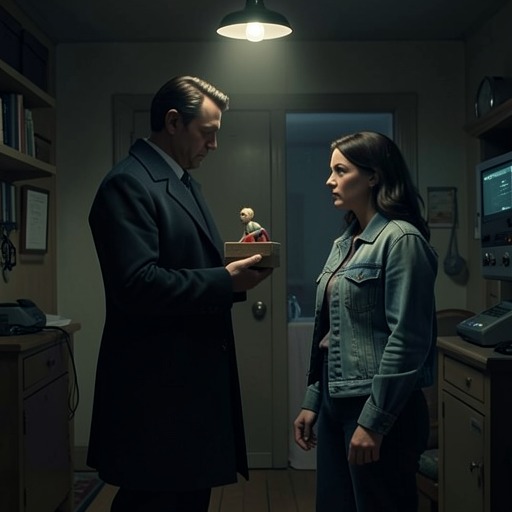
The viewing room is absorbed in the Collins family saga just as its plot turns to “parallel time,” in which the same actors play different roles. Doc recognizes how completely the roomful of viewers has given itself over to the program: a single press of the television zapper’s off button could abruptly interrupt their shared concentration. He slips out unnoticed, using the opening to resume looking for Coy Harlingen. Spotted Dick is not itself the object of that search, but its house and entourage form the setting from which Doc moves back into his investigation.
The band’s fame is visible in Bambi’s surroundings as well as in the house. Its posters, bed sheets and pillowcases, T-shirts, coffee cups, and souvenir roach clips cover the room; its albums play on the stereo around the clock. Bambi has heard the group is staying locally and comes along with Jade, while the band’s reputedly unusual recreation seems to be part of its attraction for her. The merchandise translates musical allegiance into a room furnished from wall to bed to soundtrack: fandom is not just something heard, but an environment inhabited.
Performances and Encounters
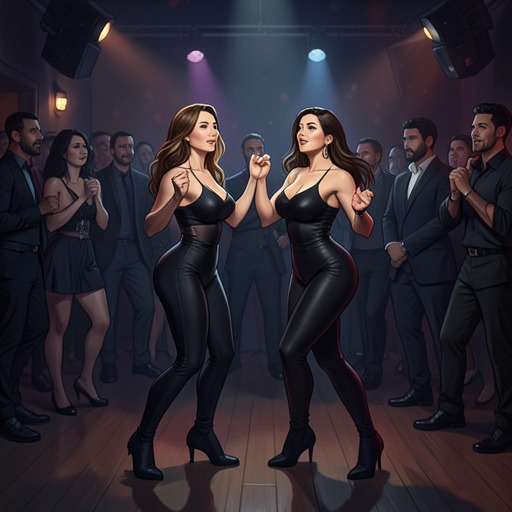
The Los Angeles music scene places Spotted Dick on a bill with the Furies at FFO. Doc reaches the club after stopping for chili dogs at Pink’s; outside, a small crowd passes joints, argues with the bouncer, and dances to the bass-heavy sound coming from within. The Furies, then known for using three basses and no lead guitar, open for the British visitors. During pauses, someone repeatedly rushes inside to demand “White Rabbit” and is thrown back into the street. The episode frames the concert as a collision between particular acts, audience expectations, and the era’s recognizable psychedelic repertoire.
Doc does not first find Bambi inside the club. He runs into her and Jade lounging outside an ice-cream store nearby, speaking rapidly and gesturing with precariously stacked cones of multicolored organic ice cream. Jade says Bambi obtained passes for Spotted Dick; Bambi calls the evening a double date and says the band’s bass player, Shiny Mac McNutley, is her chosen “class act.” A white Rolls-Royce with a chauffeur then pulls up, and an unseen voice orders the women to stay where they are. Bambi recognizes Jade’s pimp, abruptly exposing the danger and unequal control running beneath the outing’s playful talk of dates and music.
The band’s slow image becomes unnerving when Denis describes its members as English zombies: unlike the stereotypical American zombie, they are supposedly well-spoken and glide rather than stagger. The comparison is comic exaggeration, but the scene gives it a body. Trevor “Shiny Mac” McNutley, the band’s bass player, enters smoothly from left to right, smiling with louche ease as he pursues a confused young woman. Denis treats the entrance as confirmation and flees in panic. The group’s cultivated languor thus shifts, for a moment, from pose to apparent menace.
Songs, Touring, and Narrative Significance
Spotted Dick’s reach extends beyond the club. When Doc drives toward an address in the Rossmoor-Cypress area, a radio DJ announces the band’s latest single, “Long Trip Out,” as a dedication from Bambi to the Spotted Dickheads listening in KQAS Kick-Ass Radio Land. The name for its fans turns a personal dedication into a broadcast addressed to a dispersed audience; Bambi’s attachment is part of a larger, publicly legible fandom.
The song opens with a Farfisa introduction from Smedley, full of transatlantic Floyd Cramer-style licks, before Asymmetric Bob sings about a soldier returning from the Ia Drang Valley to a world of freaked-out hippies and women smoking dope. Smedley joins in harmony, and Somerset adds a bottleneck-guitar fill. The lyric places the dislocation of returning from war beside the counterculture’s own music and drug culture, while the arrangement mixes identifiable musical references into a distinctly hybrid sound. The single gives the polished act a subject more troubled than its comic image suggests: a return home can be another long trip out of place.
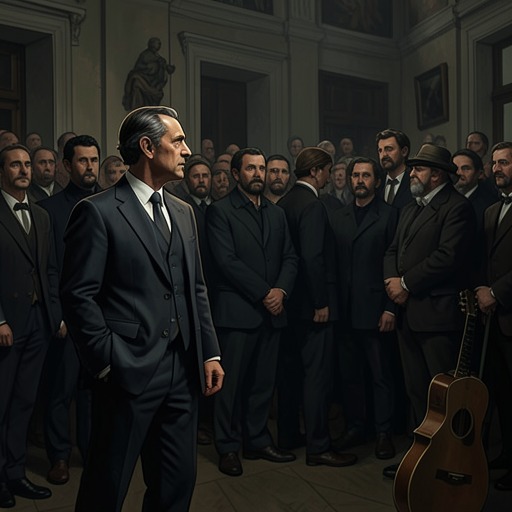
Spotted Dick never becomes the center of Doc’s investigation, but the band repeatedly marks the social landscape through which he moves. Its houseguests, club appearance, conspicuous fan culture, and radio hit make it a useful point of connection between celebrity, commerce, intoxication, and everyday danger. The contrast between the band’s composed glide and the people around it—an obsessive television audience, an anxious Denis, and Bambi’s encounter with her pimp—keeps its branded coolness from becoming an uncomplicated image of liberation.