Secondhand Rose, Secondhand Clothes
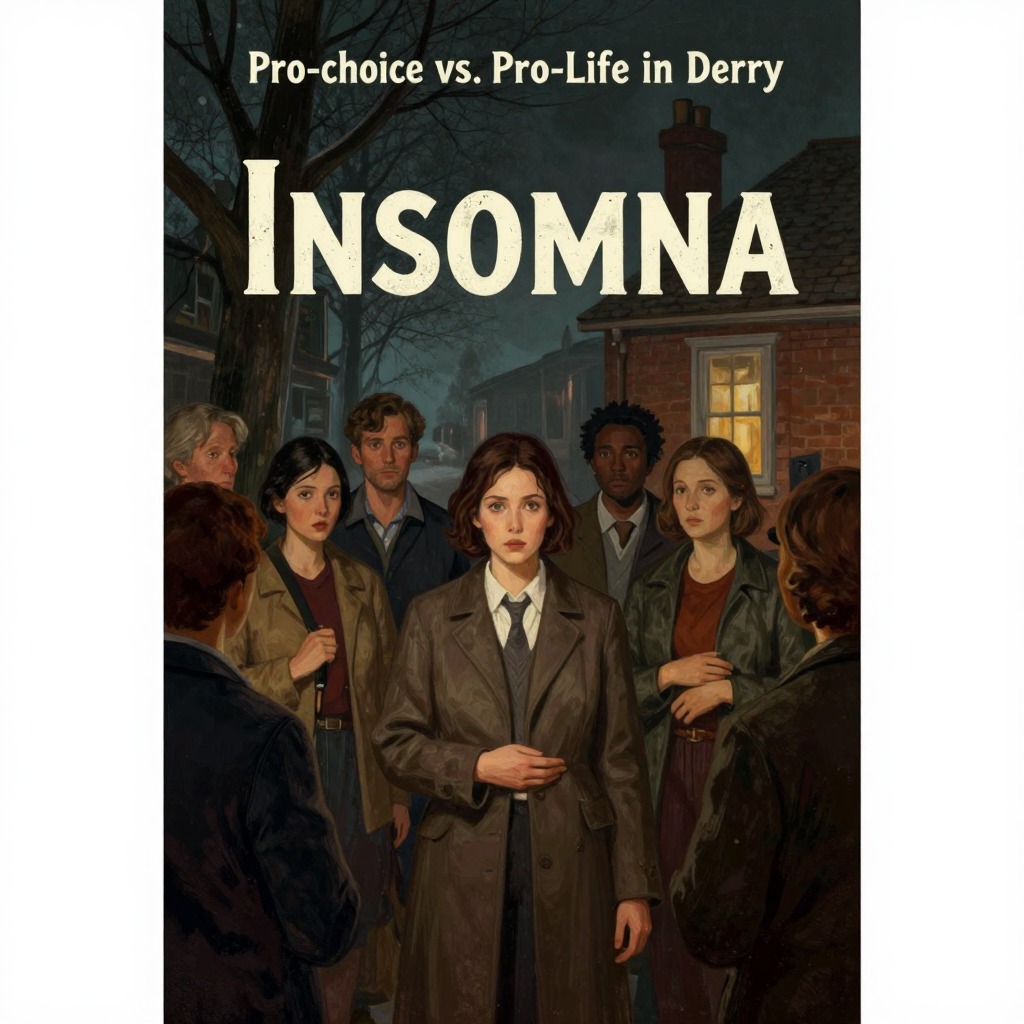
InsomniaSecondhand Rose, Secondhand Clothes is a cluttered junk shop on the corner of Witcham and Main in Derry, owned by Dan Dalton, a tall, pallid man with a goatee who serves as a leader of the anti-abortion group The Friends of Life. The store, described as a 'jumbled junkatorium,' stands next to Back Pages, a used bookstore and newsstand run by Hamilton Davenport, and the two businesses become focal points for the town's escalating conflict over abortion rights. Dalton's shop window, filled with outdated announcements and political placards, becomes a site of ideological confrontation when it displays a poster that transforms feminist activist Susan Day into a wanted criminal.
The Wanted Poster and Political Confrontation
In August 1993, Ralph Roberts notices a new poster in the window of Secondhand Rose, Secondhand Clothes, placed so it covers roughly half of a yellowing 'PAT BUCHANAN FOR PRESIDENT' placard. The poster features two photographs of a pretty blonde woman in her late thirties or early forties—unsmiling full face and profile against a plain white background—styled like police mugshots. Above the photos, in big black letters, are the words 'WANTED FOR MURDER,' and below them, in red, 'STAY OUT OF OUR CITY!' The woman is Susan Day, a prominent feminist and abortion-rights advocate. At the very bottom, in small print, is 'Paid for by the Maine LifeWatch Committee.' Ralph is stopped in his tracks by the unsettling photos, and the poster triggers a memory of Ed Deepneau's chant from the previous summer: 'Hey, hey, Susan Day, how many kids did you kill today?'
When Ralph asks Hamilton Davenport about the poster, Davenport reacts with disgust, calling Dalton a 'clown' and explaining that Day is a Pulitzer Prize-winning author and co-founder of Sisters in Arms, one of the most politically influential women in America. Davenport reveals that he has a petition to bring Day to Derry to speak in defense of WomanCare, a women's resource center that performs abortions. He accuses Dalton and the right-to-life group Daily Bread of trying to firebomb WomanCare the previous Christmas and of now attempting to use zoning regulations to squeeze the clinic out of existence. Dalton, materializing from the gloomy depths of his shop, wears a 'tiny disdainful smile' as he sees Davenport looking at the poster, and he flaps his hands dismissively before disappearing back inside. Davenport, his cheeks burning with anger, calls Dalton a 'prick' and notes that the poster is new, lacking the flydirt of the older displays.
Dalton's Role in The Friends of Life
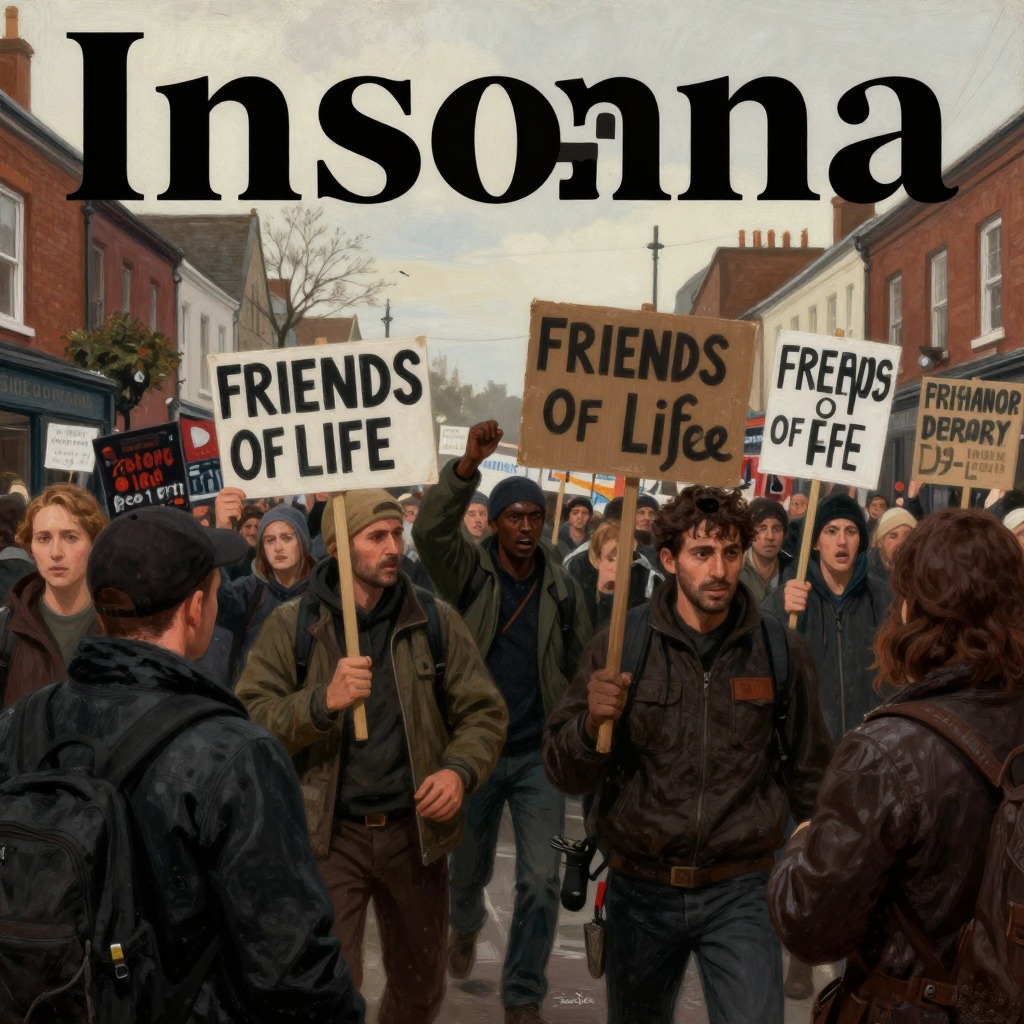
Dan Dalton emerges as a key figure in the anti-abortion movement in Derry, identified as the head of The Friends of Life after the group's first major demonstration. He is described as dressing 'as only a liberal with daydreams of what he might think of as "the Maine proletariat" could dress: faded jeans, faded blue workshirt, wide red fireman's suspenders.' On television, he appears alongside Ed Deepneau, but Ralph quickly perceives that Dalton is merely the figurehead, while Deepneau is the true driving force. During an interview after the first Friends of Life demonstration, Dalton's shrill, self-righteous demeanor contrasts with Deepneau's more polished, reasonable facade, and Ralph notes that Dalton looks 'crazy' while Deepneau seems 'a pretty reasonable fellow.' Dalton's rhetoric is extreme, claiming that babies are 'ripped from the wombs of their mothers in pieces, with their little arms waving in protest even as they die.'
The Escalation of Conflict
The shop's window continues to be a site of political expression. After the first Friends of Life demonstration, a photograph on the front page of the Derry News captures Hamilton Davenport and Dan Dalton in a violent confrontation. Davenport is caught in a snarl, one fist raised in triumph, while Dalton, wearing Davenport's 'CHOICE, NOT FEAR' sign around his head like a 'surreal cardboard halo,' has dazed eyes and blood flowing from his nostrils. Ralph, looking at the photo, is struck by the faces of the two men who have done business next door to each other for years—Davenport with his 'caveman's snarl' and Dalton with his 'dazed eyes and bloody nose'—and he thinks, 'If you're not careful with your passions, this is where they get you.' The shop, with its dusty, cluttered interior and its proprietor's extreme views, becomes a symbol of the town's deep and dangerous divisions, a place where political rhetoric hardens into personal enmity and violence.