Heaven is not a place, and it is not a time
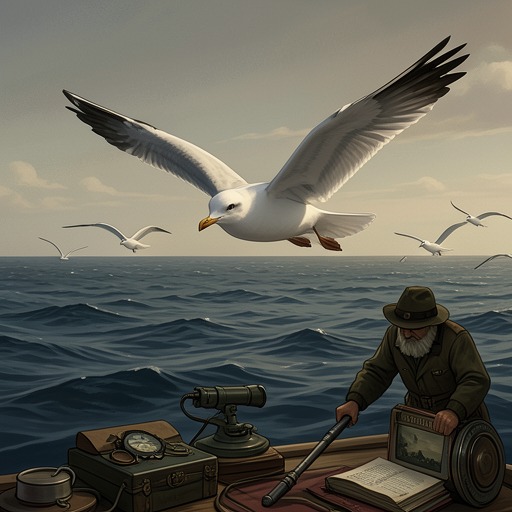
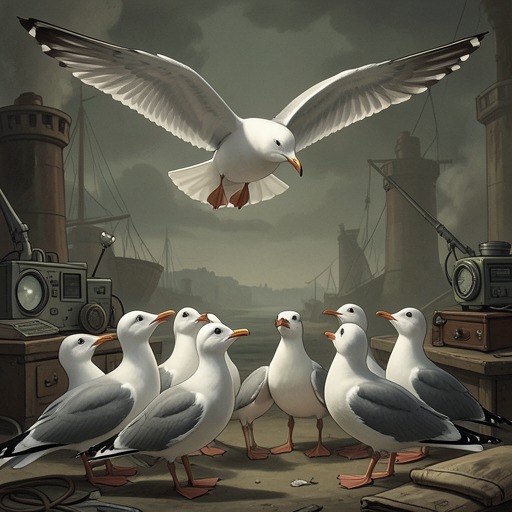
Jonathan Livingston Seagull“Heaven is not a place, and it is not a time” is Chiang’s definition of heaven in Jonathan Livingston Seagull’s training: not a location or moment to reach, but a condition of perfection. The expression redirects flight from mere speed or travel toward an inward discipline of learning, freedom, and, ultimately, love.
Definition and Context
When Jonathan asks whether there is a place called heaven, Chiang answers that heaven is “being perfect.” He links the idea to flight, but distinguishes perfection from measurable velocity: a thousand miles an hour, a million, or even the speed of light would remain limited because each is a number. Perfect speed, Chiang says, is “being there.” The language makes arrival less a matter of crossing distance than of realizing a capacity that has no fixed boundary.
Chiang demonstrates this distinction rather than leaving it abstract. He vanishes and appears at the water’s edge fifty feet away, then returns to Jonathan’s shoulder in an instant. He explains that a gull can go to any place and any time it wishes, while those who pursue travel instead of perfection go nowhere slowly. In this account, space and time lose their authority as measures of what is possible; heaven names a state in which they no longer confine the traveler.
Learning and Transformation
The definition arrives within Jonathan’s education in a new world, after his earlier life on Earth, where he had already set flight above eating and had been made an Outcast for pursuing it. His arrival at the peak of the Great Mountain Wind brings a further change in understanding: when he recognizes that he can fly higher, he also understands that it is time to go home. The idea of perfection thus does not simply draw him away from the world he left; it equips him to return with a different purpose.
Chiang’s teaching also presents perfection as an unfinished practice. He proposes that Jonathan learn to work with time, flying the past and the future, before beginning the more difficult work of knowing kindness and love. After Chiang disappears, his final instruction is to keep working on love. That sequence gives the expression an ethical dimension: transcending limits is not complete as a technical feat but leads toward a more generous way of relating to others.
Meaning in the Larger Story
Jonathan’s recollection of Earth turns the teaching into a reason to teach. He wonders whether another gull there might be struggling to see flight as more than a means of reaching a breadcrumb from a rowboat, or might have been made an Outcast for speaking against the Flock. The more he practices kindness and tries to understand love, the more he wants to return. His own way of demonstrating love, the narration explains, is to offer another gull the chance to see the truth for itself.
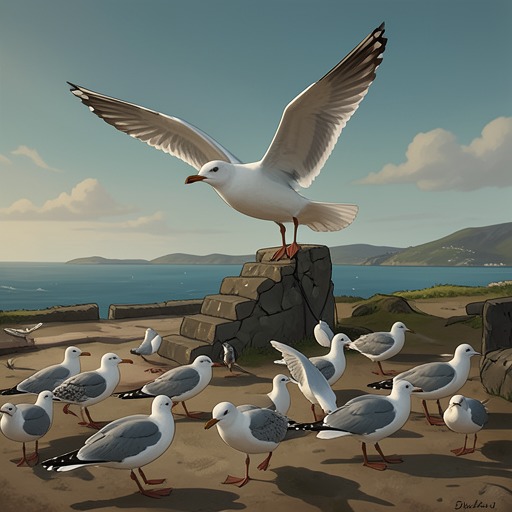
When Jonathan says goodbye to Sullivan, he holds in thought an image of the great gull-flocks on the shore of another time and understands himself not as bone and feather but as a perfect idea of freedom and flight, limited by nothing. The image gathers the expression’s main claims into one: perfection is not a faraway place, and freedom is not simply movement across distance. The teaching becomes consequential when Jonathan carries it back into relationship and instruction, rather than keeping it as a private attainment.