The only true law is that which leads to freedom
Jonathan Livingston SeagullThe only true law is that which leads to freedom is Jonathan Livingston Seagull’s concise answer to a direct challenge about obedience to the Flock. It makes freedom the test of law: inherited rules have no ultimate authority when they obstruct a gull’s capacity to fly, learn, and discover what it is. The declaration distills Jonathan’s own history of exclusion into a principle he offers to the gathered birds.
The principle and its setting
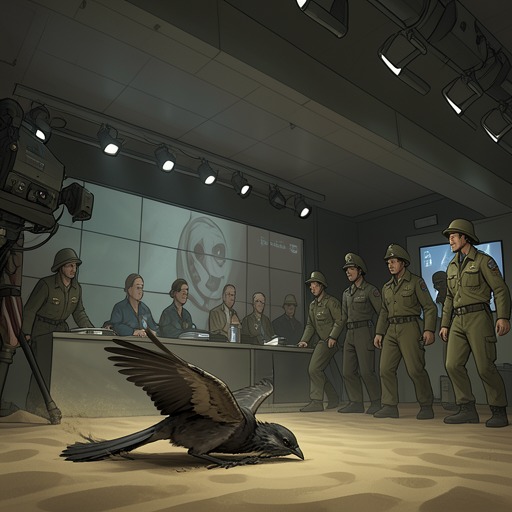
For most gulls, flight is chiefly a means of reaching food and returning to shore; Jonathan instead values flight for its own sake. His experiments and commitment to learning mark an early conflict with the expectations of his community. When the Council of the Flock condemns him for violating tradition, it casts him out to the Far Cliffs, making social belonging conditional on obedience.
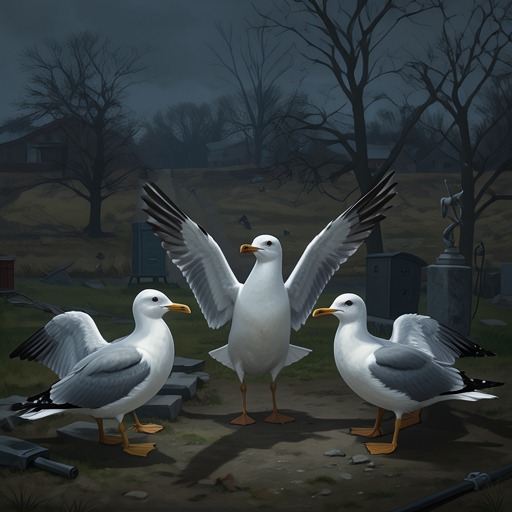
The law’s force becomes especially visible when Jonathan later leads his students back to the Flock’s beach. The customary rule says that an Outcast never returns, and the rule has not been broken in ten thousand years. The students know that returning could bring hostility, while the Flock’s Elder extends the prohibition beyond return: a gull who speaks to an Outcast becomes an Outcast, and even looking at one breaks the law. In this setting, law governs not only movement but also speech and attention.
The challenge and reply
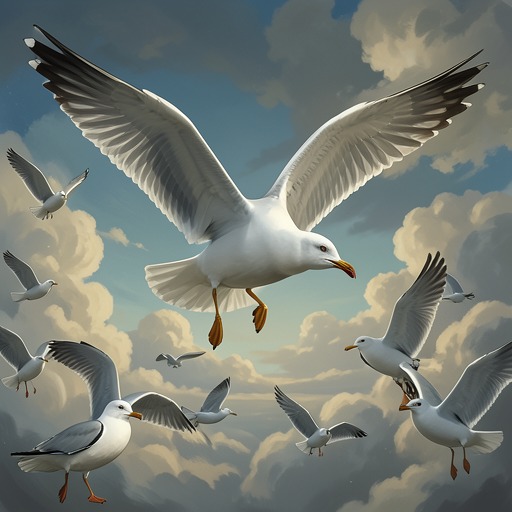
After Jonathan’s students return with him, their flying unsettles the Flock. The birds are told to ignore them, yet younger gulls wonder how the Outcasts learned to fly so well. Jonathan holds practice sessions above the Council Beach, teaching openly despite the Flock’s refusal to acknowledge him. His actions make the contradiction between the community’s rule and the demonstrated possibilities of flight increasingly difficult to overlook.
By sunrise, nearly a thousand gulls stand outside the students’ circle, listening. Jonathan speaks of a gull’s right to fly and of freedom as the nature of its being; he says that ritual, superstition, and limitation must be set aside when they stand against that freedom. A voice in the crowd asks whether this includes the Law of the Flock. Jonathan answers, “The only true law is that which leads to freedom,” adding that there is no other. The statement answers the question without denying that the Flock has rules: it denies that rule alone makes a law worthy of obedience.
Freedom as a practiced capacity
Jonathan does not present freedom as a gift reserved for an exceptional bird. When another gull suggests that Jonathan and his students are specially gifted or divine, Jonathan points to Fletcher Lynd Seagull and the other students as evidence that they are no more exceptional than their listeners. What distinguishes them is that they have begun to understand what they are and to practise that understanding. The principle is therefore tied to learning and effort, not merely to defiance.
The teaching also follows Jonathan’s own transformation. On the Far Cliffs, he comes to understand that he can fly higher and that it is time to return. In the world where he learns from Chiang, heaven is defined not as a place or time but as perfection; perfect speed is being there rather than reaching a numerical limit. Later, Chiang urges him to learn kindness and love. Jonathan’s desire to return to Earth grows from that learning: he hopes to help a gull struggling to see flight as more than a way to reach food, and his way of demonstrating love is to share what he has discovered.
The law’s consequences
The declaration is not a formal change to the Flock’s rules. The Elder’s order to ignore the Outcasts remains in effect, and the gray-feathered birds turn their backs on Jonathan while he teaches overhead. The principle instead exposes a conflict between the community’s power to enforce exclusion and the learners’ capacity to act beyond it. The Outcasts return despite the rule, and the crowd listens despite the ban on contact.
Jonathan’s own understanding of freedom reaches beyond physical motion or the removal of a particular restriction. In saying farewell to Sullivan, he holds in thought an image of gull-flocks on another shore and understands himself as an idea of freedom and flight, limited by nothing. Set beside that inward realization, his public declaration gives the Flock a practical measure for judging its customs: a rule that closes off learning and possibility cannot claim the highest authority merely because it has lasted.
Narrative significance
The expression joins the book’s recurring movement from flight as survival to flight as self-knowledge. It answers the Flock’s attempt to define responsibility as conformity and continued existence, while Jonathan insists that a life can have a higher purpose in learning, discovery, and freedom. His teaching does not depend on winning office or persuading the Elder; it begins with demonstration and practice, and grows when other gulls become willing to learn.
The statement also frames return as an act of instruction rather than submission. Jonathan and his students come back to a community that has expelled them, but their presence makes the old boundary visible and contestable. The law of freedom is thus both a moral claim and a method of change: it asks gulls to judge inherited restrictions by what they make possible, then to practise the capacity those restrictions deny.