We choose our next world through what we learn in this one
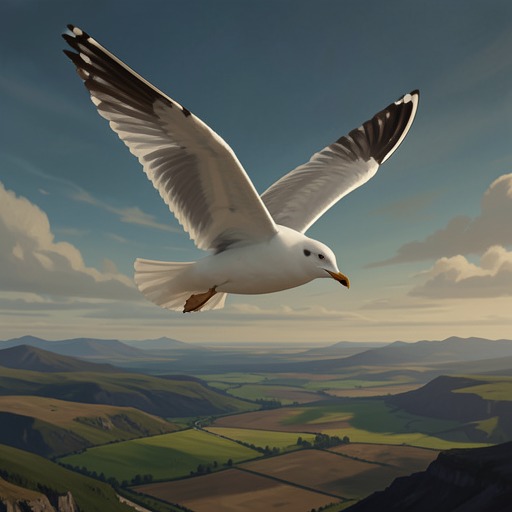
Jonathan Livingston Seagull“We choose our next world through what we learn in this one” is the book’s principle that learning shapes a gull’s passage between worlds. Spoken by Sullivan to Jonathan Livingston Seagull, it makes flight more than a skill: practice can enlarge what a life makes possible, while refusing to learn leaves the next world bound by the same limitations.## Meaning and Context Sullivan sets the principle against the ordinary pace of gull lives. Most gulls, he explains, move from one world into another that is almost exactly like it, forgetting where they came from and giving little thought to where they are headed. Their attention remains on immediate concerns such as eating, fighting, or power in the Flock. The progression toward a different understanding is slow: Sullivan imagines a thousand, even ten thousand, lives before a gull first grasps that life may mean more than those concerns, and many further lives before it recognizes perfection as a purpose.
The expression is therefore not a promise that every new world will automatically be better. Its warning is explicit: learn nothing, and the next world remains the same, with the same limitations and lead weights to overcome. Learning changes the conditions of what can follow; stagnation reproduces them.### Jonathan as an Exception The principle clarifies the difference between Jonathan and the gulls around him. From the beginning, he cares more about flying than eating, and he learns through experiment rather than accepting flight merely as a way to travel between food and shore. His progress is concrete and difficult. In one sequence of speed trials, repeated dives end in loss of control at seventy miles per hour; he revises his technique, holds his wings steady, and reaches more than ninety miles per hour. Later, changing a single wingtip feather by a fraction of an inch allows him to turn smoothly at tremendous speed. These advances make learning a matter of attention, failure, and adjustment, not simply desire.
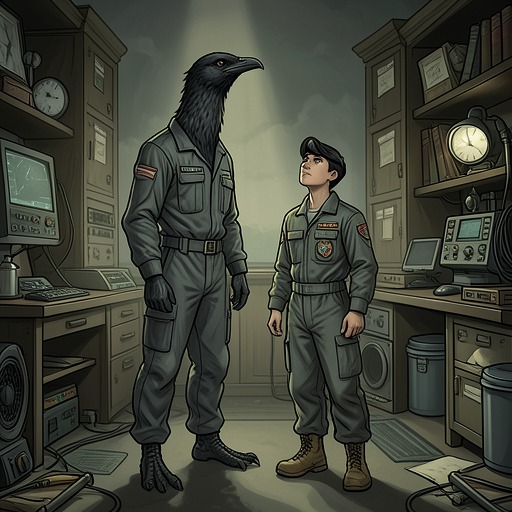
Sullivan calls Jonathan a one-in-a-million bird because he has learned so much at once that he did not need to pass through the long succession of lives most gulls require. The contrast gives the maxim both a practical and a spiritual dimension: technical mastery matters, but its deeper consequence is that Jonathan can recognize possibilities beyond the limits he once took for granted.### Learning Beyond Physical Limits The teaching expands as Jonathan studies with Chiang. At first, Jonathan’s effort produces no visible movement: day after day, from before sunrise until past midnight, he practices and moves not even a feather-width. Chiang insists that understanding, rather than faith, is the key. Jonathan eventually grasps the lesson that he is not simply a limited body measured by a forty-two-inch wingspan, but a perfect, unlimited gull; in a flash, he and Chiang are standing on a different shore beneath a green sky and twin yellow suns.
That change gives the expression a literal reach within the story’s imaginative world. Learning prepares Jonathan to move beyond ordinary physical constraints, but it also alters what he thinks perfection means. Chiang teaches that heaven is not a place or a time but being perfect, and that perfect speed is not a record-breaking number: it is being there. The movement from measured speed to thought-speed flight makes learning an enlargement of understanding as well as control.### From Learning to Teaching The maxim also connects Jonathan’s development to his responsibility toward others. Chiang’s lessons eventually turn toward kindness and love, and his final instruction to Jonathan is to keep working on love. After Chiang vanishes, Jonathan repeatedly thinks of Earth and wonders whether a gull there is struggling to escape the belief that flight is merely a way to reach a breadcrumb. The more he practices kindness and seeks to understand love, the stronger his desire to return becomes.
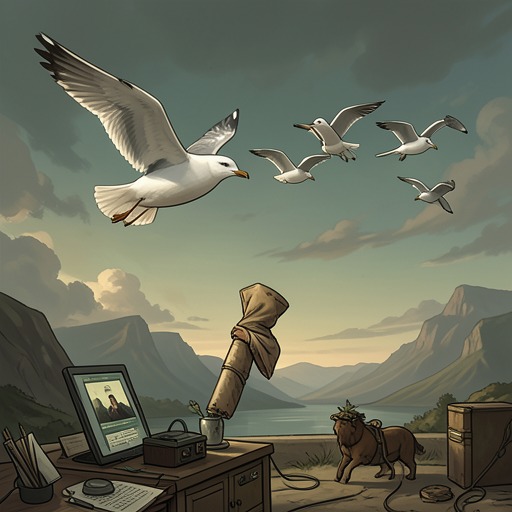
Jonathan’s choice makes the principle communal rather than purely individual. He understands his way of demonstrating love as giving another gull the chance to see the truth for itself. When he leaves Sullivan, he argues that overcoming space and time need not destroy friendship: beyond space there is only Here, and beyond time only Now. He holds in thought an image of gull flocks on a shore in another time and recognizes himself not as bone and feather alone but as an idea of freedom and flight. Learning has carried him beyond his former limits; returning gives that learning a purpose in the life he left behind.