
The Body Against Its Stories
Journey to the End of the NightThis flow traces the novel’s recurrent collision between idealized accounts of life and the stubborn realities of sickness, labor, sex, and death.
increasing Bearing strength in each event
 decreasing
Bearing strength in each eventdecreasingThe Body Under Fire
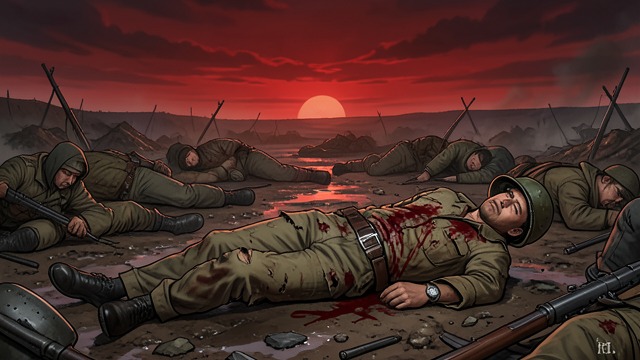
The Body Under Fire
Ideals meet flesh
Patriotic language gives no protection when shells and bullets reach soldiers. Bardamu sees bodies injured and destroyed beneath the abstractions of national glory.
The body’s authority
Physical fear becomes more convincing to him than speeches about honor. Bodily vulnerability repeatedly unsettles the stories institutions tell about sacrifice.
The Colonial Body
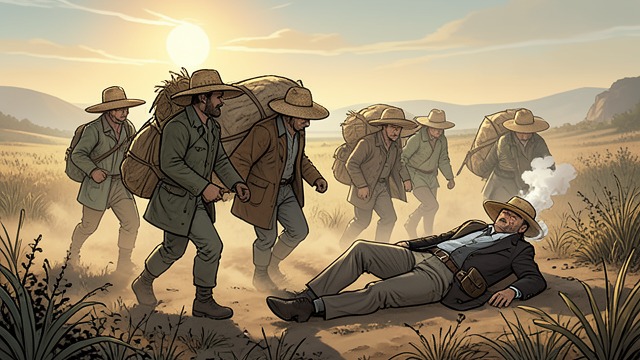
The Colonial Body
Labor and sickness
African workers carry heavy loads under coercion, while disease and heat weaken the colonizers and the colonized. The body registers the costs that administrative language obscures.
The limits of mastery
The colony treats people as labor and merchandise, yet the climate steadily defeats those who claim authority. Physical decay makes imperial control look precarious.
The Mechanized Worker
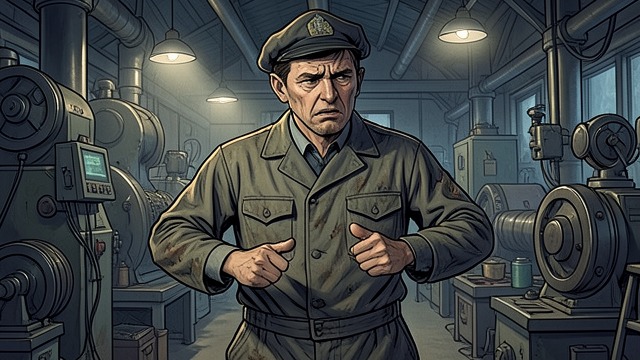
The Mechanized Worker
Motion without agency
At the factory, Bardamu’s body is expected to repeat a small task amid noise and vibration. Work reduces the worker to motion that serves the machine.
Age arrives quickly
The repetition makes him feel old and rigid. The body becomes both the instrument of production and the first casualty of industrial routine.
The Sick Child
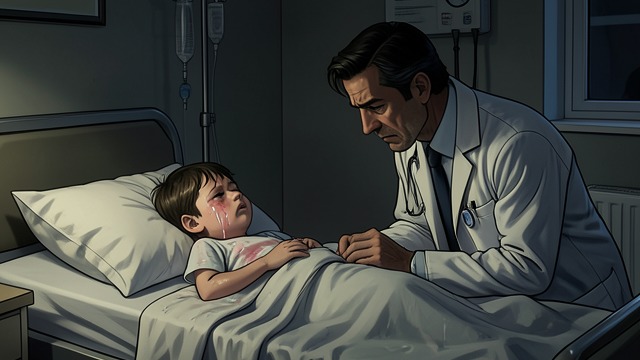
The Sick Child
A fragile body
Bébert’s fever and wasting resist Bardamu’s treatment. The child’s body makes medical uncertainty immediate to a doctor who has little power.
Grief without remedy
His death leaves no lesson that can compensate for the loss. The body’s decline is neither moral nor purposeful; it simply ends a life.
The Wounded Robinson
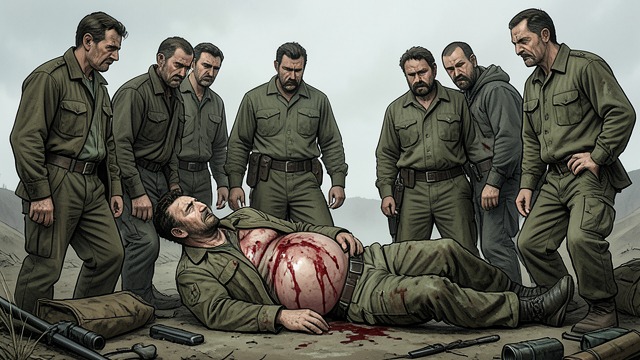
The Wounded Robinson
An exposed body
After Madelon’s shots, Robinson’s abdomen swells as Bardamu and the others assess his wounds. Clinical observation cannot conceal the human suffering before them.
Death’s material fact
Internal bleeding kills him despite morphine and medical attention. His death makes bodily decay unavoidable and strips away every remaining performance.
During Bardamu’s first battle
During Bardamu’s months in Africa
During Bardamu’s Ford employment
During Bébert’s final illness
During the final hours at Vigny
