Bébert
Journey to the End of the NightBébert is the young nephew of Bébert’s Aunt, the concierge in Ferdinand Bardamu’s poor La Garenne-Rancy neighborhood. He appears first as a child doing his aunt’s work at the lodge, then as a gravely ill patient whom Bardamu visits twice a day. His death exposes the limits of medicine and the poverty surrounding it, while the memory of his affectionate smile remains with Bardamu long after he leaves Rancy.
Identity and First Appearance
Bardamu first meets Bébert on the sidewalk while the boy is minding the lodge during his aunt’s shopping trip. He is sweeping up dust, as expected in a neighborhood where not beating carpets or raising dust early in the morning would mark a household as dirty. The street’s residents watch as Bébert leaves the broom to greet the neighborhood doctor. Bardamu notices his sickly greenish appearance and that he scratches himself; the doctor has fleas too, caught from patients during the night. The encounter places Bébert within the crowded, impoverished daily life of the street, where even a child’s ordinary chore connects him to the neighborhood’s standards and conditions.
The remembered image that endures is not the dust or the illness but Bébert’s smile. Bardamu says he cannot forget the “infinite little smile of pure affection” that crossed the boy’s livid face. He sets that unguarded affection against the hardening he associates with adulthood, imagining children as less certain to become as morally diminished as grown people. Bébert’s significance thus begins in a small gesture: a greeting that Bardamu later recalls as a rare instance of uncomplicated tenderness.
Illness and Bardamu’s Care
After Easter, when Bardamu has returned to Rancy, Bébert falls ill. His aunt hesitates before asking Bardamu to take the case, probably because he charges less than the other doctors she knows. Bardamu’s low fee is a practical reason for employing him, but it also places the treatment within the economics of a poor household. The neighborhood follows the case closely: people wait outside the lodge or on doorsteps to hear whether Bébert is improving, while the aunt’s visitors bring competing judgments about which doctor would be more capable.
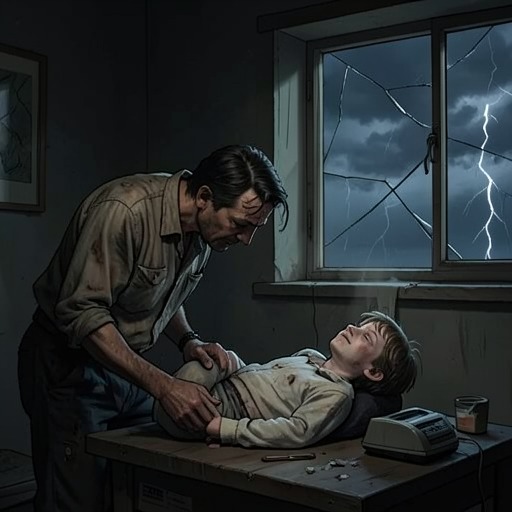
Bébert is not initially delirious; instead, he loses the desire to move and grows thinner day by day. Bardamu describes the remaining yellow, flabby flesh trembling with each heartbeat and the child lying for weeks with a pensive expression. Despite temperatures rising from 102 to 103, Bébert meets his doctor’s visits with a lucid smile. His alertness amid physical decline makes the illness more painful for Bardamu, who sees the child’s persistence while recognizing that his own treatment is not stopping the decline.
Bardamu visits twice daily as the illness continues for weeks. The whole neighborhood takes an interest, but its attention is accompanied by scrutiny: people judge Bardamu’s intelligence, and the lodge falls silent when he enters. His inexpensive care damages his standing, since a free or nearly free doctor is taken to reflect poorly on the patient and family. Neighbors urge the aunt to dismiss him and call a more impressive physician. Yet other doctors show little eagerness to accept the case once they learn how ill Bébert is, so Bardamu remains responsible for seeing it through.
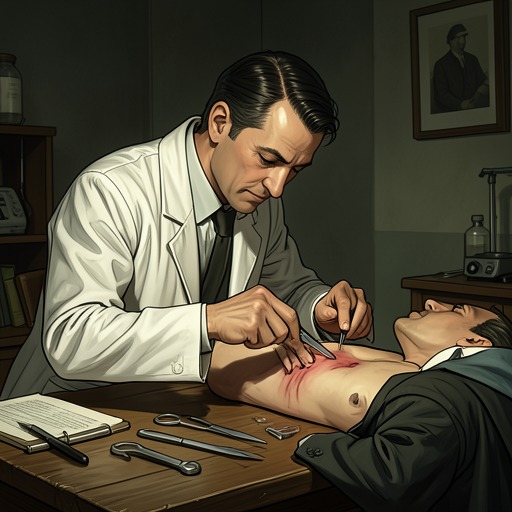
He tries the treatments available to him, including baths, serum, a dry diet, and vaccines. Nothing works. Bardamu calls the illness a malignant typhoid that defeats his efforts; Bébert continues to fade while smiling, and the doctor feels himself helplessly watching from below as the child is carried away by fever. The aunt, after exhausting her advice, breaks down in repeated grief. The contrast between her distress, the neighborhood’s medical gossip, and Bardamu’s failed interventions makes Bébert’s illness both an intimate loss and a public spectacle in the lodge.
Death and the Aunt’s Grief
After Bébert dies, Bardamu returns to the lodge late at night while quietly leaving Rancy. A school photograph hangs above the aunt’s sewing box: Bébert in his school smock, beret, and cross. It is an enlarged picture she paid for with coffee coupons, a modest keepsake that gives physical form to the child she has lost. The aunt wakes and recognizes Bardamu as her doctor, then offers him a seat and says that she too is unwell.
She makes hot grog and speaks mostly about Bébert and the Henrouilles. She repeatedly tries to arrange her memories of the boy in order, including the details of bottle-feeding him as a baby, determined not to leave out any of his endearing qualities. Each time a memory returns, she starts the account again; when she forgets something, frustration gives way to tears. Fatigue overtakes her as she sobs herself to sleep. Bardamu understands that she is alone and that remembering Bébert is both an effort to preserve him and a source of renewed grief.
Bardamu believes the aunt’s heart is sick and old and imagines that she, too, will soon be gone. His thoughts connect Bébert’s childhood play in the nearby cemetery with the dead gathered there, and he pictures the lodge eventually being repainted after her death. The reflection does not offer consolation: he feels that the living cannot achieve the togetherness the dead share, and he cannot stay beside the aunt. He leaves, diploma in pocket, continuing into the night.
Memory and Narrative Significance
Bébert remains part of Bardamu’s memory after his departure from Rancy. On a night in Montmartre, amid a vision of the dead assembled above the city, Bardamu recognizes Bébert among them and signals to him. The scene folds the dead child into a wider reckoning with people Bardamu encountered but could not fully attend to while they were alive. Bébert’s death is no longer confined to the lodge or the period of treatment: he becomes one of the remembered dead who accompany the narrator’s imagination.
Later, passing the former lodge, Bardamu wonders who lives there now and whether Bébert’s school photograph is still hanging over the bed. He does not go in, because it is too late to wake anyone. This brief hesitation reprises the earlier farewell: the child’s absence persists through a picture, a place, and the possibility of asking after what remains. Elsewhere, Bardamu recalls having administered large quantities of an anti-masturbation syrup at the Vigny rest home, linking that routine to his memory of Bébert and the syrup associated with the earlier treatment. The reference shows how the boy’s illness continues to shape Bardamu’s later medical habits as well as his private recollections.
Bébert’s role is defined less by an extended independent plot than by the relationships and memories organized around his decline. His aunt’s devotion, the neighborhood’s intrusive interest, and Bardamu’s unsuccessful care reveal how a poor child’s illness becomes entangled with household grief, social judgment, and limited medical choices. The affectionate smile Bardamu remembers stands against that harshness; after Bébert’s death, it is one of the few traces of tenderness that the narrator carries away from Rancy.