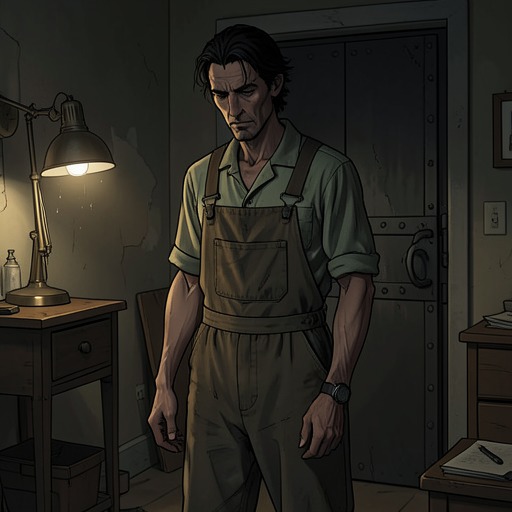
Booby-trapped rabbit hutch
Journey to the End of the NightThe Booby-trapped rabbit hutch is the central device in a plot to murder Grandma Henrouille and make her death appear accidental. Constructed by Robinson at the request of the Henrouille couple, it is meant to conceal deliberate violence behind an everyday chore; instead, the mechanism goes off while Robinson is still assembling it, exposing the plan and leaving the intended victim alive.
Design and Intended Use
Robinson describes his part as building the hutch, while the fireworks are to be supplied and used by the couple. He has been paid a hundred francs for the wood, two hundred and fifty for his labor, and a thousand more for the idea. He also sees the arrangement as a possible continuing source of income, comparing a well-told story of the affair to a pension.
The scheme relies on Grandma Henrouille being sent to feed the rabbits one evening. The fireworks are to be placed so that touching the hutch door sets them off. Because the neighborhood already believes she is mentally unwell, the conspirators expect her death to be accepted as an accident: they would say that she had been warned to stay away from the rabbits and had disobeyed. The hutch is thus intended not simply to harm her, but to make the circumstances of her death serve as a cover story.
The Plot and Its Reversal
The narrator recognizes the seriousness of what Robinson is doing and asks whether he is preparing to murder Grandma Henrouille merely to please her daughter-in-law. Robinson insists that he is only making the hutch and that the couple will handle the fireworks. He offers practical justifications as well, including the old woman’s age and the claim that he would merely be arranging her departure. The narrator is unconvinced that argument can change anyone’s conduct in a situation shaped by hardship and self-interest.
The plan fails during construction. As Robinson fastens the fireworks to the hutch door, a rabbit moves; the device goes off while he is connecting it. Grandma Henrouille, watching from her shack, later says she had a ringside view. Her account makes the crucial reversal plain: the contraption intended for her instead injures Robinson’s eyes, before the trap can be used against its target. The failure is presented as a consequence of the device’s timing and Robinson’s mishandling, not as a change of heart or a decision to abandon the plot.
Exposure and Significance
After the attempt, Grandma Henrouille recounts the scheme repeatedly. She confronts her daughter-in-law with what she knows, identifies Robinson, and recalls that she had seen him whispering with the couple. The failed trap therefore does more than prevent the planned killing: it gives the intended victim knowledge she can use to challenge the people who arranged it. She also tells the narrator that Robinson had proposed killing him, widening the account of Robinson’s work beyond the hutch plot.
As an ordinary rabbit hutch, the object belongs to a routine domestic setting; rigged with fireworks, it becomes a concealed weapon and a device for manufacturing an apparently plausible accident. Its practical purpose and its murderous use occupy the same construction. The reversal makes that disguise collapse: the device meant to remove an unwanted old woman instead exposes the conspiracy and turns its maker into the person harmed by it. The hutch’s failure is both the plot’s decisive interruption and the means by which the violence planned in private becomes known.