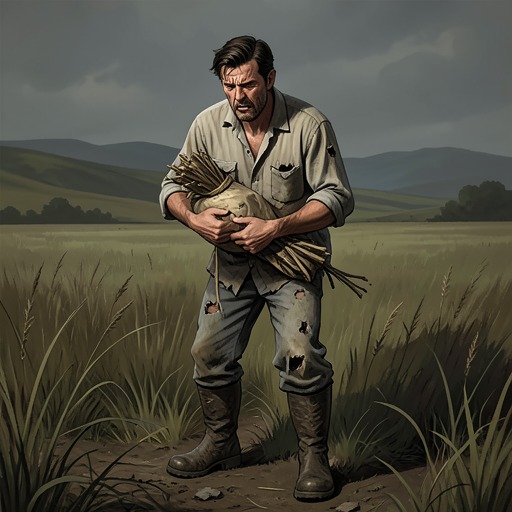
Cowardice as a survival strategy
Journey to the End of the NightCowardice as a survival strategy is Ferdinand Bardamu’s answer to imminent violence: when escape is possible, survival matters more than dignity, consistency, or heroic resistance. In the confrontation with Captain Frémizon aboard the Admiral Bragueton, Bardamu converts fear into a method, talking his way out of danger through flattery, physical contact, and patriotic performance. The episode makes cowardice both a personal tactic and a governing principle of the narrator’s view of human conduct.
The Logic of Escape
Bardamu’s reasoning begins with the threat of a sudden, fatal attack. Hearing that Captain Frémizon has come to demand an explanation of the remarks made during the voyage, Bardamu feels relief rather than alarm: a demand for speech leaves room to maneuver, whereas a blow might not. He regards the confrontation as an opportunity because it replaces immediate violence with a situation he can manage through words.
He generalizes from that calculation into a blunt ethic. Any form of cowardice can become hopeful when it offers a route out of danger; a person under persecution need not first discover why the persecution began, or insist on choosing only respectable means of escape. Getting away is sufficient. The episode therefore defines cowardice less as passive fear than as active attention to whatever practical opening remains.
Humiliation as Tactic
Bardamu answers Frémizon’s accusation by denying that he could have expressed contempt for the officers and passengers. He praises the colonial officers as heroes and presents himself as their brother, then elaborates on their sacred duty and celebrated predecessors. His speech is not an account of conviction but an improvised performance designed to interrupt the confrontation and make the accusers hesitate.
At a pause, Bardamu seizes the opening: he approaches the captain and grips both his hands. Maintaining that contact, he apologizes, attributes the misunderstanding to his own timidity, and asks to be admitted into the group’s patriotic fellowship. The gesture is tactical as well as theatrical. Holding Frémizon’s hands makes Bardamu feel safer, while the captain’s inability to respond decisively gives the speech time to work.
Bardamu’s loss of self-respect is the episode’s inward cost. He describes it as a gradual weakening that eventually becomes complete, but also as a release: after the humiliation, he feels morally light and free. The reversal is central to his survival ethic. What ordinary standards would mark as degradation becomes useful precisely because Bardamu stops treating dignity as something worth risking his life to defend.
Patriotism and the Truce
Bardamu completes his performance by appealing to shared patriotic feeling. Raising one arm while still holding one of the captain’s hands, he cries, “Vive la France! Vive la France!” He credits the slogan to Sergeant Branledore’s familiar gimmick and says it works again. The audience hesitates: an officer finds it difficult to strike a civilian who has just shouted for France, and that moment of hesitation is enough to save Bardamu.
He then turns the pause into a social bargain, inviting the officers to drink to his health and their reconciliation. They accept, and the group drinks for two hours. The danger has not vanished so much as changed form: Bardamu must keep praising the officers and draw out stories of their colonial exploits to avoid saying anything that might renew the conflict. Their vanity supplies the fragile terms of the truce; admiration lets him occupy the role of a compliant audience instead of an adversary.
Meaning and Limits
The episode makes survival depend on reading other people’s weaknesses rather than appealing to reason or justice. Bardamu describes soldiers as readily amused when they are not fighting and treats their vanity as a predictable resource. His own exaggerated admiration is therefore a means of managing danger, not evidence that the patriotic ideals he invokes have persuaded him.
His conclusion is deliberately unsentimental: fear has proved more useful than weapons or virtues. The claim does not turn cowardice into a conventional moral ideal; it exposes the cost of heroic self-respect in a world where the threat is bodily harm. The rescue is temporary—the women who watched the reconciliation remain suspicious of Bardamu—but the immediate outcome confirms his rule. In this encounter, survival comes not from defeating power but from surrendering the appearance of resistance until violence loses its opening.