Detroit
Journey to the End of the NightDetroit is the setting for a decisive passage in Ferdinand Bardamu’s American experience: a city where industrial routine deepens his alienation, while an intimate relationship with Molly gives him temporary refuge and a lasting memory of kindness. He arrives seeking work, moves through the exhausting world of Ford’s factory and its laborers, and eventually leaves the city with Molly’s affection still shaping how he understands himself.
Arrival and the search for work
After a fierce quarrel with Lola, Bardamu takes the train to Detroit, having heard that the city offers plentiful jobs that pay well and do not demand too much. The expectation is quickly tested by the people he encounters: passers-by offer the same confident, directionless reassurance he had heard from a sergeant in the forest, telling him to follow his nose. The advice supplies no real knowledge of the city or its prospects; it simply sends him onward into another uncertain stretch of life.
Detroit gives Bardamu employment at Ford’s, but the work brings him into a world he experiences as an extension of the machinery. He describes the factory hands as echoes and smells of machines, their bodies convulsing with vibrations. The city’s promise of accessible wages thus carries a cost: paid work does not restore his independence so much as make him feel incorporated into industrial motion. After weeks of renunciation, he senses himself becoming a new Ferdinand, but the change is not a recovery of uncomplicated well-being. His desire to see people returns precisely because the factory has made ordinary human contact feel absent.
Work, isolation, and bodily consolation
Bardamu seeks out a clandestine brothel in the north end of town, whose vague address he has obtained only after considerable effort. Its garden and discreet entrance distinguish it from the hostile world he has known in America: to enter, he must move quickly enough to avoid the nearby policeman, yet inside he is received amiably for five dollars. He returns regularly, spending his wages there because the physical intimacy feels necessary to counter the factory’s horror. Movies, which had once offered a mild antidote, no longer suffice.
The brothel also makes Detroit a place of stark contrasts in money and leisure. Bardamu earns barely ten dollars at Ford’s, while Molly takes in about a hundred dollars a day. On Saturday nights, baseball teams arrive in high spirits, and Bardamu gives up his place while they crowd the establishment. He waits alone in the kitchen, writing short stories, and regards their exuberance as different from his own more vulnerable attachment to beauty. The scene places the factory worker, the commercial sex worker, and the carefree visitors in the same city without giving them anything like equal freedom or security.
Molly becomes more than the occasion for Bardamu’s visits. He describes the two as intimate in body and mind and says that they take walks around town for a few hours each week. Her kindness and his trust matter especially because, as he puts it, trust in a frightened person takes the place of love. She understands the industrial blues and is accustomed to factory workers. Detroit’s human refuge is therefore not a rescue from the conditions surrounding them: their connection grows within a city where Bardamu remains poorly paid, exhausted, and unsure how to imagine a future.
Molly and a temporary life together
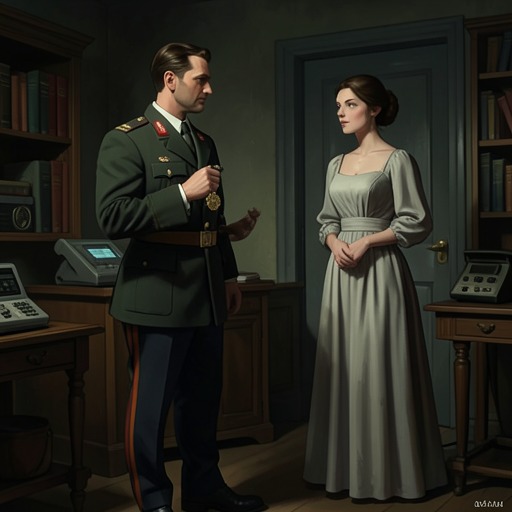
Molly’s care takes concrete forms. One evening she gives Bardamu fifty dollars. He thinks of his mother and realizes that she had never given him so much; he then spends Molly’s money on a fashionable tan four-piece suit. At the brothel, the madame plays her large phonograph to teach him to dance. Molly kisses the new suit when nobody is looking, and on their way to the movies she asks whether he is jealous, connecting his sadness both to the suit and to his reluctance to return to the factory. The gift briefly lets him appear as someone other than a worn-down worker, though he cannot simply cast off the mood that work has produced.
Bardamu eventually tells Molly that he will finish medical school in France and then return. Molly does not believe him: she understands that he will not come back and that she will not remain there either. Her judgment exposes the fragility beneath his promise. The future he describes is a reassurance he cannot make credible, and their affection does not erase the different lives waiting beyond their walks and evenings together.
Departure and the city in memory
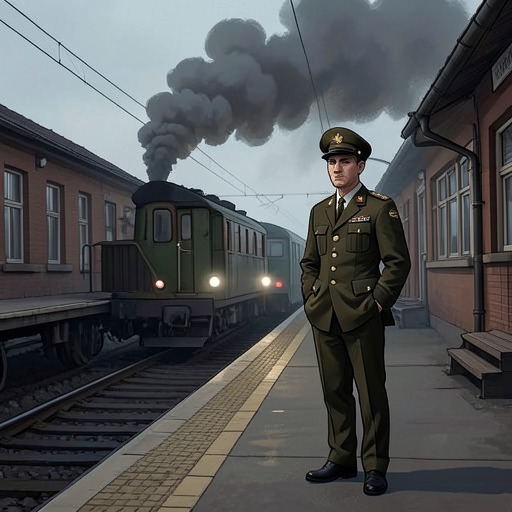
When Bardamu leaves, he and Molly go to the station shortly before she must begin work. He has said goodbye to Robinson earlier that day; Robinson is unhappy to see him go, as Bardamu recognizes a repeated pattern of leaving people behind. On the platform, men pass Molly while pretending not to know her and exchanging whispers. Their behavior brings the stigma attached to her work into the scene of departure, even as Bardamu remains focused on the intimacy they have shared.
The arriving train makes Bardamu less certain of his plans. He kisses Molly with the spirit he has left and feels genuinely sad—for himself, for her, and for everyone. The departure is not a triumphant escape from Detroit: it is another separation, undertaken despite the grief it causes. Years later, he has written repeatedly to Detroit and to other addresses where he thinks Molly might be known, but receives no answer. He learns only that the house has closed. The city persists for him less as a recoverable place than as the setting of an attachment whose future he cannot reach.
Significance
Detroit holds together two sharply different experiences of modern life. Ford’s factory turns workers into bodies that seem to echo machinery; the clandestine house offers Bardamu a brief, paid welcome and, through Molly, a more particular intimacy. Neither experience changes the insecurity of his position, and neither makes the city a permanent home. What endures is not a career or a successful return, but Bardamu’s memory of Molly’s kindness. His retrospective address to her imagines that she might still come to him and share his bread and furtive destiny; even the possibility that she is no longer beautiful does not undo the beauty he has kept alive in memory. Detroit’s lasting significance in his story lies in this contrast between the impersonal force of work and the intimate generosity that remains with him after he has gone.