Lola
Journey to the End of the NightLola is an American nurse whose wartime romance with Ferdinand Bardamu brings the novel’s conflict between patriotic idealism and fear of death into an intimate, repeatedly uneasy form. She offers him affection, attention, and eventually money, but she cannot accept his rejection of the war; when they meet again in New York, need has reversed their positions, and their shared past becomes the means by which Bardamu presses her for help.
Identity and Introduction
Bardamu meets Lola in the lobby of the Opéra-Comique, after receiving the Médaille Militaire while convalescing from a wound. He remembers the evening as a turning point: her questions and her American identity prompt his curiosity about the United States, while the possibility of travel opens in his mind as an uncertain departure from the life he knows. Lola is not simply an incidental admirer; her entrance helps set Bardamu’s next movement in motion.
In a Paris where uniforms have become nearly ubiquitous, Lola wears an official one decorated with small crosses on its sleeves and cap. She has come to help France, as she tells a hotel manager, and her manner joins patriotic conviction to youthful enthusiasm. Bardamu finds her attractive and is drawn to her body, but he distrusts the emotional idealism she associates with the heart. His account establishes their mismatch from the beginning: Lola approaches the war through service and belief, while Bardamu sees it through the bodily danger from which he longs to escape.
Lola belongs to a group of American Expeditionary Forces nurses housed at the Hôtel Paritz. Through her connections, she is placed in charge of a service supplying Paris hospitals with apple fritters. She hires cooks to make them and tastes the results before delivery; the daily task becomes a small but consequential part of the couple’s life. When anxiety about weight makes her stop eating the fritters, their routines change: they take long walks along the riverbanks and boulevards and stop going to the Napolitain for ice cream. Her work, appetite, and self-consciousness give their relationship a domestic rhythm, though Bardamu’s account presents that rhythm through his own sharply skeptical perspective.
Wartime Intimacy and Ideological Conflict
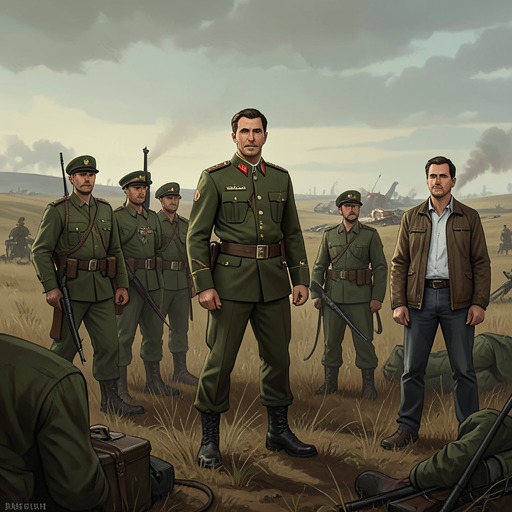
Lola’s patriotism is not a passing flourish in their conversations. She repeatedly speaks of France as a wounded, chivalric figure and wants Bardamu to share her enthusiasm. He listens without contradicting her, partly because he is sexually attracted to her, but he cannot summon the patriotic feeling she expects. His experience of war has left him, in his words, radically cured of heroism. To him, the public language of national sacrifice disguises a massacre, and the poor men he knows are especially exposed because their deaths matter little to the powerful.
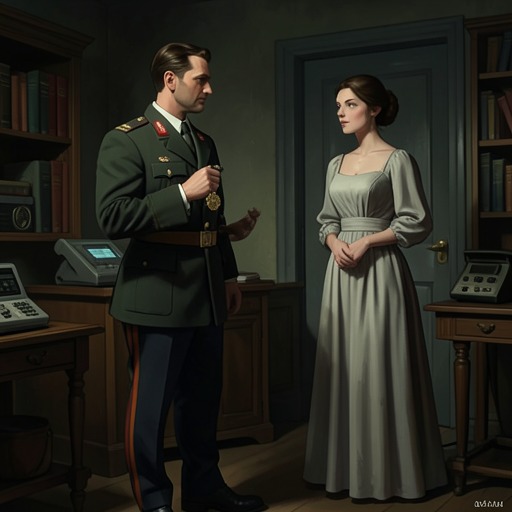
The contrast sharpens when Bardamu is confined in a military hospital or institution and Lola visits him. On a Thursday she asks whether he has gone mad; he admits that he has. He describes a fear so deep that even the prospect of a natural death troubles him, because he wants to remain buried rather than be cremated and reduced to ashes. Lola calls him an absolute coward and compares him to a rat. Her response makes clear that she reads his fear not as a consequence of the war but as a failure of character.
Bardamu answers by making his position explicit: he rejects the war and everything in it, not merely its suffering or its outcomes. He insists that he does not want to die, and argues that the soldiers killed in past wars have become anonymous to later generations. In his view, they died for nothing, and the war now celebrated as an urgent national cause will itself eventually be forgotten. Lola cannot accept that refusal. For her, rejecting the war while the country is in danger is possible only for madmen and cowards; for him, her patriotic certainty is part of the machinery that makes slaughter appear honorable.
That exchange ends the relationship. Lola loses sympathy when Bardamu openly claims the shame she assigns to him, and she decides to leave. At the hospital gate she does not kiss him; when he asks about the fritters, she gives no answer. The small, ordinary question about her work cannot restore the intimacy. Her silence marks the break as both personal and ideological: the nurse who had shared daily routines with him now refuses the man who will not adopt her account of courage.
The Gap Between Their Worlds
Bardamu’s retrospective portrait of Lola is openly partial. He calls her tender, enthusiastic, and physically attractive, but also describes her as a charming fraud, distant from the war and from life. He believes in her body, not her soul, and treats her optimism as the privilege of someone with health, security, and a future. The contrast is less a neutral account of Lola’s character than a measure of the gulf between a wounded man who expects to die and a nurse who still believes that patriotic purpose can give suffering meaning.
Their unequal views of the war persist even when the couple are together. Lola talks about France and heroism; Bardamu thinks of his own body and the risk of being sent back to the front. He says he lets her speak because she is sexually accommodating, an admission that exposes how much their intimacy depends on an arrangement he considers bodily rather than spiritual. In his narration, physical closeness and ideological alienation coexist; neither cancels the other.
Lola’s hospital work also places her within the public performance of patriotic service. She has a uniform, a role connected to the hospitals, and a task supplying food to the wounded. Bardamu, however, regards the civilian and institutional celebration of heroism with suspicion, especially after his own experience of combat and injury. Their difference is not simply that one believes and the other doubts: each sees the same wartime world from a different position, and Bardamu insists that his exposure to death has made the rhetoric of sacrifice impossible for him to accept.
Reunion in New York
Years later, Bardamu finds Lola in New York while he is desperately poor. Before approaching her, he weighs whether to ask for fifty or a hundred dollars and doubts that he has enough strength to make the request before eating and sleeping. He finally locates her on the twenty-third floor of a building on 77th Street. Her comfortable apartment contrasts with his need, and the encounter begins with mutual hostility rather than easy recognition of former intimacy.
Bardamu tries to draw on their shared past and mentions the war, but Lola does not want to hear about it; she says that it makes her feel old. She retaliates by mocking the changes in his appearance, and the two trade insults. Their former disagreement has not softened into reconciliation. Instead, the war remains an unwelcome subject for Lola and an available point of pressure for Bardamu, who has come to her not simply to remember but to obtain money.
The balance shifts when Lola speaks about her mother in Chicago, who has cancer of the liver. Bardamu’s blunt assertion that the disease is incurable visibly disconcerts her. He then uses her distress to press his case, threatening to stay and continue discussing the illness unless she lends him money. The episode shows him turning medical knowledge into leverage; the tenderness he once associated with their relationship gives way to a transaction shaped by his immediate poverty and her fear for her mother.
Money, Threat, and Narrative Significance
Lola finally screams at Bardamu to take the hundred dollars and leave, never to come back. He asks for a kiss as well, teasing her about whether they are still friends. In response she takes a revolver from a drawer, and he leaves by the stairs without waiting for the elevator. The money answers his request, but it does not restore affection: her payment is coupled with an unequivocal expulsion and the threat of force.
For Bardamu, the quarrel has an immediate material consequence. He says that the fight restores his taste for work and improves his morale; the next day he takes a train to Detroit, where he has been told that jobs are plentiful. Lola therefore becomes a point in his itinerary as well as a figure from his past: he approaches her when he is exhausted and short of money, secures enough to move on, and leaves after their encounter has confirmed how little of their old intimacy survives.
Lola’s role is defined by a persistent collision between conviction and survival. In Paris, she asks Bardamu to believe in France and the moral meaning of sacrifice; he answers that he wants to live and rejects the war outright. In New York, Bardamu’s circumstances have changed, but the relationship remains combative: her money can meet his immediate need, while her revolver ends the possibility of renewed closeness. Through Lola, the novel sets patriotic idealism against the fear of death, then returns to the pair in a different country to show intimacy reduced to memory, bargaining, and departure.