Madelon
Journey to the End of the NightMadelon is the young caretaker of the Sainte-Eponime crypt in Toulouse and the fiancée of Robinson, whose blindness and precarious recovery shape their plans for a shared future. Seen chiefly through Ferdinand Bardamu’s account, she is at once a capable worker, a secret lover, and a forceful presence in Robinson’s life. Her story turns on a stark reversal: the woman who imagines a life together with Robinson becomes the pursuer he tries to escape, and, when he refuses to go with her, she shoots him.
Work and Introduction
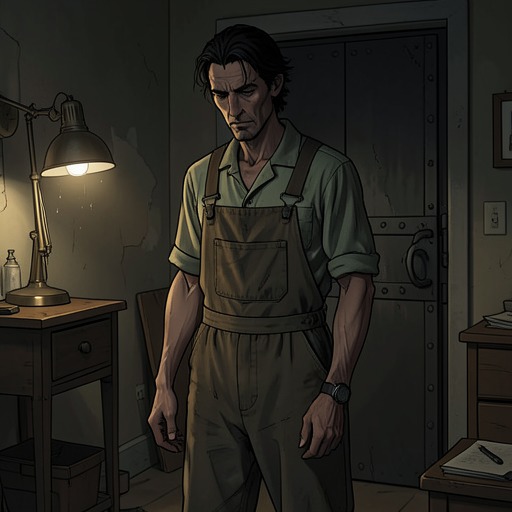
Bardamu first encounters Madelon at the entrance to the crypt beneath the Church of Sainte-Eponime. She is covering the lunch hour for Grandma Henrouille, the regular caretaker. She explains that she works for a dressmaker in the afternoon, placing her between the crypt’s unusual business and ordinary paid work in the city. Madelon has also been writing Robinson’s letters, so Bardamu’s first conversation with her immediately connects her to both his friend and the place where Robinson lives and works.
Their meeting begins in a practical exchange of news. Madelon says that Robinson is improving and may soon see well enough to go out alone. Grandma Henrouille, meanwhile, is content with the crypt and its income; the main nuisance at home is a bedbug problem severe enough that the household burns sulfur. Madelon tells Bardamu that Robinson often speaks of him, and the conversation reaches the couple’s planned marriage. Only after they have talked for some time does Bardamu realize he has not asked her name. She tells him she is Madelon, and that she was born during the war.
The proposed marriage does not persuade Bardamu that Robinson is prepared for domestic life. He thinks Robinson will remain an invalid even if his sight improves, and worries that his health and morale are also damaged. He considers warning Madelon, but cannot manage to turn the conversation toward marriage or to withdraw from it; instead, he asks to see the crypt. His misgivings establish a contrast between his pessimistic assessment of Robinson and the future Madelon and Robinson are trying to arrange.
Engagement, Money, and the Affair
Madelon and Robinson’s relationship is bound up with work and economic plans as well as affection. Robinson imagines that, once recovered, he and Madelon can open a small restaurant, with her cooking attracting customers. He hopes to obtain starting capital from Grandma Henrouille and intends to leave her behind. He also speaks of making Madelon his wife before becoming physically intimate with her. These plans give their engagement an everyday, material shape: a business, a source of money, and a departure from the crypt.
Bardamu judges Robinson harshly for becoming preoccupied with money and saving. He says Robinson has been influenced by Grandma Henrouille’s thrift and by Madelon’s wish to marry, and admits that he is jealous of the couple’s growing attachment. That jealousy has a concealed basis: Bardamu and Madelon meet secretly in her room before dinner. They do not discuss these encounters, and their affair coexists with her engagement to Robinson rather than replacing it. Bardamu’s resentment of Robinson therefore mixes his criticism of the other man’s ambitions with his own involvement in the relationship.
The intimacy between Bardamu and Madelon does not mean, in Bardamu’s account, that she has stopped loving Robinson. The two relationships occupy different positions in her life: Robinson is her intended husband, while Bardamu is her clandestine lover. When Robinson’s eyesight begins to improve, Madelon responds with visible happiness, interpreting the improvement in his left eye as a hopeful sign. Bardamu, nearby, feels excluded as she and Robinson exchange affection. The moment makes the triangle plain without resolving it: Robinson’s recovery strengthens the couple’s hopes even as Bardamu remains involved with Madelon.
From Toulouse to Separation
Bardamu agrees to stay in Toulouse for another week after Robinson and Madelon persuade him not to leave before seeing the surrounding countryside. Their invitation is framed as hospitality and sightseeing, but Bardamu is also uneasy because his intimacy with Madelon is becoming dangerous and Grandma Henrouille has begun to suspect something. The old woman stays behind to keep the crypt open. On the outing, Madelon knows people in the villages; Robinson, who cannot see well, is guided by Bardamu and Madelon and drawn toward a bar by the smell of its inexpensive French fries. This excursion shows the three still moving together, although their relations are increasingly strained by the secret Bardamu shares with Madelon.
Later, Robinson tells Bardamu that he tried to end Madelon’s attachment by claiming that he sometimes went out of his mind. He hoped that talk of his fits, against the background of his war experiences and his recent conduct toward Grandma Henrouille, would make Madelon reconsider their future. For more than a week she left him alone, and Robinson thought he might be able to slip away quietly. Instead, when he showed her the bump and scar on his head, presenting them as evidence of a wartime injury and trepanning, she became more protective and more ardent. The tactic meant to create distance intensified her attachment.
Robinson says that Madelon eventually agreed to leave her mother in charge of the crypt and go with him to Paris to find work. What she would not accept was living apart. Robinson, who had grown tired of her insistence, left secretly one morning while Madelon and her mother were out shopping. He describes the departure as the result of repeated efforts to make her release him, not as an agreed separation. His fear that she might track him down and involve the authorities accompanies his flight.
The Final Confrontation
Madelon does find Robinson again. In the cab, she demands that he come with her and threatens that, if he refuses, she will go to the police the next day and tell them how Madame Henrouille fell down the stairs. Robinson counters that Madelon was involved too and cannot disclose the event without implicating herself. She accepts that possibility rather than withdraw her threat. Their argument exposes the criminal secret binding them even as they struggle over whether they will remain together.
As the cab continues along the road, Madelon presses Robinson for an answer. He refuses to go, finally telling her to do what she likes. She draws her revolver and fires three times. Robinson collapses against Bardamu, still making sounds, while the driver stops beneath a gas lamp. Madelon pushes the driver aside, gets out, and runs down the embankment across the fields. Bardamu calls after her, but she is already gone. The scene ends not with reconciliation or a departure together, but with Robinson shot, Madelon fleeing, and Bardamu left with the immediate aftermath.
Narrative Role and Significance
Madelon’s characterization comes through uneven and interested accounts. Bardamu first sees her as a worker and a prospective bride, then becomes her secret lover; Robinson later tells him why he fled and what he believes Madelon will do. Bardamu does not present these perspectives as a settled explanation of her motives. He is surprised by Robinson’s account of her intensity, recalling that she had seemed shrewd rather than tragic, and his own involvement makes him an unreliable judge of the relationship’s boundaries. The reader encounters Madelon through the men’s interpretations, but her actions—the work she takes on, her efforts to remain with Robinson, and her final refusal to accept his answer—give the conflict its concrete direction.
Her plot also overturns the practical promise of the engagement. The couple’s hopes are expressed in terms of marriage, restaurant work, and money for a new start; the same relationship becomes a struggle over whether Robinson may leave. Madelon’s attachment persists after he abandons their plan, while Robinson’s effort to escape it ends in violence. The final cab scene closes the movement from shared prospects to pursuit and refusal, making Madelon central to the collapse of Robinson’s attempted independence and to the danger that returns to Bardamu’s life.