Memory and forgetting
Journey to the End of the NightMemory and forgetting in Journey to the End of the Night form a troubled economy: recollection can briefly restore lost people and places, yet it also reopens fear, and the passage of time turns once-vivid memories into something suspect and decayed. The narrator’s reflections move between Robinson’s private recollections, their shared past, and the narrator’s own bodily returns of distress, making memory both a fragile bond and an involuntary burden.
Memory as a private refuge
While recovering from the injury to his eyes, Robinson tells Ferdinand Bardamu about a sexual encounter from his apprenticeship. At eleven, apprenticed to a high-class shoemaker, he had delivered shoes to a customer who invited him into an experience he had previously known only in imagination. The woman’s chiffon chemise and the details of her apartment stayed with him for decades. Robinson has seen continents and lived through wars, but this early revelation remains available to him as an enduring scene of pleasure, a private recollection he can revisit when blindness confines him.
Robinson describes his closed eyes as a kind of movie show in his head. The image makes memory seem like an inner spectacle: it can furnish company and pleasure when the visible world is shut away. Yet Bardamu recognizes the limit hidden in that consolation. Thought does not free Robinson from mortality; the inward show will eventually contain nothing but death. Memory preserves an image, but it cannot restore the lost moment or hold off the end.
Shared stories and the exposure of secrets
At Bardamu’s request, Monsieur Henrouille reads to Robinson after lunch. Robinson repeats the story of the customer to him, and the private episode gradually becomes a joke shared by the household. What began as an intimate memory changes through retelling: it becomes communal material, no longer belonging to Robinson alone. The narrator draws a grim consequence from this circulation. Once secrets have been told, they lose some of their terror; what remains frightening is what has not yet been said. Speech can make memory bearable, but it also exposes and transforms what a person once kept private.
During another visit, Robinson tries to keep Bardamu beside him by recalling their shared adventures and places. His recollection reaches even things they had never previously taken time to discuss. In his isolation, the old world seems to pour back: former friends, old clothes, acts of kindness, and the people and places they had left behind. Bardamu imagines this as a shop filled with worn-out emotions, an inventory assembled inside Robinson’s blind mind. The shop is crowded, but its contents are not new life; they are remnants brought back by seclusion, and their return makes Robinson’s loneliness more palpable.
Time’s damage to recollection
The friends wonder what became of Molly, Lola, and Musyne, and Bardamu admits that, although he would rather have forgotten Lola, he would welcome news of them all. He has lost the names, mannerisms, and addresses of many people. Years spent worrying about the next meal have not merely separated him from them; they have worn down the memories of their friendliness and smiles until those expressions seem to him like grimaces. He compares neglected recollections to apples that rot and to old cheese: the passage of time does not preserve the past unchanged but makes it repellent, distorting what had once seemed warm.
This decay also unsettles the authority of memory. Bardamu and Robinson talk over their youth without trusting it. The narrator recalls his mother’s news of deaths and misfortunes, delivered amid the disappointments accumulated in her little shop, while Robinson’s own childhood offers almost nothing he can remember without despair. In this landscape, a person’s past is not a coherent account that guarantees identity. It is a collection of fragments, some vivid, some lost, and some so painful that remembering them produces disgust rather than understanding.
Bardamu’s reflections on people encountered in the past give forgetting a second, more painful meaning. Years later, he wishes he could recover both certain people and their words, to ask what they had meant or whether they had changed their minds. They are gone, and the survivors were not educated enough to understand them at the time. The missed question cannot now be asked. Memory preserves regret, but it cannot undo the lateness that produced it; the narrator and his former companions are left to continue alone, aware that they did not recognize what mattered while they still had the chance.
Forgetting, fear, and the body
Forgetting is also presented as a condition of endurance. Bardamu argues that without it people would waste away under the weight of their hopes, passions, lies, pleasures, and affectations. He describes the efforts people make to cover these things over, fearing that they may return with the force of vomit. The need to forget is not proof that the past was insignificant: it is a means of surviving what has accumulated. But the argument is deliberately uneasy. The same forgetting that makes life bearable can obscure the truth about what people have desired and done.
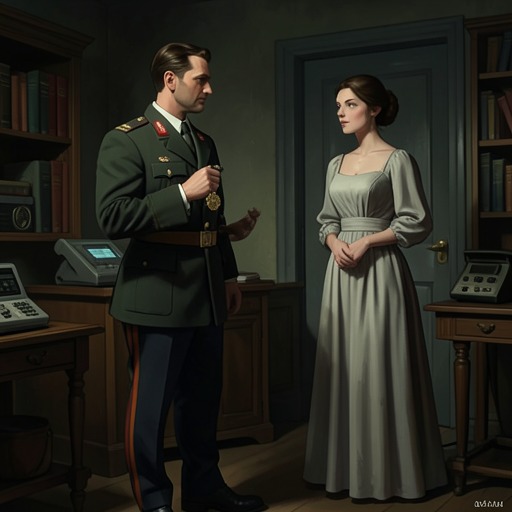
The narrator’s own distress shows how an experience can return without being invited by deliberate recollection. After his encounter with Robinson in Rancy, Bardamu believes their reunion has brought on a shock. He becomes increasingly uneasy and sleeps worse, as if an old bad dream has been carried back into his present life. The effect is not limited to a clear memory he can calmly examine; it appears as renewed spells, agitation, and insomnia. The past operates through the body as well as through conscious storytelling.
A later return takes the form of sleepless fear. Remembering what happened in Toulouse, Bardamu imagines dramatic sequels to Grandma Henrouille’s fall into the crypt. Terror rises from his bowels and makes his heart pound; he gets out of bed and paces through darkness into the dawn, unable to recover enough calm to sleep. His practical test for unhappiness is whether a person can sleep. Here the test acquires force because memory has damaged the trust that sleep requires: he says he will never again sleep fully, having lost the habit of trusting other human beings. Forgetting may be needed to keep living, but it cannot simply be commanded. What returns can take possession of the night, and of the body that has to endure it.