The body as material decay
Journey to the End of the NightThe body as material decay names a governing idea in the novel: human identity and its social ideals rest on vulnerable matter that does not remain whole. Ferdinand Bardamu’s clinical attention to an abbot’s mouth becomes a route from particular illness to a broader reflection on speech, attachment, aging, and death. Later, the same material vision takes shape in an old room changed by time and in the remains displayed in the Henrouille family crypt. These scenes connect private bodily decline with the long, impersonal process by which flesh and identity yield to dust.
The body observed
Bardamu’s starting point is not an abstract theory but the abbot before him. The man’s teeth are decayed and discolored, with tartar around them; Bardamu recognizes a serious dental condition and is about to discuss it. But the abbot is speaking too busily for the doctor to intervene. Bardamu instead watches the physical work of speech: the tongue moving, and bruised, bleeding places along its edges. Conversation, usually treated as an invisible vehicle for thought, becomes a bodily action that cannot be separated from the mouth that produces it.
Bardamu describes this scrutiny as a habit, almost a hobby. Examining how words are formed and uttered, he argues, exposes the material origins that ordinary social attention disguises. The passage shifts from one patient’s dental condition to the effort of speaking in general: speech is not a disembodied exchange of ideas but a difficult operation performed by vulnerable flesh. The movement matters. A specific clinical observation opens into an attack on the idealization of human feeling, without making the abbot’s illness itself a moral failing.
Matter against idealization
From the mouth, Bardamu extends his argument to the body as a whole. Human beings are, in his formulation, packages of living matter, and their capacity for sentiment does not lift them out of that condition. Love may be easy to imagine as an ideal; remaining together is difficult. The contrast is deliberately unsentimental: feeling is not proof that people have escaped their physical nature or achieved permanence.
The body’s struggle to endure as a recognizable individual is central to this account. Bardamu imagines the molecules composing a person as wanting to disperse into the universe rather than remain confined to one identity. Yet people insist on continuing to be themselves, year after year. The self that seems most intimate and stable is thus figured as a temporary arrangement of matter, while the effort to preserve it becomes a source of suffering. The body is both the condition of human life and the boundary that frustrates the fantasy of lasting unchanged.
Time, rooms, and decline
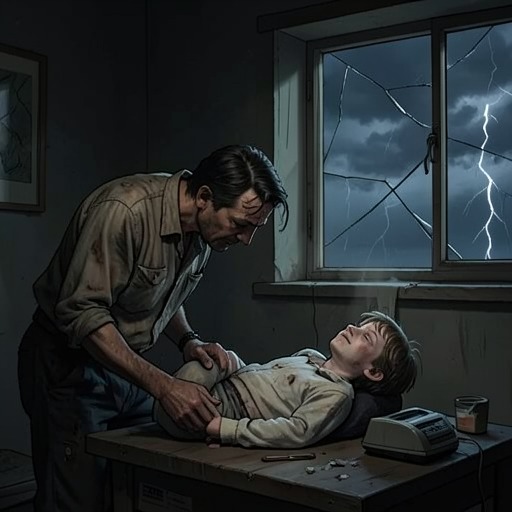
The idea recurs when Bardamu returns to the bedroom where he had treated Robinson after Robinson’s accident. The room’s contents have not been moved, yet Bardamu feels that everything has changed. Time has altered the things themselves, making them enter the present with a different weight. The passage turns aging into an alteration not only of bodies but of the world as encountered: familiar surroundings acquire a closer relation to mortality as the people who return to them have themselves moved nearer the end.
This change is gradual rather than spectacular. Bardamu describes life as languishing and shrinking, while fear of death leaves its mark on the people and objects of the past. What once seemed precious, imposing, or ordinary becomes more subdued and defenseless in retrospect. The room therefore acts as a material register of time: it is recognizably the same place, but neither it nor the returning observer can be restored to its earlier condition. Memory does not preserve the past intact; it receives it through bodies already altered by the prospect of ending.
The crypt and the visible end
In the Henrouille family crypt, material decay becomes a public display. Guided by a small lantern, Madelon and Bardamu see the remains emerge from the shadows. The corpses have spent more than five hundred years in a quicklime cemetery, and their condition records a long passage toward dust. The collection contains twenty-six bodies, from large and small remains to a baby whose dried neck still bears a fragment of lace and swaddling clothes. These surviving details make the passage of time legible without restoring the people who once lived within them.
Grandma Henrouille makes money from showing the remains to tourists. During the summer season the display earns her a hundred francs a day, and she presents the bodies as attractions. Their economic use contrasts with the physical process the crypt exposes: the remains are made to serve a living business even as they testify to the eventual disappearance of bodily integrity. The crypt thus joins decay to social circumstance, showing that even the dead can be incorporated into someone else’s livelihood.
Madelon asks whether the corpses look sad, but Bardamu distrusts the tourists’ comforting story that the dead are happy. The dead cannot answer for themselves, and the display cannot establish what they feel. His objection does not make the remains speak; it insists instead on the limit of what the living can claim about them. The scene completes the concept’s recurring movement from idealization to material fact: bodies change, diminish, and become remains, while the living supply interpretations and uses that the dead cannot confirm.
Significance
Across these episodes, bodily decay is not confined to illness or to the crypt. It joins the abbot’s diseased mouth, the difficulty of sustaining human attachment, the altered bedroom, and the centuries-long reduction of the dead. The body’s material vulnerability repeatedly interrupts ideals of speech, love, memory, and personal continuity. What appears stable—a self, a relationship, a room, even a corpse preserved as an attraction—proves subject to change or to the purposes imposed by others.
The novel makes that idea concrete through close observation and altered scale. It begins with the visible details of one mouth, expands to a theory of the body’s desire for persistence, and later presents decay across centuries in the crypt. Rather than treating death as a distant abstraction, these scenes show how mortality enters ordinary perception: in medical attention, in returning to a familiar room, and in the remains gathered for visitors. The body’s decline becomes a way of measuring both time and the fragile ideals people build against it.