The urge to flee and the compulsion to wander
Journey to the End of the NightThe urge to flee and the compulsion to wander are the governing contradiction in Ferdinand Bardamu’s relationship with Molly: he recognizes the possibility of a generous, shared life, yet treats departure as a destiny more compelling than love. The impulse is neither simple adventure nor freedom. It becomes a role he believes he has acquired beyond remedy, and its cost is measured in the intimacy he withholds, the future he refuses, and the lasting grief that follows him after he leaves America.
A Restlessness Mistaken for Destiny
Bardamu describes himself as having started out restless, then gradually taken his role and fate seriously until he could no longer imagine throwing them off. His account turns a habit of leaving into a theory of character: a person begins to love his own misery, he says, and becomes so completely restless that the condition seems fixed. The language makes the compulsion sound less like a succession of free decisions than an identity that has hardened unnoticed. Yet the claim is not entirely absolving. Bardamu also calls his urge a vice and suspects it is driven by stupid pride and a sense of superiority. The self-description thus holds two explanations together: he feels shaped by a force stronger than choice, but he recognizes that he has helped turn flight into a personal creed.
That creed becomes visible precisely when another life is offered. Molly urges him not to return to Ford’s and suggests that he find office work as a translator, something suited to his love of books. She speaks from concern for his happiness, and Bardamu recognizes the unusual quality of her attention: she tries to understand him from the inside, taking his egoism into account rather than simply judging him from her own point of view. The proposal confronts his restlessness with a practical alternative, not merely a demand that he become different. He is being offered work and care that might accommodate some part of who he is; he cannot make that possibility into a reason to stay.
Molly’s Alternative: Care, Work, and a Shared Future
Molly attempts to imagine a future that would not require Bardamu to abandon affection or dignity. She proposes that they invest their savings and buy a small business, and argues that they could live as other people do. Her plans are partly meant to quiet his scruples, but the scene also shows that she takes his hesitation seriously and tries to meet it with concrete arrangements. She is not simply asking him to remain through sentiment. She wants to build a life in which both of them might be content.
Her generosity extends beyond the relationship. Molly regularly sends fifty dollars a month to her younger sister at the University of Arizona, enabling her to pursue her unusual interest in photographing birds in nests and wild animals in dens. Bardamu sees in this support a heart both sublime and practically generous, unlike what he calls his own insincere nature. Molly also offers to provide him an allowance if he will draw up a budget, hoping to support what she understands as his unconventional vocation. He refuses. A remaining sense of delicacy prevents him from making further use of her kindness, but the refusal does not lead him toward independence through work or a shared plan. Instead, it becomes another point at which he chooses the road back into uncertainty.
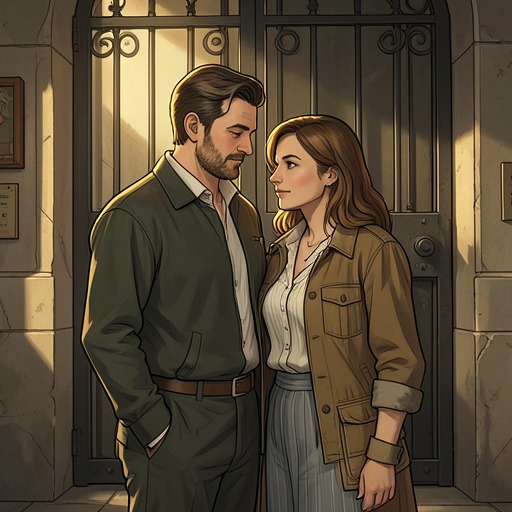
Bardamu tells Molly about the mania that makes him want to clear out of wherever he happens to be. She listens for days as he exposes his anxieties and pride, patiently taking his side whether he is struggling against his phantoms or siding with them. Her gentleness makes him grow accustomed to being understood. That intimacy, however, increases rather than cures his conflict: he feels he is cheating on his supposed destiny, so he stops telling her everything and withdraws into himself. He becomes more miserable because solitude now contains a new distress, something resembling genuine feeling. The attachment does not erase the impulse to flee; it gives that impulse something real to injure.
Intimacy Divided by the Impulse to Leave
During their excursions to bare hills and small lakes, Bardamu and Molly avoid elaborate confessions. They kiss, but he admits that he does not kiss her as fully as he should. Even in tenderness, part of his attention is elsewhere: he imagines that he must conserve passion for something magnificent and future, as though giving himself wholly to Molly might leave too little for the life he still hopes to discover. His wandering is therefore inward as well as geographical. He keeps a portion of himself in reserve for an imagined existence beyond the present, and that reservation makes genuine intimacy feel like a possible theft from his future.
Their circumstances sharpen the separation between them. After walking together, Bardamu leaves Molly outside her house, where customers will keep her occupied through the night. He goes to the movies and then rides streetcars through the city, sometimes with the pale, sleepy passengers heading toward the suburbs after two in the morning. The contrast is telling: Molly’s work ties her to a fixed place and schedule, while Bardamu makes the night into a route without a clear destination. He misses her while she is away from him, yet his sadness can make her feel more present than when they are together. Separation becomes a condition he can inhabit and even turn into a form of closeness, without surrendering the larger habit of leaving.
Molly names the practical consequence of his choice. She asks whether he knows what he wants and reminds him that, back in France, he will have to earn a living rather than roam through the night dreaming while she works. Bardamu says he loves her, but qualifies the declaration as being in his own way, and recognizes that his way does not amount to much. Molly understands his restlessness as a sickness, a need to know more and more; she also accepts that he must live his own life and thinks he will travel further alone. When he promises to finish medical school in France and return, she answers that he will not come back and that she herself will no longer be there. Her clear-eyed response exposes what his reassuring promise conceals: the future he describes does not overcome the compulsion to depart.
Departure, Grief, and the Memory of Molly
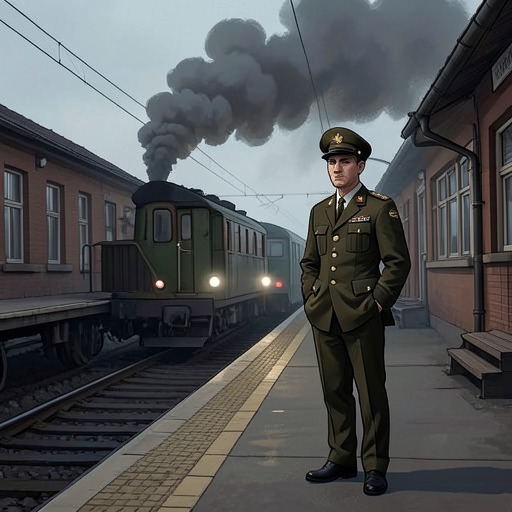
When the train arrives, Bardamu’s resolve falters at the sight of its engine. He kisses Molly with all the spirit he has left and, for once, feels genuine sadness for everyone, including himself and her. The departure is not emotionally empty or a simple rejection of her worth. He believes that perhaps people seek the worst possible grief in order to become fully themselves before death. In this formulation, sorrow becomes bound to identity: leaving gives him the pain that proves the reality of what he has left behind, while doing nothing to restore it.
Years later, he has written repeatedly to Detroit and to other addresses where he thinks Molly might be known, but has received no answer. The house is closed; that is all he has been able to discover. He still declares his love for her in his own way and imagines that she could come to him and share his bread and furtive destiny. Even the possibility that she is no longer beautiful does not undo his attachment: he says he has kept so much of her beauty alive within himself that it could last for both of them. Memory preserves what his departures could not sustain in shared life, although it cannot tell him where she is or whether she will return.
Bardamu judges that leaving Molly required madness, and calls the act cold and disgusting. He nevertheless credits her kindness and the dream she gave him during his few months in America with keeping his soul in one place, and imagines that their influence has left him less cold, ugly, and heavy than other men. This retrospective gratitude does not resolve the contradiction: he still understands himself through the compulsion to move on, but Molly remains the measure of the tenderness that compulsion cost him. The episode gives wandering its emotional definition—not a clean escape from attachment, but a pattern of leaving that carries love and grief forward as memories rather than a life shared.