
The Meaning of the Fig Tree
JudasThis thread follows the cursed fig tree from a Gospel episode to a moral question that shapes Shmuel’s and Judas’s imagined worlds.
increasing Bearing strength in each event
 decreasing
Bearing strength in each eventdecreasingThe Tree in the Yard

A Seasonal Image
Bare Branches
Shmuel looks at the winter fig tree in the courtyard and remembers Jesus cursing a tree for lacking fruit.
A Question
He wonders why Jesus did not bless it and make fruit grow instead.
The image links the ordinary landscape to Shmuel’s moral examination of Jesus.
A Miracle Refused
Need and Cruelty
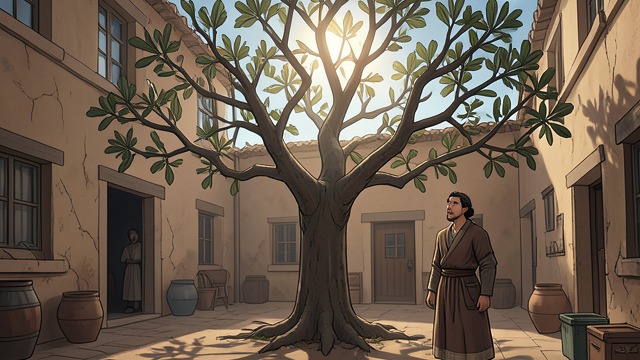
The Episode
Jesus seeks food from a fig tree that cannot fruit before Passover.
Alternative
Shmuel asks whether a miracle could have met the need without punishing the tree.
The question tests the distance between power and compassion.
Judas Sees the Warning
A Missed Sign
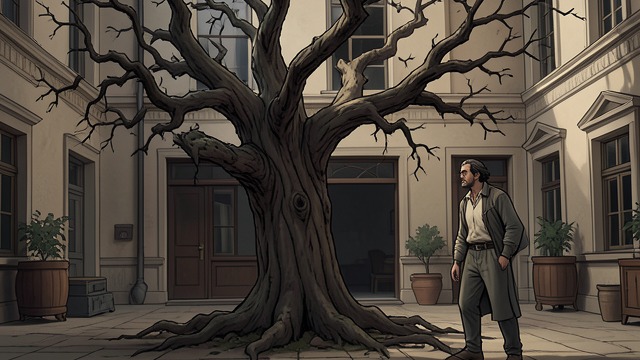
The Tree Withers
In Shmuel’s reconstruction, Judas sees Jesus curse the fig tree despite its having done nothing wrong.
Doubt Deferred
Judas senses that Jesus may be human and capable of cruelty, but continues to urge him toward Jerusalem.
The tree becomes a warning that devotion can refuse to see.
A Cross-Story Echo
Nature Outlasts the Drama
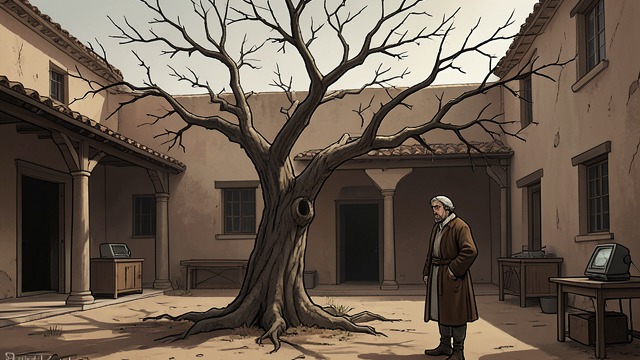
The Dying Jesus
Judas watches Jesus suffer while crowds wait for a miracle.
The World Continues
The landscape and its seasons seem to persist regardless of the human catastrophe.
The fig tree’s earlier punishment now shadows Judas’s belief in a miraculous interruption of ordinary life.
A Branch for the Rope
The Image Returns
Judas’s Despair
Judas leaves the crucifixion convinced that he has killed the person he loved.
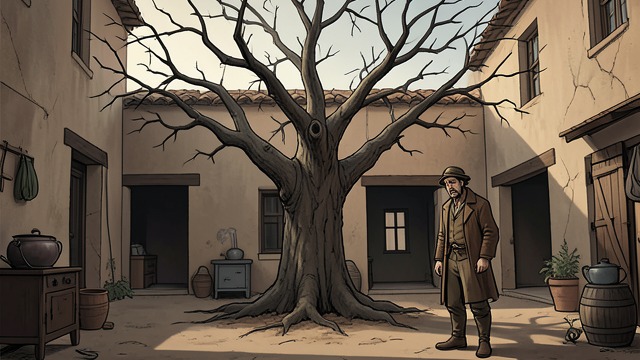
The Final Tree
He returns to the dead fig tree and uses a branch to hang himself.
The symbol turns from an accusation against a tree into the final consequence of Judas’s impossible faith.
Shmuel’s mornings in the house
During Shmuel’s early reflections
In Shmuel’s imagined account before the Jerusalem journey
During Judas’s vigil at the crucifixion
After Jesus dies in Shmuel’s reconstruction
