
The Libertine Arguments
JustineThis flow traces the repeated philosophical attempts to justify egoism and crime, alongside Justine’s resistance to their conclusions.
increasing Bearing strength in each event
 decreasing
Bearing strength in each eventdecreasingDubourg’s Utility

Dubourg’s Utility
Help made conditional
Dubourg argues that the poor have no claim on the wealthy unless they can offer something in return. He turns assistance into a transaction and presents Justine’s virtue as economically useless.
The vulnerable answer
Justine challenges the idea that need cancels human obligations. The encounter introduces the novel’s debate between mutual care and a philosophy that recognizes only personal advantage.
Dubois and Necessity
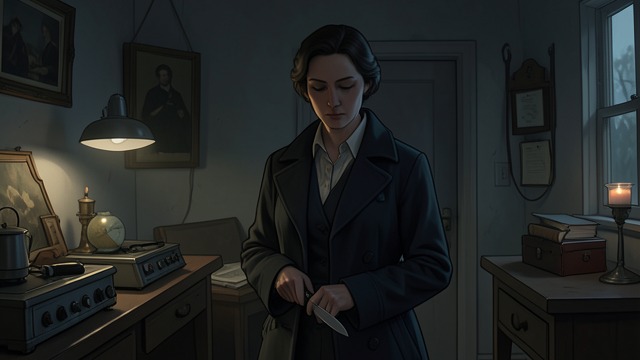
Dubois and Necessity
Crime defended as survival
Dubois argues that the rich have already violated fairness by refusing aid, making theft and violence a means of correcting an unequal balance. Her argument links private wrongdoing to structural injustice.
Justine’s objection
Justine accepts that poverty makes virtue difficult but refuses to conclude that hardship authorizes harm. Their disagreement tests whether moral duties survive when society fails to meet its own responsibilities.
Bressac’s Nature

Bressac’s Nature
Destruction naturalized
The Comte de Bressac argues that killing does not destroy matter and therefore cannot offend nature. He uses this claim to dismiss moral limits and justify the murder of his aunt.
A competing appeal
Justine answers with the claims of conscience, attachment, and future remorse. The disagreement connects an abstract theory of nature to an immediate decision about whether a person will live.
Clement’s Egoism

Clement’s Egoism
Pleasure made sovereign
Clement argues that tastes are determined by bodily organization and that a person should pursue sensations without regard for another’s suffering. Pain becomes, in his reasoning, an instrument for intensifying pleasure.
The victim’s counterargument
Justine objects that a theory of appetite does not make cruelty just. Her resistance exposes the gap between describing a desire and granting it moral authority.
Dubois’s Final Lesson

Dubois’s Final Lesson
Remorse dismissed
Dubois tells Justine that guilt is habit and geography, and that repeated wrongdoing can silence conscience. Her advice turns moral education into a strategy for making crime feel ordinary.
Justine’s refusal
Justine asks why Dubois demands that her own character change if different temperaments are themselves natural. The question challenges the assumption that a philosophy of moral relativism can justify compelling others to adopt it.
During Justine’s first search for work
After the prison escape
During the poisoning plot
During Justine’s first weeks in the monastery
During her later return to Grenoble
