
Confinement as a Repeating Pattern
JustineThis flow reframes Justine’s adventures as a progression through linked systems of detention, forced service, and restricted movement.
increasing Bearing strength in each event
 decreasing
Bearing strength in each eventdecreasingConvent Departure, No Protection

Convent Departure, No Protection
Sudden exposure
Justine leaves the convent with little money and no stable household to return to. Freedom from institutional life means immediate exposure to people who can exploit her need.
Confinement begins socially
Before anyone locks her in a room, poverty and lack of protection already restrict her choices. The later physical prisons extend a vulnerability that begins with social abandonment.
Prison for Refusal
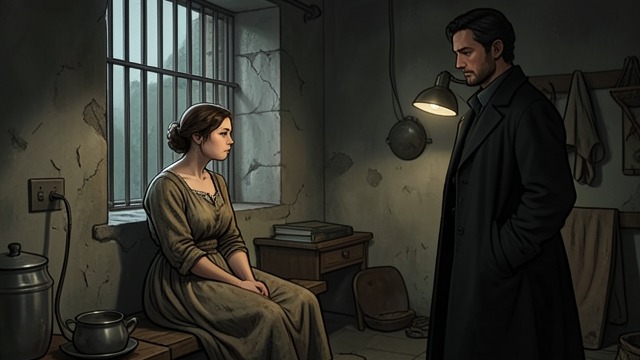
Prison for Refusal
Punished by authorities
Justine’s refusal to steal leads to a planted charge and imprisonment. The court turns a private employer’s retaliation into a legal sentence.
The prison as an opening
Dubois uses the fire to escape, but the prison also introduces Justine to the gang that will try to claim her. Release from one confinement becomes entry into another form of control.
Captivity in the School

Captivity in the School
A household with hidden limits
Rodin’s home first appears to offer employment, but its school and household depend on the subordination of children and servants. Justine’s ability to leave is constrained by need and the threat of accusation.
Rescue punished
Her attempt to free Rosalie is met with branding and expulsion. The private violence leaves her carrying a mark that will make future captivity easier to impose.
Institutional Enclosure
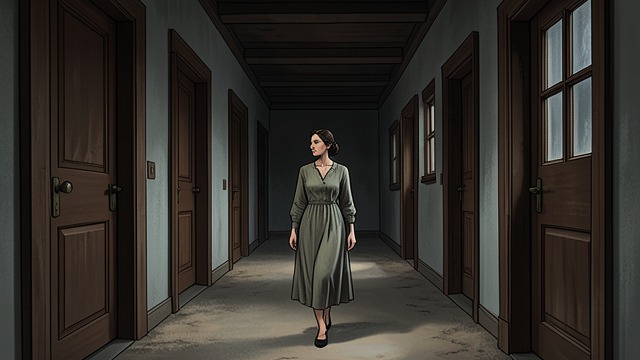
Institutional Enclosure
A hidden prison
The monastery’s concealed rooms, guards, tunnels, and rules cut the captives off from outside help. Religious architecture and public reputation make the confinement difficult to detect.
Routine replaces hope
The women’s schedules normalize their lack of choice. Justine’s escape plan develops only after she learns enough about the institution’s structure to risk crossing it.
The Final Cell
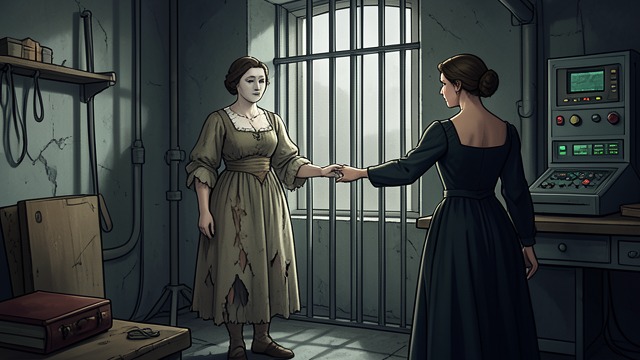
The Final Cell
Imprisonment returns
Justine is jailed once more after Dubois and Madame Bertrand’s accusations. Her past confinement and brand now make the authorities more ready to believe that she is a repeat offender.
Escape through intervention
She does not escape by her own preparation this time; Juliette and Corville intervene. The movement from prison to protection marks a temporary change in who controls her fate.
At the beginning of Justine’s adult life
After Monsieur du Harpin frames her
During Justine’s recovery at Saint-Marcel
After Justine enters the monastery
After Justine’s arrest in Lyon
