
Two Sisters, Two Moral Languages
JustineThis flow follows the contrast between Juliette’s early pragmatism and Justine’s religious morality through the sisters’ parting and reunion.
increasing Bearing strength in each event
 decreasing
Bearing strength in each eventdecreasingShared Education

Shared Education
Common beginnings
Juliette and Justine grow up in the same family and receive a similar education. Their later difference cannot be attributed simply to wholly separate childhoods.
Temperament diverges
Juliette appears more worldly and self-directed, while Justine is more sensitive and trusting. The distinction shapes the different moral languages they will use to interpret the same world.
Advice Refused
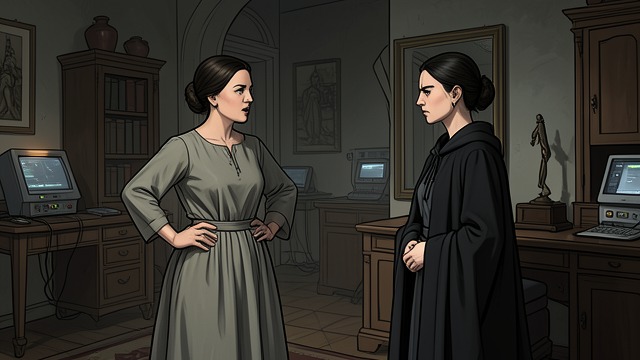
Advice Refused
Juliette’s argument
Juliette tells Justine that pleasure and self-interest are safer guides than moral sensitivity. She argues that women should use their attractions to avoid dependence on unreliable men.
Justine’s answer
Justine refuses to treat survival as justification for dishonor. Their separation becomes an argument in action, with each sister following the path she has defended.
Worldly Success and Moral Cost

Worldly Success and Moral Cost
Juliette’s material account
Juliette rises through the very world she once recommended, gaining money and rank by treating relationships strategically. She appears to have proven that her approach can succeed.
Justine’s contrary experience
Justine’s suffering seems to confirm Juliette’s expectation that a lone virtuous person will be exploited. The two sisters’ separate lives become competing evidence about what kind of conduct offers a livable future.
Recognition Through Testimony

Recognition Through Testimony
A hidden kinship uncovered
Juliette recognizes her sister through the story of her misfortunes. Justine’s narrative makes the family history present again, despite years of separation.
Moral distance narrowed
Juliette no longer encounters virtue as an abstract principle or a rejected childhood choice. She sees the specific suffering borne by the sister who chose differently.
Different Endings

Different Endings
Justine’s life ends
Justine dies just after legal recognition and reunion. Her story does not culminate in a long period of safety or reward.
Juliette changes course
Juliette gives up her worldly life and enters a convent, while Corville remains active in public service. Their contrasting endings leave the sisters’ moral paths joined emotionally but unequal in outcome.
Before the family’s financial collapse
The day the sisters leave the convent
During the years before their reunion
At Montargis
After Justine’s death
