
The Cycle of Crime and Consequence
JustineThis flow follows the novel’s uneven pattern in which crimes produce immediate advantage for perpetrators and lasting danger for Justine.
increasing Bearing strength in each event
 decreasing
Bearing strength in each eventdecreasingFirst Profit from Cruelty

First Profit from Cruelty
A successful aggressor
Dubourg threatens Justine, while the people around her treat his wealth and authority as reasons to accommodate him. His conduct is not immediately checked by the moral standards he dismisses.
A pattern announced
The episode establishes the disparity between the harm Justine experiences and the lack of consequence for those who cause it. Later stories enlarge the same pattern across households and institutions.
A Crime That Saves
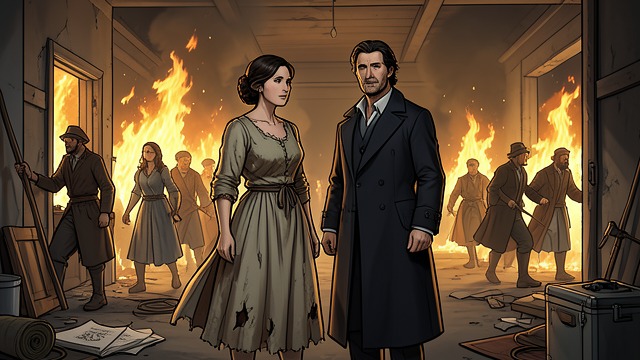
A Crime That Saves
Escape through wrongdoing
The prison fire enables Justine and Dubois to escape execution, but it also kills people who were confined there. Crime temporarily protects the innocent while inflicting harm on others.
Moral complication
The rescue prevents an easy opposition between every criminal act and every useful consequence. It does not turn the fire into a just act, but it makes the plot’s moral categories more difficult.
Success Without Accountability
Success Without Accountability
Inheritance secured
The Comte de Bressac acquires money and property after his aunt dies, while Justine is blamed for the crime she tried to prevent. His inheritance and her danger arrive as linked outcomes.
Consequence deferred
The law does not immediately expose the Comte’s role. The episode gives practical force to Justine’s observation that wrongdoing can flourish without visible punishment.
Fortunes Preserved
Fortunes Preserved
Institutions endure
The monastery remains protected by its reputation, while several offenders rise in social standing or escape prosecution. Justine’s account repeatedly fails to interrupt the systems that shelter them.
A social pattern emerges
The narrative shifts attention from individual villains to the broader conditions that let them continue. Wealth, office, secrecy, and public credulity distribute consequences unevenly.
A Final Moral Accounting
A Final Moral Accounting
Earthly imbalance remains
Justine dies after receiving formal exoneration, while the novel notes that powerful offenders evade meaningful punishment. The narrative does not produce a worldly settlement that matches the harms inflicted.
Spiritual balance asserted
The narrator and Juliette interpret the outcome through Providence and the promise of another life. Their explanation offers moral closure, but the plot preserves the tension that made such closure necessary.
After Justine refuses Dubourg
During the Conciergerie fire
After the Marquise’s death
After the monastery escape and later trials
In the novel’s closing scene
