Kensuke Believes His Family Died in the Atomic Bombing of Nagasaki
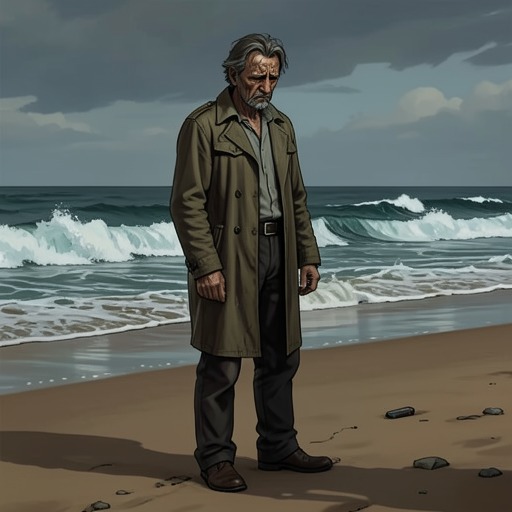
Kensuke's KingdomKensuke’s belief that his family died in the atomic bombing of Nagasaki turns wartime separation into decades of self-imposed exile. Hearing that the city has been destroyed, he concludes that his wife, Kimi, and young son, Michiya, are dead; that conclusion governs his decision to remain on the island, his distrust of people, and his understanding of himself as a survivor who has outlived everyone he loved. The later discovery that his family survived transforms this private certainty into the story’s most consequential misunderstanding: Michiya grew up believing his father had died, while Kimi died still believing the same of Kensuke.
Origins of the Belief
Before the war, Kensuke’s life is rooted in family and medicine. Born in Nagasaki, he studies medicine in Tokyo and London, becomes a doctor, and returns to Nagasaki, where he lives with Kimi and their son, Michiya. His work caring for mothers and babies gives his professional identity a distinctly life-preserving purpose; he remembers himself as proud and happy, with a family he could visit while serving in the Japanese Navy as a doctor aboard a warship.
That life is broken during a sea battle. American aircraft bomb Kensuke’s ship, and he remains with his patients rather than abandoning them. When the attack is over, he believes he is the only person alive aboard, although the ship’s engine continues running and he cannot control its course. Listening to the radio, he hears that an atomic bomb has fallen on Nagasaki and that many people are dead. His mother and the rest of his family are there, and he assumes Kimi and Michiya have been killed as well. The radio report gives him news of destruction, not confirmation of his family’s fate, but in the confusion and isolation of war he experiences it as certainty.
Grief and Self-Imposed Exile
Kensuke’s ship eventually stops, survives a storm, and is carried to the island, where he finds food and water. His survival does not initially feel like good fortune: he describes feeling that he has no wish to live when he believes his friends and family are dead. Meeting the orangutans gradually changes his relation to survival. Their kindness and the island’s peace give him a reason to remain, and he comes to tell himself that he is fortunate to be alive, even as he continues to grieve the family he thinks he has lost.
The island becomes both refuge and boundary. Kensuke takes useful supplies from the wreck, hides them in a cave, and later sees a terrible storm drive the ship onto the rocks, where it is wrecked and eventually partly buried under sand. When American soldiers arrive, he hides in the forest rather than surrendering. He hears them say that everyone in Nagasaki is dead and takes their words as further confirmation of his fear. Believing there is no family or home left to return to, and regarding surrender as dishonourable, he stays on the island after the soldiers leave.
His loss also shapes the way he sees other people. When hunters later come to the island, Kensuke hides with the orangutans and witnesses the hunters shoot gibbons and take their young. In the wake of that violence, he concludes that people are killers and decides he does not want to see them again. This is not simply a general dislike of company: his isolation is tied to bereavement, fear, and the harm he has seen people inflict. When Michael is washed ashore, Kensuke leaves him food and water but tries to keep him away, fearing that human presence will bring danger to the animals and to himself.
The Belief Tested by Friendship
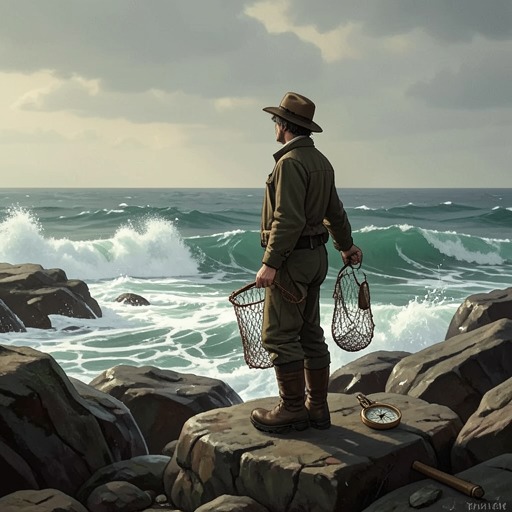
The truth of Kensuke’s wartime past emerges during a fishing trip in his outrigger boat, as he tells Michael the story of his life. Their shared work and time together create the occasion for what Kensuke had previously kept private. Michael learns not only that Kensuke rescued him and Stella from the sea, but also that the old man who first seemed hostile has survived years of loneliness under the weight of believing his family dead.
After the two become friends, Michael tries to make another future imaginable. He tells Kensuke that the bombing may not have killed everyone and suggests he might return to Japan when a ship comes for Michael. Kensuke considers the possibility, but rejects it: he has heard that Nagasaki was destroyed and remains convinced that his family is dead. His answer shows how thoroughly a report received in wartime has hardened into an unalterable personal truth. Going home would not seem like reunion to him; it would mean facing a world he believes has already taken everyone he loves.
Kensuke’s bond with Michael makes the belief more painful, not less. He comes to regard the boy as a son and recognizes the parallel between Michael’s mother losing her child and his own separation from Michiya. Yet he distinguishes their futures: Michael longs to return to his parents, while Kensuke says he has chosen to stay on the island. Their affection cannot erase either loss, and Kensuke knows that Michael’s departure will grieve him even as he accepts that going home is right for the boy.
The Truth After the Island
Years after Michael’s return, a letter supplies the fact Kensuke never knew. Michiya Ogawa writes that he is Kensuke’s son and that, until reading Michael’s book, he believed his father had died in the war. Kimi died three years before Michiya wrote, still believing Kensuke was dead. The family had in fact survived the bombing because they had gone into the countryside to visit Michiya’s grandmother for a few days before the bomb fell.
The revelation confirms that Kensuke’s certainty was false, but it does not undo the years shaped by it. Kimi and Michiya survived Nagasaki, while Kensuke survived the war and the shipwreck, yet the family remained divided by the same mistaken belief on both sides. Michael’s account becomes the means through which father and son can finally find one another: a month after receiving Michiya’s letter, Michael travels to Japan and meets him. Michiya laughs like his father, a small resemblance that makes the connection between their separated lives newly present.
Kensuke’s story therefore turns on the difference between survival and knowledge. He is alive, his family is alive, and yet the destruction he hears about convinces him that reunion is impossible. The island gives him safety and, through the orangutans and later Michael, companionship, but it also becomes the place where an unverified conclusion keeps him apart from home. The eventual meeting of Michael and Michiya repairs one consequence of that silence without restoring the years Kimi and Kensuke lost.