Michael and Kensuke reconcile and build a rescue beacon
Kensuke's KingdomMichael and Kensuke’s reconciliation transforms a strained, nearly silent friendship into a shared decision to prepare for Michael’s return home. Kensuke acknowledges that Michael has a life beyond the island, forgives him for concealing his message in a bottle, and proposes that they build a large beacon together. Their renewed closeness is expressed not only in words but in work, fishing, painting, and a game of soccer that brings them back into one another’s company.
The distance after the bottle
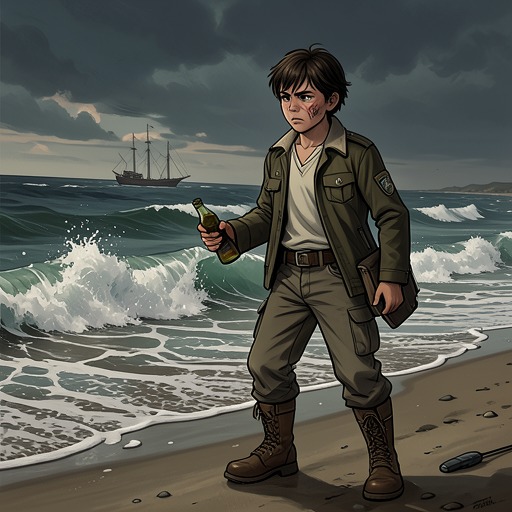
The reconciliation follows a rupture that neither man had resolved. After Kensuke discovered Michael’s message in a Coca-Cola bottle, he withdrew into himself. He did not openly reproach Michael, but the warmth and laughter that had marked their life together disappeared. They remained civil and polite, yet no longer shared the easy intimacy of their earlier friendship. Michael wandered the island with Stella, hoping Kensuke would forgive him, and often went to Watch Hill to rehearse an explanation. However carefully he reasoned it through, he could not persuade himself that concealing his wish to contact the outside world had been anything other than a betrayal.
One night, Tomodachi came to the mouth of their cave. Kensuke explained that she had lost her baby, Kikanbo, again, and suggested that she stayed nearby for comfort. Michael had noticed that the orangutans sometimes sought Kensuke when they were upset or frightened. Her presence, and Kensuke’s description of her as a distressed mother, opened a way for him to speak about Michael’s own separation from his mother. The reconciliation begins in this quiet scene rather than in a dramatic confrontation: Kensuke turns from the silent distance between the two men to the pain of a mother who has lost her child.
Family, memory, and different futures
Kensuke tells Michael that Tomodachi makes him think of Michael’s mother, who has lost her son and may search for him without finding him. He imagines that she keeps Michael present in her thoughts, just as he carries his own family in his mind. Kensuke says that his son, Michiya, and his wife, Kimi, remain with him in memory, though he believes them dead. The comparison makes their separation legible to each other: Michael is not simply a boy who wants to leave Kensuke, but a missing child whose family may still be looking for him.
Kensuke then distinguishes their wishes rather than treating them as the same. He says that he has chosen to stay on the island and does not want to return to Japan; Michael, by contrast, wants to cross the sea and go home. Kensuke admits that he hated Michael at first, but that he came to regard him as a son and himself as a father to the boy. He is sad at the prospect of Michael leaving, and says that he enjoys their conversations and wants him to stay. Yet he recognizes that the two have different needs: remaining on the island may suit Kensuke, but it is not the right future for Michael.
Confession and forgiveness
Kensuke identifies the injury between them as a failure of honesty. They were friends, he says, but Michael did not tell him what he felt or what he intended to do. Finding and reading the message made Kensuke deeply sad. Afterward, however, he understood that Michael could both wish to stay with him and wish to return home. Michael had written because he wanted to go home, and had kept the attempt secret because he knew it would make Kensuke sad. When Kensuke asks whether he has understood correctly, Michael confirms that he has.
That recognition changes the meaning of Michael’s act. It does not erase Kensuke’s hurt, but it replaces the idea of simple betrayal with an account of divided affection: Michael wanted to preserve his bond with Kensuke while also reaching his family. Kensuke’s response is to release him from the guilt that has been weighing on him. He points to Michael’s youth and future, and says that he cannot spend his whole life on the island with an old man who will one day die. In this exchange, affection does not mean demanding that Michael stay; it means accepting that he must leave.
Building a way home
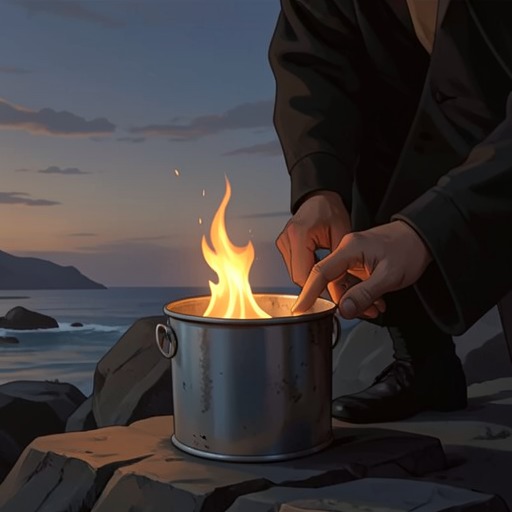
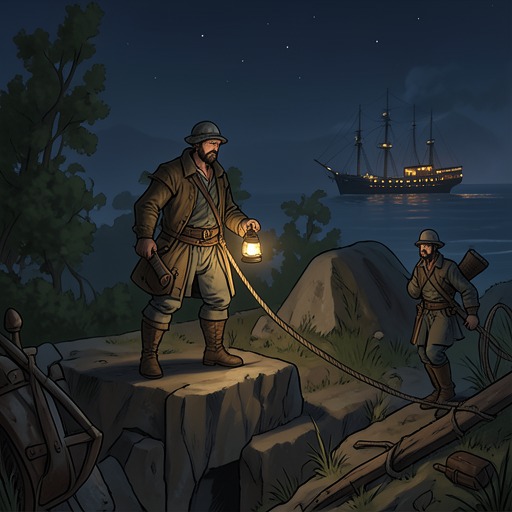
Kensuke proposes that they begin building a large fire on the hill the next day, so they will be ready if a ship appears. Michael agrees, and the decision gives their reconciliation an immediate practical form. They use most of the firewood they had gathered for cooking, which was stored in the dry part at the back of the cave, and Kensuke even contributes some of his best driftwood. The site above the cave house is close enough that they can carry the wood there without difficulty. Once they have made a sizeable pile, Kensuke says they can continue gathering fuel from the forest each day and jokes that the fire may be large enough for people in Japan to see.
The beacon is a reversal of the fire that had helped divide them. Earlier, Michael’s attempt to make a signal had angered Kensuke, who feared that a fire might bring people to the island and endanger the animals or expose Kensuke himself. Now Kensuke agrees to build the signal with Michael, because he has accepted that the boy’s return home matters. Their shared fire is not a denial of Kensuke’s fear or attachment to island life; it is a deliberate preparation for Michael’s departure.
Friendship restored through play
The next afternoon, the two set sticks in the sand as goalposts and take turns shooting at each other with the soft football. Its poor bounce recalls Michael’s old playground at home, but it does not spoil the game. Kensuke, despite carrying a stick and being very old, can kick well enough to score past Michael often. The orangutans watch, bemused, while Stella interferes and chases after each goal. They continue until darkness sends them back up the hill; afterward, both are too tired to do more than drink water, eat a banana or two, and settle onto their sleeping mats.
The game gives the reconciliation a visible ending without making the sadness of separation disappear. Kensuke has agreed to help Michael leave, and Michael has accepted that decision; at the same time, both are reluctant for their renewed time together to end. The beacon points toward a possible rescue, while the afternoon of soccer restores a form of ordinary companionship. Their friendship is renewed not by returning to the exact life they had before the bottle, but by making room for both Kensuke’s attachment and Michael’s future beyond the island.