The atomic bombing of Nagasaki
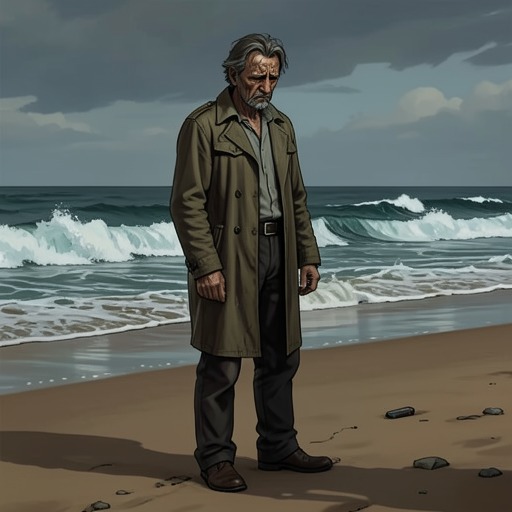
Kensuke's KingdomThe atomic bombing of Nagasaki is a pivotal event in Kensuke Ogawa’s remembered history: news of the attack, received while he was serving as a doctor on a Japanese warship, led him to believe that his family had been killed. That belief helped turn wartime survival into a long separation from home, and the later discovery that his wife and son had escaped the bombing recasts the loss around which he had built his life on the island.
News at Sea
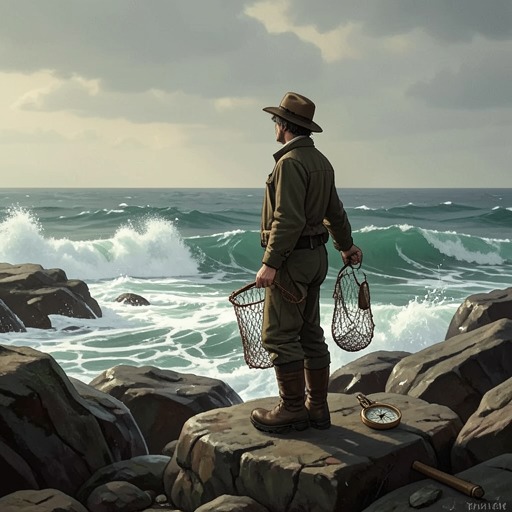
Kensuke recounts the bombing while explaining his life to Michael during a fishing trip. Born in Nagasaki, he had studied medicine in Tokyo, trained at Guy’s Hospital in London, returned to Nagasaki, married Kimi, and become the father of Michiya. When war came, he joined the navy as a doctor aboard a large warship. He describes the conflict as worsening for Japan as American ships, aircraft, and bombs came to bear.
During a major sea battle, American planes attacked Kensuke’s ship. He stayed aboard because he was a doctor responsible for his patients. After further attacks, he found the patients and sailors dead and himself the ship’s sole survivor. The vessel was still moving, but he could not steer it. Listening to the radio, he learned that an atomic bomb had fallen on Nagasaki. Because his wife, son, mother, and other relatives lived there, he concluded that they had all died. The story presents the bombing through this specific, incomplete knowledge: Kensuke hears the news at sea and interprets it as the destruction of his family.
From Bereavement to Isolation
The news compounded the losses aboard the ship with what Kensuke believed was the loss of everyone waiting for him at home. When Japan surrendered, he was so grief-stricken that he wanted to die. After the ship’s engine stopped, a storm carried the vessel to the island, where it came ashore without sinking. Kensuke survived, found food and water, and gathered useful supplies from the ship before a later storm drove it onto the rocks and it went down.
Kensuke’s conviction that his family had died shaped the choice to remain on the island. He felt like a survivor who had no reason to return to a life emptied by loss; the island, where he later found companionship among the orangutans, became a place apart from war and the people he associated with it. He hid when American soldiers came ashore rather than surrendering, and their comments about everyone in Nagasaki being dead seemed to confirm his fear. For years, he did not know that his family had survived. The atomic bombing therefore remains consequential not only as the catastrophe he heard about, but as the information around which he organized his solitude.
The Later Correction
The truth emerges only after the story has crossed into another generation. Four years after Michael’s account was first published, he received a letter from Michiya Ogawa, who identified himself as Kensuke’s son. Michiya explained that he had believed his father died in the war, while his own mother had died three years earlier still believing the same. He also clarified that his family had lived in Nagasaki but had gone into the countryside to visit his grandmother for several days before the bomb fell. They survived.
Michiya’s letter overturns the belief that had defined Kensuke’s separation from his family: Kimi and Michiya were not killed in the bombing. The letter does not erase the deaths Kensuke witnessed at sea or the grief of a family separated by war, but it establishes that the catastrophe did not destroy his immediate family as he had thought. A month after receiving the letter, Michael went to Japan and met Michiya; the closing detail that Michiya laughed like his father gives the revelation a personal connection across the years of mistaken bereavement.
Narrative Significance
The bombing is recounted as a remembered event rather than a scene witnessed directly by Michael. Its effects unfold through testimony, material traces, and later correction: Kensuke’s account of the radio news, the wrecked warship Michael finds on the island, and Michiya’s letter each adds a piece to a history that neither Kensuke nor Michael initially knows in full. The wreck makes the war’s physical aftermath present in the island setting, while the letter distinguishes Kensuke’s sincere belief from what actually happened to his family.
This delayed disclosure makes the bombing central to the book’s treatment of memory and separation. Kensuke’s enduring attachment to Kimi and Michiya coexists with his certainty that they are dead, while Michiya grows up believing his father has died. Their later meeting becomes possible because Michael’s account reconnects people separated by war and by decades of incomplete knowledge. The story thus gives the bombing a continuing family consequence: it shapes Kensuke’s choice to stay away, even though the family he mourns had survived.