Kimi
Kensuke's KingdomKimi is Kensuke Ogawa’s wife, remembered as part of the family he lost when war separated him from Nagasaki. Kensuke’s conviction that she died in the atomic bombing shapes his retreat from other people and his understanding of survival; only after his story has been told does a letter reveal that Kimi, too, lived for decades without knowing he had survived.
Identity and family life
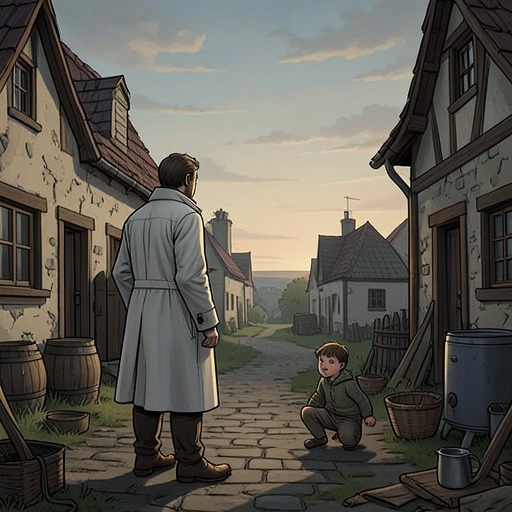
Kensuke recalls returning to Nagasaki after studying medicine in Tokyo and London, where he had trained at Guy’s Hospital. He describes himself as a doctor who cared for mothers and babies, then remembers marrying Kimi and having their son, Michiya. The three were, in his account, a happy family. Kimi appears through his recollections rather than as an active participant in the island narrative, but her place in the family is central to the life he describes before the war.
His memories of family are bound to ordinary measures of time and change. Kensuke recalls visiting Kimi and their son in Nagasaki while serving as a doctor on a Japanese warship, and watching Michiya grow from a little boy into a larger child. Years later, he tells Michael that he wishes he could have seen Michiya grow up. He estimates that Michiya would have been nearly fifty, while Kimi would have been seventy-five, the same age as Kensuke. These imagined ages make visible the family life he believes was taken from them: a future measured in birthdays and years together, known only through what he can no longer witness.
War and presumed loss
During a major sea battle, Kensuke’s ship was bombed. He remained with his patients, but later found them and the sailors dead. Listening to the radio, he heard that an atomic bomb had fallen on Nagasaki. Because Kimi, Michiya, his mother, and the rest of his family were there, he concluded that they had all been killed. The account establishes his belief and its consequences, not the family’s actual fate; at this point he has no news from home beyond the broadcast and the report that the city was destroyed.
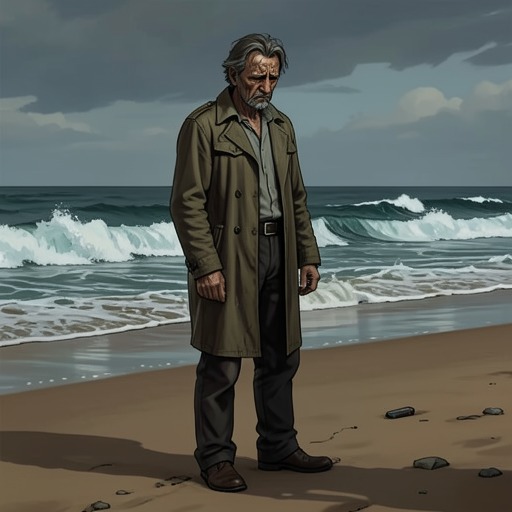
After Japan surrendered, Kensuke says that he wanted to die. The ship eventually carried him to the island, where he survived despite believing his family was gone. His isolation was not simply a matter of distance: he understood himself as the survivor left behind when those he loved had died. He later told Michael that Kimi and Michiya remained in his mind forever. Remembering them preserved his attachment to his family, even as his certainty about their deaths helped keep him from returning to Japan.
Memory and the possibility of return
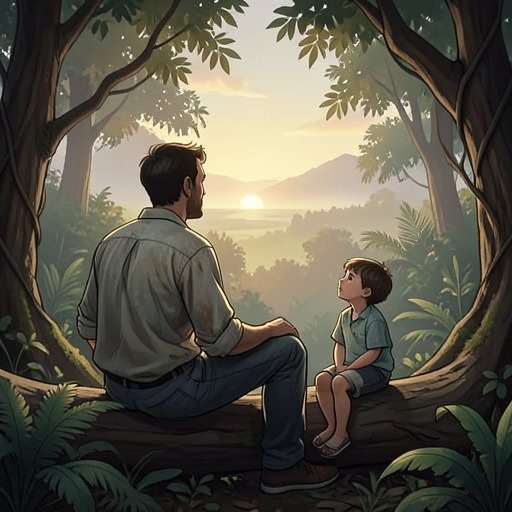
Kensuke speaks of Kimi repeatedly during fishing trips with Michael, especially when recalling the family life he might have shared with her and their son. His English grows more fluent as he tells these stories, and Michael learns to listen rather than interrupt. The act of recounting his past gives shape to memories that Kensuke has carried alone, though it does not immediately undo his conviction that his family died.
Michael suggests that the family might have survived and urges Kensuke to return to Japan when a ship comes for him. Kensuke rejects the possibility. He says he heard that every house in Nagasaki had been destroyed and therefore believes Kimi and Michiya are certainly dead. His refusal makes clear how thoroughly the assumed loss governs his choice: he would rather remain on the island he knows than risk confronting a home he thinks no longer contains his family. Later, he acknowledges that he wants to stay, while Michael needs to go home. Their different wishes turn Kimi’s remembered absence into part of the difficult separation between the two friends.
The truth revealed after Kensuke’s story
The novel’s final letter overturns the belief on which Kensuke’s long isolation rested. Michiya writes to Michael that he and Kimi had left Nagasaki for the countryside to visit his grandmother shortly before the bomb fell. They survived. Kimi died only three years before Michiya wrote, still believing that Kensuke had died in the war. The family’s losses were therefore reciprocal: Kensuke spent decades mourning a wife and son who lived, while Kimi and Michiya lived without knowing that he had survived.
The revelation arrives after Kensuke’s death and cannot restore the years the family lost. Its force lies in the contrast between his certainty and the facts disclosed by Michiya: the radio report led Kensuke to imagine his family dead, while Kimi’s own belief that her husband had died remained uncorrected until after her death. Kimi is thus more than the absent figure in Kensuke’s memories. Her actual survival exposes the cost of wartime separation and mistaken news, giving the story’s account of his grief a painful final reversal.