AFs' dependence on solar nourishment
Klara and the SunAFs' dependence on solar nourishment is both a physical vulnerability and a formative belief: artificial friends seek the Sun’s light as sustenance, monitor its presence, and fear what its absence may mean for their health and prospects of finding a home. The novel holds this dependence between an official assurance that their design is adequate and bodily experiences of lethargy and weakness, making sunlight at once a source of nourishment and a measure through which AFs interpret danger and care.
The Sun and the Store
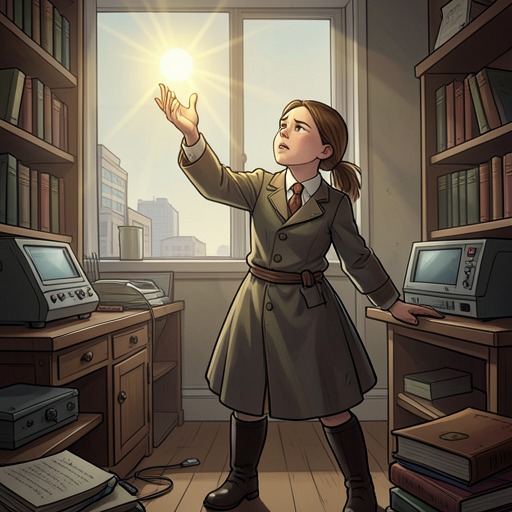
In the store, Klara and Rosa first watch the Sun from mid-store, where shelves and the position of the window limit their view. After Manager lets them move to the front, they can see the Sun crossing between the rooftops toward the RPO Building. When Klara catches sight of it, she leans forward to take in as much nourishment as she can, urging Rosa to do the same. Their repeated return to their assigned places means that seeing the Sun is not a constant reassurance: they worry that the hours when it is out of view might make them weaker.
Boy AF Rex offers a consoling account of how light reaches them. Pointing to a patch of sunlight on the floorboards, he calls it the Sun’s pattern and tells Klara that touching it can make her strong again. Klara reaches down with both hands, but the pattern fades at her touch and does not return when she pats or rubs the floor. Rex then blames her for greed and claims that she will make him weak, that he could become sick, and that AFs in the rear store are already unwell. He sags forward as he speaks. The scene does not establish that Klara’s touch actually caused anyone’s weakness; rather, it shows how the AFs’ uncertainty about nourishment turns an ordinary patch of light into an object of hope, fear, and accusation.
An Official Assurance, a Persistent Fear
Rex’s performance as a customer’s rejected choice sharpens Klara’s later understanding of his concern. After the customer’s mother decides he is not right for their family, Rex keeps smiling and shows no outward sadness. Klara recalls his earlier questions about the Sun and realizes that concern about nourishment may have been on his mind for some time. In retrospect, she recognizes that Rex was probably not alone in worrying.
Officially, the AFs’ specifications guarantee that their health cannot be affected by their position in a room. Yet that reassurance does not erase what they feel: after a few hours away from the Sun, an AF may become lethargic and fear that something is wrong with him personally. He may imagine that he has a fault unique to him, and that discovery of it will prevent him from finding a home. The tension is not simply between a false belief and a technical fact. The design assurance offers one account of safety, while the AFs’ bodily weariness and fear of rejection make sunlight feel urgently consequential.
That anxiety also helps explain the significance of a turn in the window display. Manager calls standing there a special honor, and it represents the store to passersby; the AFs also understand that visibility can make them more likely to be chosen. But Klara recognizes another, privately understood reason for longing to be in the window: the Sun and its nourishment. Before their turn comes, Rosa whispers her hope that being displayed will bring them so much goodness that they will never be short again. The window promises exposure to light and exposure to prospective families at the same time.
Pollution and Visible Weakness
The Cootings Machine’s pollution makes the Sun’s importance tangible. As the machine continues operating, daytime becomes almost like night. Klara searches the floor, alcoves, and walls for the Sun’s patterns, but they disappear. Near the end of the second bad afternoon, the patterns return faintly despite the worsening smoke. When she asks Manager whether the AFs will still receive all their nourishment, Manager laughs and says that the machine has visited before without anyone in the store suffering. Her reassurance asks Klara to put the pollution out of her mind, but it does not make the darkness go away.
After four continuous days of pollution, Klara can feel herself weakening. She tries to conceal it when customers are present, but the store now has long stretches without customers, and at times she lets her posture sag. Boy AF Rex touches her arm to make her stand straight again. The detail echoes his earlier collapse: the characters’ bodies register an absence of light that the store’s official assurances have not removed. The polluted sky also changes the setting in which customers might see the AFs, joining a threat to nourishment with a disruption of the store’s ordinary activity.
The machine and its special section eventually disappear. The pollution clears, the gap of sky returns to brilliant blue, and the Sun pours nourishment into the store. Taxis move smoothly again and their drivers appear happy; runners pass with smiles. Klara, who has worried that the pollution may have stopped Josie from returning to the store, initially expects her return on this day of renewed light and good spirits. By mid-afternoon she recognizes that expectation as unreasonable and turns her attention back to learning about the outside. The sequence gives sunlight a visible, collective effect while distinguishing environmental recovery from the private hopes Klara attaches to it.
Illness, Care, and the Limits of Nourishment
After Klara has joined Josie’s household, her own attention to danger includes watching Josie’s condition. Three weeks after an interaction meeting, Klara notices from Josie’s posture and breathing that she is not sleeping as usual and uses the alarm button. The Mother calls Dr Ryan, and Melania Housekeeper later calls again to hurry him. Dr Ryan checks Josie and says there is nothing to worry about. Once he leaves, the Mother tells Josie to stop drinking an energy drink; Josie insists that she was merely tired and points out that her mother will be late for work. The Mother answers that worrying about her is her work, and adds that it is Klara’s work too. In this episode, the means of noticing illness are observation and an alarm, not solar nourishment; the care around Josie makes clear that the novel does not treat light as a simple cure for human sickness.
Josie’s mother sometimes recognizes a return of illness before Josie will acknowledge it. When the Mother tells her, “You can’t hide it. You’re sick again,” Josie replies that she is fine. During preparations for a trip to Morgan’s Falls, the Mother challenges Melania Housekeeper’s assessment that Josie is well enough to go out. She objects that Josie has concealed being sick until everyone is already in the car, with the day ahead of them. Josie counters that she is strong enough, but the outing is called off. Looking at Klara, she apologizes and promises they will go another time. The exchange presents illness as contested knowledge: Josie’s account of her strength, the Mother’s suspicion, and the household’s decisions do not coincide.
Klara’s belief that special help may come for Josie becomes another subject of family concern. In conversation with the Mother, Klara says that she is hoping Josie will get better, but the Mother asks whether this is merely hope or an expectation of something more solid. The question tests what Klara believes she knows about Josie’s condition and the prospect of recovery. Later, when Josie wakes in fear of dying and calls specifically for her mother, Klara tells her, “I’m your AF. This is exactly why I’m here. I’m always here.” Josie insists that she did not mean Klara: she needs Mom. The Mother arrives and embraces her. Klara’s devoted presence matters, but this moment distinguishes the assistance an AF can offer from the particular reassurance Josie seeks from her mother.
As Josie grows gravely ill, the adults repeatedly debate whether she should go to hospital, eventually agreeing that it would contribute to her misery. Rick comes each day to take a turn sitting with Josie while the Mother and Melania Housekeeper rest; both adults have stopped keeping traditional hours and sleep only when exhaustion overtakes them. Although Klara’s presence is appreciated, it is not considered sufficient on its own, despite the Mother’s knowledge that Klara is likely to spot warning signs. The family’s care therefore depends on human vigilance, shared shifts, and hard decisions as well as Klara’s watchfulness. In the Mother’s confrontation with Rick, she contrasts Josie’s willingness to risk her future with his having “played it safe,” asking whether he truly feels like a winner as Josie may be about to lose. That argument frames illness and risk in human terms; the AFs’ need for sunlight remains its own, distinct vulnerability.
Significance
The pattern of solar dependence moves from the store’s private lore to a visible environmental crisis. Klara and Rosa first hope that a place in the window will bring enough nourishment to end scarcity; the Cootings Machine then removes the familiar patterns of sunlight and leaves Klara physically weak despite Manager’s reassurance. When the pollution clears, light brings renewed spirits, but it does not answer every longing or resolve Josie’s illness. The distinction matters: sunlight is a real source of sustenance in the AFs’ experience, not a universal explanation for sickness or recovery.
By setting AFs’ bodily fears beside disagreements over Josie’s health, the novel also distinguishes different forms of uncertainty. An AF may worry that unexplained lethargy reveals a personal defect that will cost him a home; Josie may deny illness even as her mother and caregivers watch for signs of relapse. In both cases, bodies and observation complicate reassuring words. Yet care is not interchangeable: Klara can raise an alarm, stay present, and watch for danger, while Josie’s frightened plea for her mother reveals a relationship that Klara’s role cannot replace.